
Tooth loss not only affects the aesthetics of your smile but also creates challenges in daily activities. Restoring missing teeth is crucial for improving both chewing function and appearance. So, what are the specific missing teeth replacement methods available? Let’s find out in the detailed article below!
Dental implants
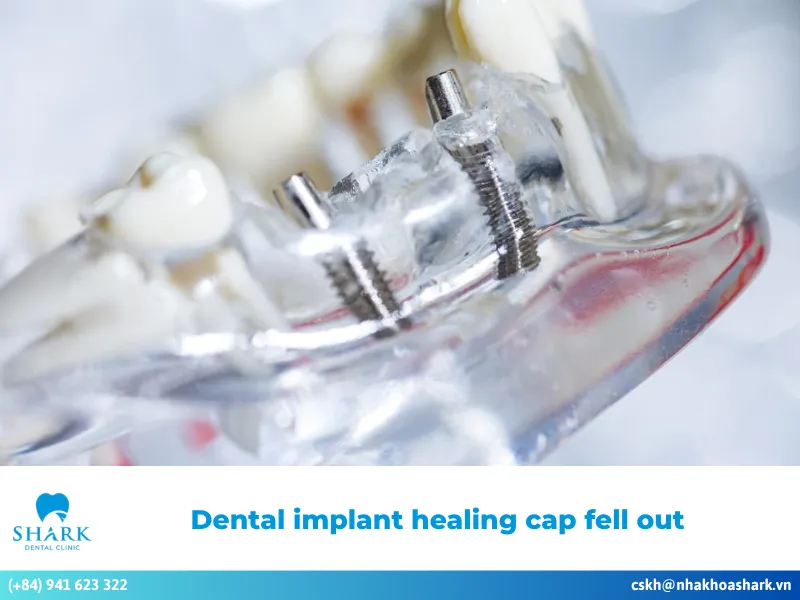
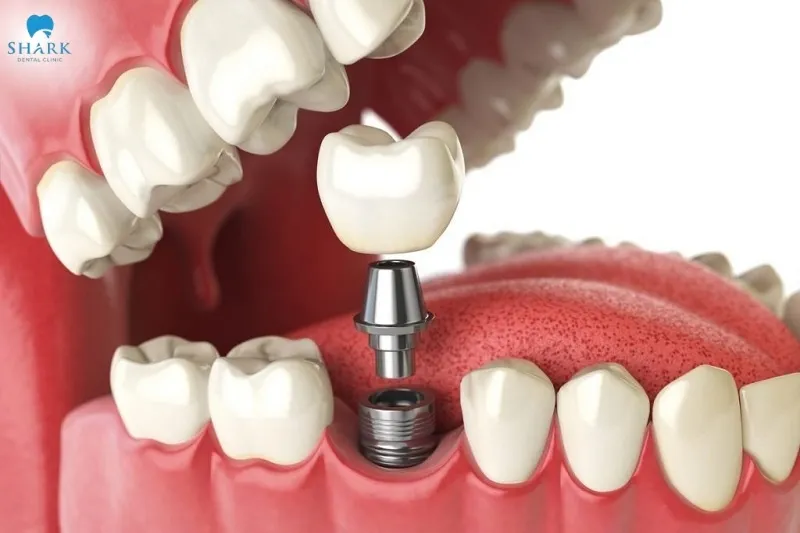
Dental implants are a modern method for replacing missing teeth. This procedure involves placing titanium posts into the jawbone, which serve as artificial tooth roots. A porcelain crown is then attached to these posts to restore both function and appearance.
Currently, dental implants are one of the most commonly used and advanced tooth replacement methods in dentistry. Although the cost can be relatively high, many patients opt for dental implants due to their numerous advantages, including:
- Effective restoration of chewing ability and aesthetics without the need to grind down or affect natural teeth.
- Prevention of jawbone loss and bone resorption associated with missing teeth.
- Suitability for various cases of tooth loss.
- Longevity, with a lifespan of 20–25 years or potentially permanent with proper care.
Dentures
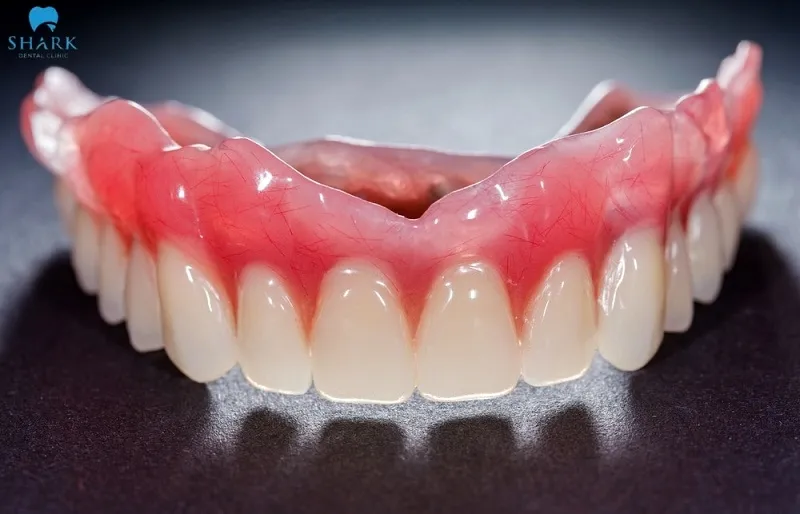
Removable dentures are a traditional option for tooth replacement. They are designed to be easily removed and reinserted for daily cleaning. A removable denture consists of two main parts:
- Artificial teeth made from porcelain or resin.
- A denture base made of acrylic resin or a metal framework.
These components work together to restore chewing function and aesthetics for the patient. Many people still prefer removable dentures because they offer several advantages:
- They are significantly more affordable compared to other dental restoration techniques.
- They are easy to remove and clean, facilitating good oral hygiene.
- The fabrication process is quick, typically completed within 2–3 days.
Partial dentures
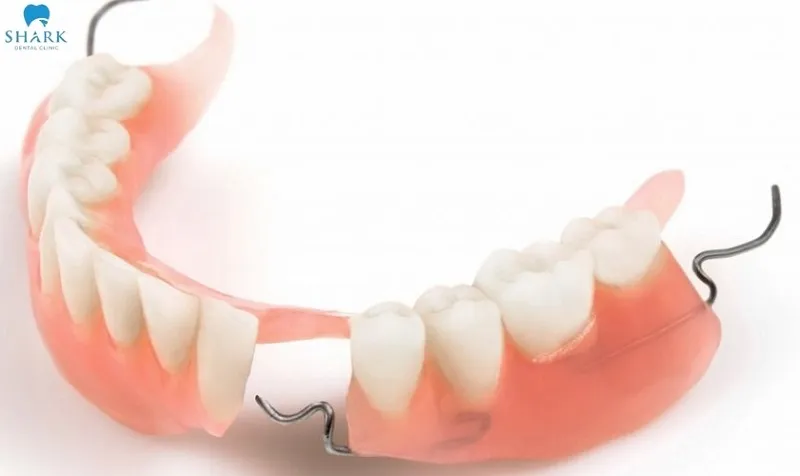
Partial dentures are a type of removable prosthesis designed to replace several or all missing teeth. The main component is a metal framework, which includes clasps, connectors, and saddle areas cast together using acrylic material.
Partial dentures effectively enhance chewing function and restore dental aesthetics. Additionally, they provide several key benefits:
- Cost-effective, making them accessible for many patients.
- Simple and fast procedure, saving clients time.
- Easy to remove for cleaning and maintenance.
- Non-invasive, causing no direct impact on the natural tooth structure.
Dental bridges
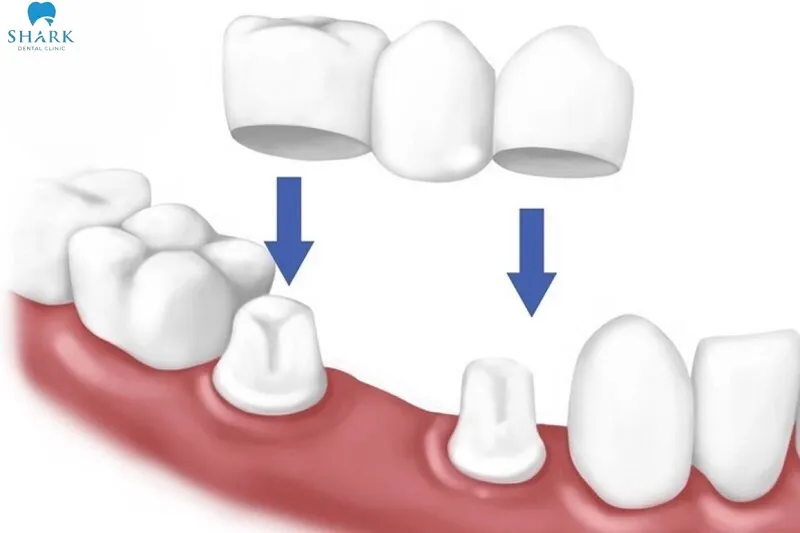
Dental bridges are a popular option for replacing missing teeth, effectively restoring both chewing function and appearance. This technique uses the two healthy teeth adjacent to the missing tooth as supporting pillars for the bridge, which holds the artificial tooth securely in place. However, for this method to work, both adjacent teeth must be strong enough to support the entire structure. In cases where the seventh molar is missing, a bridge cannot be performed because the eighth tooth (the wisdom tooth) is not strong enough to serve as a pillar.
Dental bridges offer several advantages, including:
- Providing natural shape, color, and size similar to real teeth.
- Blending seamlessly with the surrounding teeth, making it difficult to detect and helping patients feel confident when speaking or smiling.
- Offering high strength and durability, restoring about 60–70% of natural chewing capacity.
- Lower cost compared to implants, yet still providing effective chewing restoration.
- Long-lasting results when maintained and cleaned properly.
Removable dental bridges
Removable dental bridges consist of two main components: the denture framework and the artificial teeth. The framework, typically made of metal, serves as the main structure that stabilizes the denture when placed in the mouth. The artificial teeth are usually made from acrylic or porcelain materials that closely resemble natural teeth in shape and color, helping to restore both chewing function and aesthetics.
This tooth replacement technique is especially suitable for elderly patients or those whose health conditions may not permit other procedures, such as dental implants or fixed porcelain bridges.
Key advantages include:
- Affordable treatment cost
- Maximum preservation of natural teeth
Hybrid dentures
Hybrid dentures are an advanced tooth replacement solution designed for patients who have lost multiple teeth or an entire arch. This technique involves securing dentures onto implant posts, providing greater stability and chewing efficiency compared to traditional removable dentures.
Notable benefits of hybridge dental implants include:
- Improved chewing function and enhanced stability compared to conventional dentures
- Easy removal for cleaning or maintenance when needed
- More benefits than full-arch fixed restorations on multiple implants
- Long lifespan when properly cared for and maintained
All-on-4® dental implants
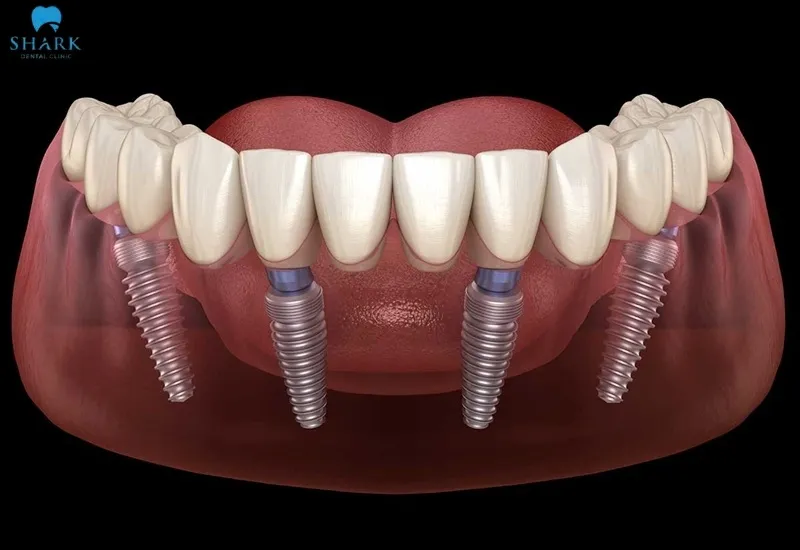
The All-on-4® technique in dentistry refers to a full-arch dental implant method. In this approach, four implant posts are used to support a complete arch of replacement teeth—two are placed vertically in the front (at the position of the second tooth), and two angled implants are placed in the back (around the position of the fifth tooth), with additional support from multi-abutments.
This solution effectively restores full chewing function and aesthetics while offering several advantages over traditional implant restorations:
- Fewer implants are required, reducing swelling and discomfort
- Helps prevent jawbone loss after tooth extraction
- Can last a lifetime with proper care
>>> See more: All on X Implant
Bone grafting
Bone grafting is a dental procedure used to restore or rebuild bone in areas where there has been jawbone loss. This procedure helps regain the structure and function of the affected area and is commonly performed to support dental implant placement when there isn’t enough bone volume or when bone resorption has occurred after tooth loss.
Common bone graft materials include:
- Donor bone from another person
- Bone harvested from another part of the patient’s body
- Approved animal-derived bone
- Synthetic materials such as Hydroxyapatite or Tricalcium Phosphate
Bone grafting can be performed in various areas of the jaw to stabilize the structure and prevent further bone loss. In tooth replacement procedures, it ensures sufficient bone density and quality for successful implant integration, significantly increasing the success rate of the surgery.
Sinus lift
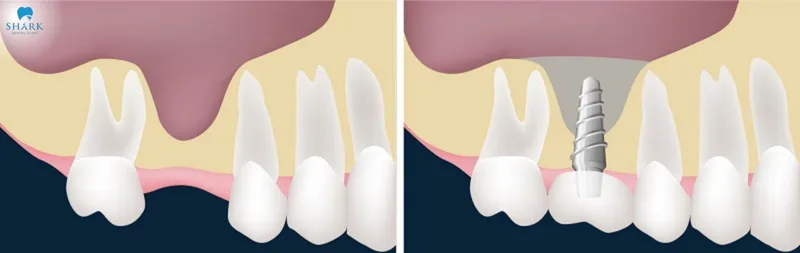
A sinus lift is a dental surgical technique performed to increase the thickness of the jawbone before dental implant placement. The procedure creates additional space for the implant by lifting the sinus floor and adding bone graft material to areas with bone deficiency. This helps the implant integrate firmly and ensures long-term stability and effectiveness in replacing missing teeth.
There are two common sinus lift techniques performed before implant placement:
- Internal sinus lift (Closed sinus lift): The dentist makes a small incision in the gum and creates a tiny opening in the jawbone to gently lift the sinus membrane. Bone graft material is then inserted to fill the created space.
- External sinus lift (Open sinus lift): In this technique, the dentist makes an incision in the gum and opens a window in the side of the jawbone to carefully lift the sinus membrane. The space beneath is then filled with bone graft material.
Mini dental implants
Mini dental implants are a tooth replacement option often recommended for patients who have lost teeth for many years or have experienced bone loss that affects chewing function. This technique is particularly effective for those seeking dental implants with bone loss, as the smaller diameter requires less bone volume for stabilization.
These implants are smaller in size, typically measuring 2–3 mm in diameter and 13–16 mm in length, and are made from high-quality titanium that is certified as safe and biocompatible with the human body.
The mini implant technique offers several notable advantages:
- Simple and quick procedure with a shorter recovery time.
- Minimally invasive, causing less trauma to the jawbone and promoting faster healing.
- More affordable compared to conventional dental implants due to their compact size.
- High success rate, with simple surgical steps and minimal discomfort.
Flipper teeth
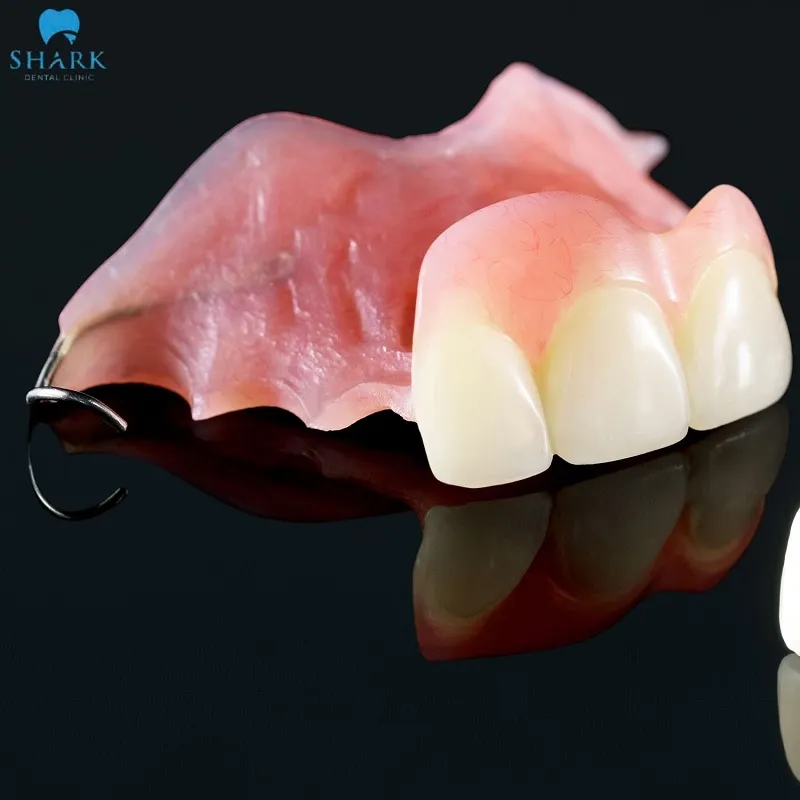
Flipper teeth, also known as partial removable dentures, are designed to replace one or more missing teeth. This type of denture consists of two main components:
- Base frame: Made from either metal or acrylic resin.
- Gum and artificial teeth: Crafted mainly from high-quality resin that mimics the natural color and shape of real teeth.
Flipper teeth are suitable for various cases of tooth loss, particularly when there are intermittent missing teeth within the same dental arch. Many patients choose partial removable dentures for several reasons:
- A variety of materials are available, allowing patients to select what best suits their needs and comfort.
- The materials are biocompatible and safe, ensuring no irritation or adverse reactions during use.
- They are easy to remove and clean, promoting good oral hygiene.
- They are affordable, making them an ideal option for those looking to restore chewing function on a limited budget.
Snap-on smile
Snap-On dentures, also referred to as Snap-On Smile, represent a relatively new concept in dentistry. These aesthetic removable dental appliances are designed to cover existing teeth and improve their appearance, providing a natural-looking smile without the need for invasive procedures or alterations to natural teeth. Snap-On dentures are an excellent option for patients who may not be medically eligible for other restorative treatments, such as dental implants or porcelain crowns. This restoration method offers several notable advantages:
- It effectively restores the natural shape and chewing function of the teeth.
- It is more affordable compared to other restorative methods, making it suitable for a wide range of patients.
- It is non-invasive, preserving the natural structure of existing teeth.
- It is easy to remove and clean, or can be taken off when not in use.
Snap-on dentures
Overdentures are a type of removable denture anchored and stabilized by dental implant posts. This technique enhances chewing ability, improves aesthetics, and helps prevent jawbone loss more effectively than traditional dentures. Additionally, overdentures can be easily removed for cleaning, providing convenience and promoting hygiene. With implant-supported overdentures, patients can:
- Significantly improve chewing efficiency and aesthetics.
- Prevent bone resorption in the jaw effectively.
- Experience greater comfort and stability during use.
Immediate dentures
Immediate dentures are temporary dentures designed and fitted immediately after tooth extraction. Their main purpose is to restore chewing and aesthetics during the healing period. However, they serve only as a short-term solution and will later be replaced with permanent dentures once the gums and jawbone have fully healed. Key benefits of immediate dentures include:
- Restoring chewing function and appearance during the waiting period for crowns or permanent dentures.
- Protecting the gums from trauma and bacterial infections while reducing bleeding and promoting healing after extraction.
- Helping to prevent complications such as dry sockets or tissue loss, ensuring a smoother and faster recovery process.
Each missing teeth replacement method has unique advantages tailored to different oral conditions and patient needs. To determine the most suitable solution, it is best to consult with a reputable dental clinic for a thorough examination and professional advice. Choosing the right restorative option not only helps you regain a beautiful, confident smile but also preserves healthy chewing function and ensures long-lasting oral well-being.