


The appearance of a blood clot after tooth extraction is a positive sign that the body has begun its natural wound-healing process. However, not everyone fully understands the role of this protective layer and how to care for it properly. Let’s join Shark Dental Clinic in taking a closer look at the functions of the blood clot and the important precautions you should be aware of in the article below!
Understanding the function of the blood clot after tooth extraction
The blood clot after tooth extraction is not merely coagulated blood left behind after the procedure. In reality, it plays several critical roles that actively support the healing process, including:
- Hemostasis: The primary and most critical role of the blood clot is to stop bleeding after the extraction, minimizing blood loss and protecting the wound.
- Prevention of infection: The blood clot acts as a protective barrier over the extraction socket, preventing bacteria from entering and helping the body defend against infectious agents.
- Facilitating wound healing: The blood clot creates an optimal environment for new tissue cells to develop, which promotes faster and safer healing of the extraction site.
- Supporting alveolar bone regeneration: In addition to protecting the gum tissue, the blood clot provides a stable foundation for new bone formation, allowing the socket to heal properly.
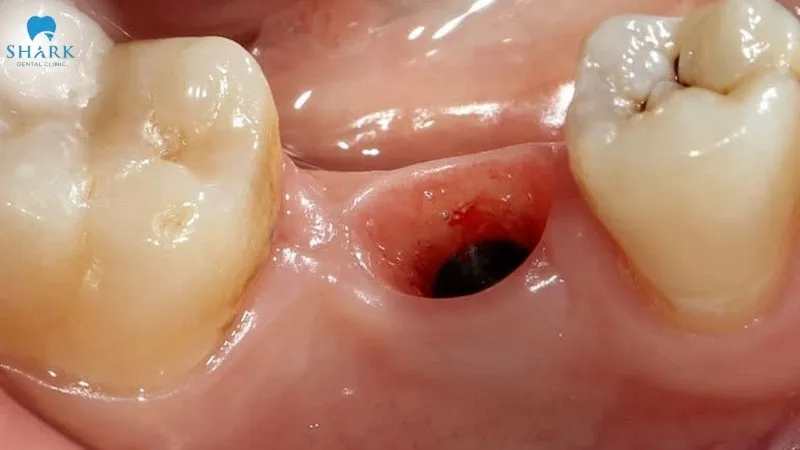
Visual characteristics of a healthy blood clot after tooth extraction
Recognizing the signs of a healthy blood clot is essential for monitoring your healing progress and preventing potential complications.
Typical color progression during healing
The blood clot does not remain unchanged; it undergoes gradual color changes throughout the healing process, which are as follows:
- First 24 hours: The blood clot appears dark red as it fills the extraction socket to stop the bleeding.
- 24–48 hours: The clot turns dark brown or black as its surface begins to dry and contract.
- 3–7 days: A whitish or pale yellow layer develops, which is granulation tissue that supports healing and is not pus.
- 7–14 days: The extraction site becomes light pink, resembling normal gum tissue, indicating that healing is largely progressing well.
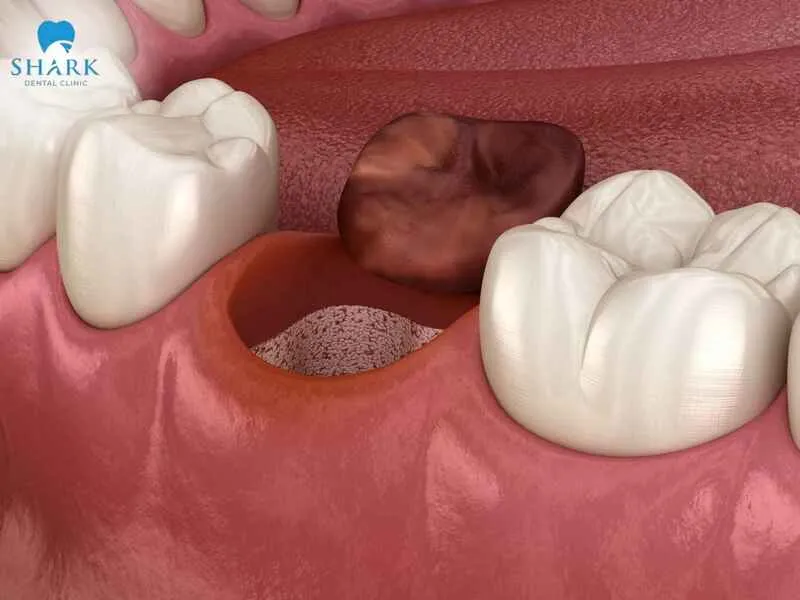
Distinguishing normal healing from infection or debris
To maintain oral health, it is important to differentiate between a healthy blood clot following a tooth extraction and signs of infection or retained debris. Below are key comparison criteria:
| CRITERIA | NORMAL HEALING | INFECTION |
| Time of onset | The blood clot appears immediately after extraction, typically within 1–2 days. | Symptoms generally develop 2–4 days after extraction. |
| Appearance | Symptoms generally develop 2–4 days after extraction. | The socket appears empty and dry, with exposed white-gray bone. |
| Pain characteristics | Pain is dull and gradually decreases over time. | Pain is severe and sharp, often radiating to the temple or ear. |
| Odor and taste | There may be a slight metallic taste of blood or no noticeable odor. | There is often foul breath along with a bad taste in mouth after tooth extraction due to pus discharge. |
| Systemic signs | Generally normal condition; mild warmth may be present due to physiological inflammation. | Possible symptoms include high fever, fatigue, and swollen lymph nodes under the jaw and neck. |
| Severity | Not dangerous. | Serious; if not treated promptly, it may spread and cause prolonged pain. |
| Gum condition | Mild swelling occurs within the first 48 hours, gradually subsiding; surrounding gums appear pink. | Gums may be red, swollen, warm to the touch, tense, or may release pus when gently pressed. |
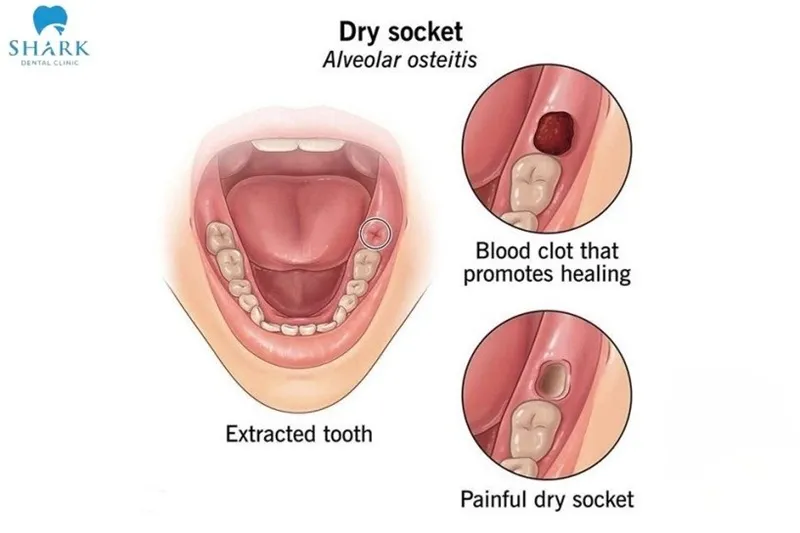
Complications: Dislodged clots and alveolar osteitis (Dry socket)
Dry socket (alveolar osteitis) is a common complication that arises when the blood clot after tooth extraction does not form properly or becomes dislodged too early due to activities like vigorous rinsing or using a straw.
If dry socket is not treated promptly, several serious complications may arise, including:
- Widespread infection: Exposed bone and damaged gum tissue create conditions conducive to bacterial growth, potentially leading to cellulitis, inflammation of the jawbone, or spreading abscesses.
- Nerve damage: Dry socket can irritate surrounding nerves, causing numbness in the lips or tongue.
- Difficulty with future dental procedures: Weakened soft tissue and jawbone may complicate treatments such as dental implants, bone grafting, or prosthetic restorations, making them more time-consuming and costly.
- Bite misalignment and tooth shifting: Delayed healing and weakened bone can lead to shifting of adjacent teeth, resulting in bite misalignment and negatively impacting chewing function and facial aesthetics.
Alveolar osteitis cannot resolve on its own through home care. Therefore, if you experience this complication, return to the dental clinic immediately for a professional examination and timely treatment to prevent further infection.
>>> See more: Tooth extraction cost in Vietnam
Post-operative care to protect the blood clot after tooth extraction
To ensure the blood clot is protected after tooth extraction, it is crucial to follow these post-operative care guidelines:
- Avoid forceful spitting: Strong spitting or rinsing can dislodge the blood clot, slow the healing process, and increase pain.
- Do not touch the wound: Limit contact with the extraction site using your fingers or tongue to keep the blood clot stable and prevent further injury.
- Apply cold compresses externally: Placing an ice pack on the outside of the cheek helps reduce swelling, control bleeding, and relieve pain effectively.
- Use medications as prescribed: Follow your dentist’s instructions regarding pain relievers and antibiotics to manage discomfort and prevent infection.
- Limit strenuous activity: Avoid intense physical activity during the first 24–48 hours after extraction, as excessive movement may shift or break the blood clot and interfere with healing.
- Pay attention to nutrition: If you are wondering “What are the best foods after tooth extraction?”, prioritize soft, easy-to-chew foods such as porridge, soup, or smoothies. Avoid hard or crispy foods that may leave debris in the socket and cause infection.
- Do not use a straw: Using a straw is one of the leading causes of blood clot dislodgement and subsequent complications.
- Do not smoke: Nicotine in tobacco smoke constricts blood vessels, reduces oxygen supply to tissues, delays healing, and increases the risk of infection.
>>> See more: Why should you use Amoxicillin after tooth extraction?
When to contact a dental professional?
Although the formation of a blood clot after tooth extraction usually proceeds smoothly through natural healing mechanisms, you should contact a dental professional immediately if you experience any of the following symptoms:
- Pain that does not improve: Severe pain that does not respond to pain medication or becomes worse after 2–3 days.
- An empty socket: Upon inspection, the extraction socket appears empty and lacks the characteristic dark blood clot.
- Exposed bone or sharp fragments: You may see white bone inside the socket or feel a sharp, uncomfortable fragment known as a bone spicule after tooth extraction. These small pieces of bone can sometimes work their way to the surface during healing and may require a dentist to gently remove them to prevent irritation.
Visit a dental clinic immediately for timely management and treatment if you experience any unusual symptoms. We are a leading provider of tooth extraction in Ho Chi Minh City. Frequently asked questions about blood clot after tooth extraction What happens if the blood clot falls out?
Frequently asked questions about blood clot after tooth extraction
What happens if the blood clot falls out?
If the blood clot becomes dislodged, the jawbone and nerve endings may be exposed, leading to a condition known as dry socket (alveolar osteitis). This can result in severe pain, bad breath, and a significantly prolonged healing process.
Is it normal for the clot to look white?
Yes, it is normal for the blood clot to appear white after a tooth extraction. Around the third day following the extraction, the clot gradually changes from dark red to white or pale yellow.
This white layer is known as a fibrin membrane, which is a positive sign indicating that your body is forming new tissue to heal the wound. As long as you’re not experiencing pain or bad odor, there is no need to worry.
How long does it take for the socket to close completely?
The time it takes for the extraction socket to fully close and heal typically ranges from 2 to 4 months. This duration can vary based on individual healing capacity and the size of the tooth root.
Can i brush my teeth without dislodging the clot?
Yes, you can brush your teeth, but you should do so very gently and avoid brushing directly over the extraction site. Additionally, refrain from rinsing forcefully or spitting, as this pressure may dislodge the blood clot.

We hope the information provided by Shark Dental Clinic helps you better understand the role and importance of the blood clot after tooth extraction. Understanding the function and characteristics of blood clots will enable you to care for your oral health effectively and potentially shorten your healing period. If you are looking for a reputable, safe, and complication-free tooth extraction service, please contact Shark Dental Clinic at hotline (+84) 941 623 322 for prompt consultation and appointment scheduling.