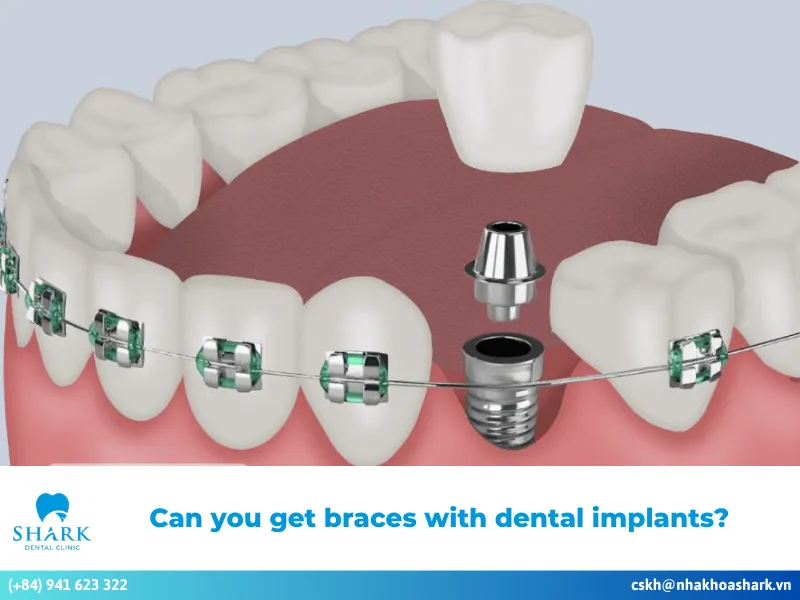


After getting dental crowns, many people still feel their teeth are not completely aligned or their bite is not yet ideal, so they want to continue orthodontic treatment to improve their smile. So, can you get braces with a crown? The article below from Shark Dental Clinic will help you understand this concern in detail, while also providing useful information about orthodontic methods that are suitable and safe for patients who already have dental crowns.
Can you get braces with a crown?
Yes, you can get braces if you have a dental crown, but it’s not always straightforward. If you have just a few individual porcelain crowns, orthodontic treatment can typically proceed. However, if you have crowns on all your teeth in an arch, it may be challenging to effectively use braces, as crowns might not fulfill the necessary requirements for tooth movement.
Before getting braces on crowned teeth, certain conditions must be met:
- The crown should be intact—meaning it must not be cracked, broken, or loose.
- The natural tooth structure underneath the crown must be healthy and stable.
To determine the suitability for braces, it’s essential to schedule a direct examination with an orthodontist. This evaluation allows the orthodontist to assess the overall condition of your teeth, crowns, periodontal tissues, and jawbone. A thorough examination will enable the doctor to design a safe and effective treatment plan.
>>> See more: Can you get braces with missing teeth?
How long after crown can I get braces?
There isn’t a fixed waiting period for getting braces after receiving a dental crown, as this varies based on the specific condition of the tooth and the dentist’s assessment. If the crown is securely bonded and the tooth is stable, the orthodontist may recommend proceeding with braces immediately.
However, if the tooth is still sensitive or causing discomfort, it’s advisable to wait until all discomfort has completely resolved to ensure safety and effectiveness during the orthodontic process.
What types of braces work best with dental crowns?
Once you understand that you can get braces with a crown, choosing the right type of braces becomes crucial for effective orthodontic treatment. Here are three common options for individuals with dental crowns:
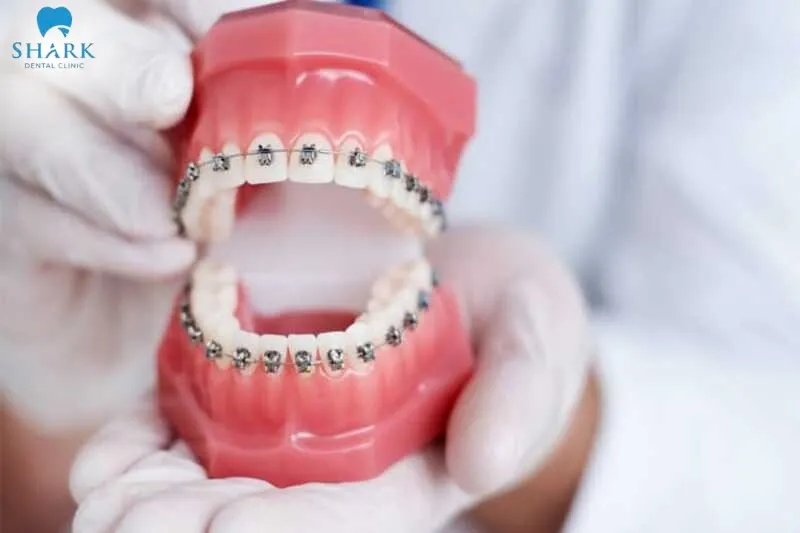
Traditional metal braces with crowns
This is the conventional method and is effective for most cases. For crowned teeth, dentists use a special adhesive to securely bond the brackets without damaging the crown. However, traditional metal braces are more visible, which may not be ideal for those with aesthetic concerns.
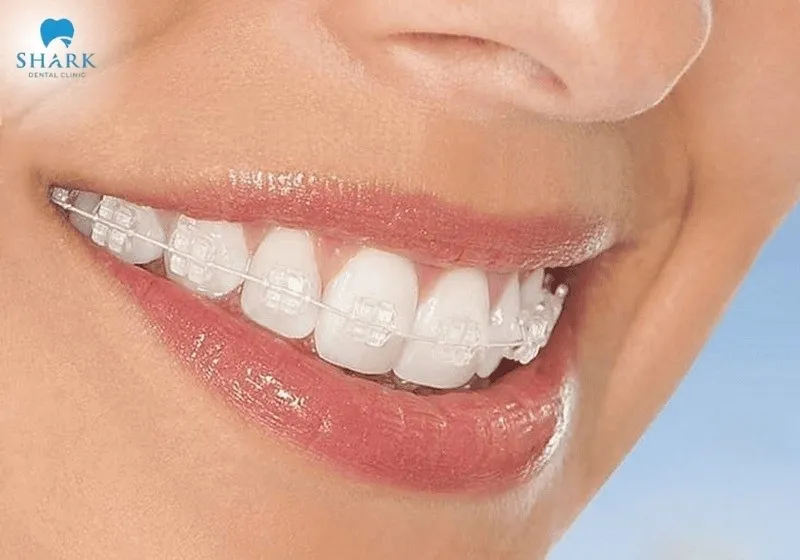
Ceramic braces for patients with crowns
Ceramic braces are designed to match the color of natural teeth, helping to maintain aesthetics throughout treatment. They function similarly to metal braces but tend to cause less irritation. This option is suitable for patients with porcelain crowns who prefer a more discreet appearance during orthodontic treatment.
Clear aligners as an alternative to bracket bonding
Clear aligners are an excellent choice for individuals with dental crowns because they do not require brackets or wires to be bonded to the tooth surface. The aligner trays are custom-made to fit the dental arch, allowing for gentle tooth movement while minimizing the risk of loosening crowns and ensuring a high level of aesthetics.
Possible complications with braces and dental restorations
Orthodontic treatment on crowned teeth can lead to various complications if not carefully examined or performed using proper techniques. These complications include:
- Cracked or fractured crowns: The continuous force applied by braces, brackets, and archwires to move teeth can directly impact the crown, making it more susceptible to cracking or breaking.
- Weakening of the natural tooth: Teeth that have been reduced in preparation for crowns are already weaker. Prolonged orthodontic force can further reduce their stability, potentially leading to looseness or even tooth loss.
- Decalcification and aesthetics: Wearing braces makes oral cleaning more challenging, allowing plaque to accumulate easily. This not only causes yellowing but can also lead to permanent white spots on teeth after braces if hygiene is neglected around the crown and bracket margins.
- Misaligned bite: As teeth move, the crown may lose its original fit. Additionally, friction between orthodontic appliances and the porcelain surface can cause slight wear, leading to gaps and bite imbalances.
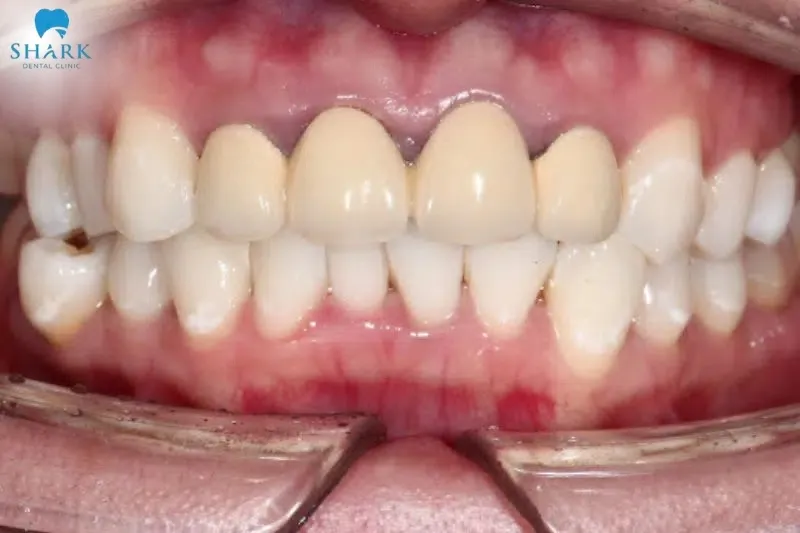
- Dark gum margins: During treatment, the repositioning of teeth may expose the cervical edge of the crown, revealing inner materials or the natural tooth structure beneath. This exposure can lead to darkened gum lines — a common concern often associated with black gum line around crowns. Such changes may negatively impact overall aesthetics.
How to prevent problems with braces and crowns
To minimize risks when undergoing orthodontic treatment with crowns, consider the following solutions:
- Choose a reputable dental clinic: Prioritize clinics that specialize in both orthodontics and prosthetics to ensure that correct techniques are applied, minimizing risks to porcelain crowns.
- Consult with your dentist: Visit a trusted clinic for a thorough examination of your teeth and crowns before starting braces. Your dentist will evaluate the capability for tooth movement and recommend the most suitable treatment plan.
- Select the appropriate Orthodontic Method: For crowned teeth, consider using lighter-force options like clear aligners to reduce the risk of crown loosening or detachment.
- Regular monitoring: Attend scheduled follow-up visits so that your dentist can check the force levels, bracket bonding, and promptly address any signs of loosening, wear, or discoloration of the crowns.
What special care do I need for braces with crowns?
If you have crowns on your teeth and are considering orthodontic treatment, it’s important to follow specific care instructions to ensure your treatment is effective and safe. Here are some guidelines:
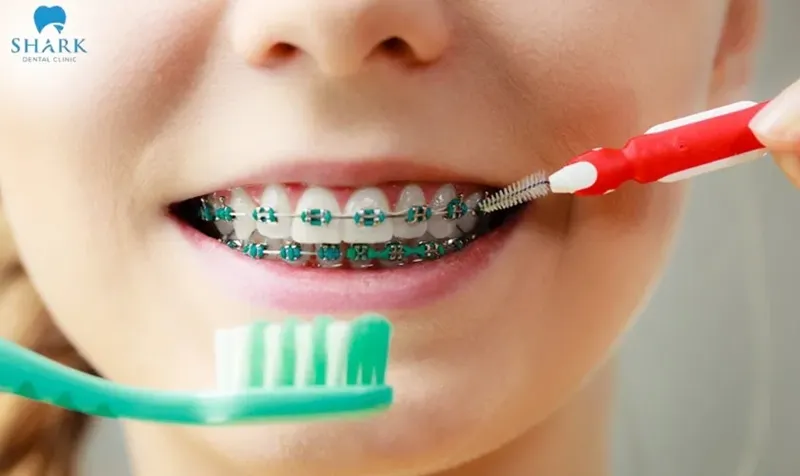
Maintain excellent oral hygiene
Proper cleaning is crucial for crowned teeth, especially when you have braces. Follow these steps:
- Brushing: Brush at least twice a day with a soft-bristled toothbrush and toothpaste designed for porcelain crowns.
- Use a water flosser: A water flosser can help remove food particles in tight areas. The water pressure effectively cleans debris from hard-to-reach spots.
- Antibacterial mouthwash: After brushing, rinse with an antibacterial mouthwash to reduce plaque and maintain fresh breath.
Follow a healthy diet
A balanced diet plays a significant role in protecting your crowns and supporting stable tooth movement during treatment. Consider the following:
- Choose soft foods: Opt for softer foods to minimize pressure on crowns and brackets.
- Limit hard, chewy, and crunchy foods: These can chip crowns and dislodge brackets, so it’s best to avoid them.
- Avoid extreme temperatures: Steer clear of foods that are too hot or too cold, as sudden temperature changes can cause porcelain to expand slightly, leading to sensitivity.
- Reduce dark-colored beverages: Limit drinks like coffee to prevent discoloration of crowns.
- Increase nutrient-rich foods: Incorporate foods high in vitamins and minerals, such as vegetables, milk, and eggs, to support gum and jawbone health during orthodontic treatment.
>>>See more: Can you chew gum with a crown?
Eliminate harmful habits
Certain habits can damage your appliance or impact your oral health:
- Avoid biting hard objects: Refrain from using crowned teeth to bite or tear hard items like pen caps or packaging to reduce pressure on crowns and brackets.
- Wear a nightguard: If you grind your teeth at night, using a nightguard can protect both your crowns and your orthodontic appliances.
Attend regular check-ups
Keep all scheduled appointments to allow your dentist to adjust the orthodontic force appropriately for crowned teeth. If you experience prolonged sensitivity, loose brackets, or notice any movement in the crown, inform your dentist promptly for timely management.
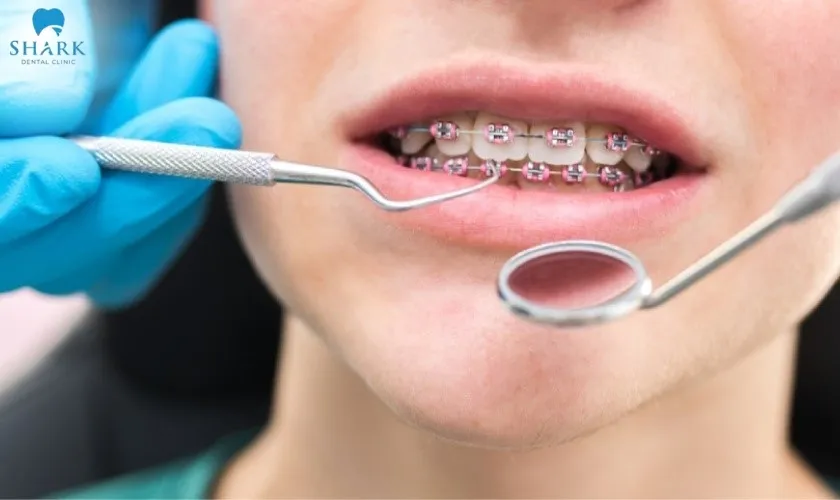
Many clients often wonder: “Can you get braces with a crown“? At Shark Dental Clinic, we provide detailed answers to these questions. Before starting treatment, it’s essential to carefully consider your options and consult with specialists at reputable dental clinics to develop the safest and most suitable plan for your specific dental condition.
>>> See more: Can you get Invisalign with a crown?