


Do all root canals need a crown? This is a concern that many patients have after completing root canal treatment. When the tooth has lost its pulp, its structure becomes more fragile, more prone to chipping, and its chewing function gradually decreases over time. However, not every case requires a dental crown.
To understand this issue clearly and make the most suitable choice for your oral health, let Shark Dental Clinic guide you through the detailed information in the article below!
Do all root canals need a crown?
Not every tooth that has undergone root canal treatment needs a crown. Crowns are typically recommended for teeth that are significantly weakened, have lost a substantial amount of structure, or are at a high risk of cracking during chewing. In these cases, a porcelain crown helps increase strength and protects the tooth in the long term.
Conversely, if a tooth has only minor damage and retains a stable structure—without significantly affecting its function—your dentist may allow you to keep the tooth without additional intervention.
For a personalized assessment, it’s best to visit a reputable dental clinic. There, the dentist will conduct a thorough examination and evaluate the durability of the remaining tooth structure before recommending the most appropriate treatment option.
>>> See more: Can root canals cause cancer?
When should you get porcelain crowns after root canal treatment?
Dentists recommend placing a crown after root canal treatment in certain situations to protect the natural tooth and ensure proper chewing function:
- Severe decay leading to pulp inflammation: When a deep cavity allows bacteria to reach the pulp, the tooth is often severely damaged. Post-root canal, the tooth becomes brittle and more prone to fractures. A porcelain crown offers full coverage, prevents breakage, and reduces the risk of reinfection.
- Chipped crowns or fractured teeth due to trauma: Strong impacts or habits, like biting hard foods, can result in the loss of part of a tooth’s structure. A crown helps restore the original shape, enhances aesthetics, and protects the remaining tooth tissue.
- Non-vital (dead) teeth: When the pulp has died (necrosed), the tooth loses sensation and becomes susceptible to cracking. A porcelain crown stabilizes the tooth, increases its strength, and improves long-term chewing comfort.
- Excessive root wear: If the root area is significantly worn down, contact between the tooth and the gum diminishes, leading to sensitivity and gaps. A crown can cover the tooth and prevent further damage.
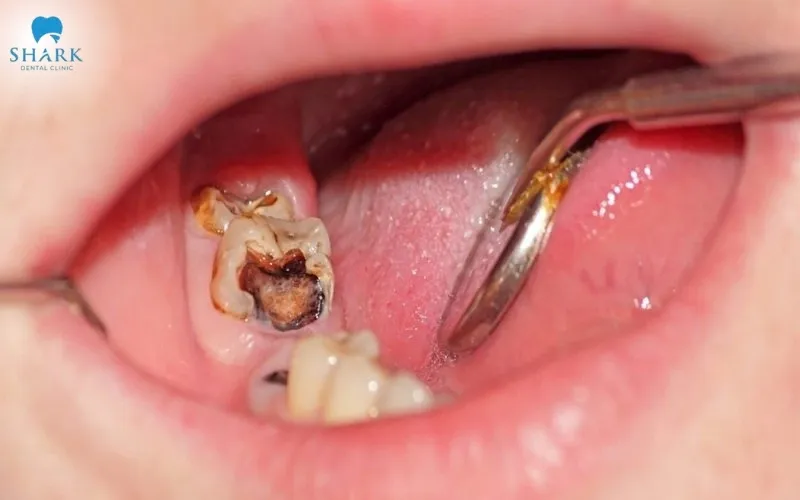
Cases where crowns are not needed after root canal treatment
Crowns are not always required after root canal treatment. For instance:
- Strong tooth structure: If the remaining tooth walls are thick, stable, and not at risk of cracking, a crown may not be necessary.
- Teeth in low-stress positions: Teeth that do not endure heavy chewing forces—such as certain front teeth—may require only a filling rather than a crown.
- Mild damage: Teeth with small cavities or minimal pulp involvement, which do not significantly reduce structure, can often be restored with specialized filling materials.
- No cracks or fracture risk: If the tooth remains stable after treatment, without cracks or significant wear, the dentist may suggest monitoring instead of placing a crown.
- Successfully restored with a filling: If the tooth has been filled properly, functions well during chewing, and shows no sensitivity or weakness, a crown might not be needed at this time.
Through the information shared by Shark Dental Clinic, we hope this article has helped you find the answer to the question “Do all root canals need a crown?”To maintain healthy teeth and stable chewing function, it’s essential to visit a reputable dental clinic for a thorough examination and personalized consultation. Timely restoration not only protects your natural teeth but also ensures long-lasting results for your smile.
>>> See more: How long do porcelain crowns last?