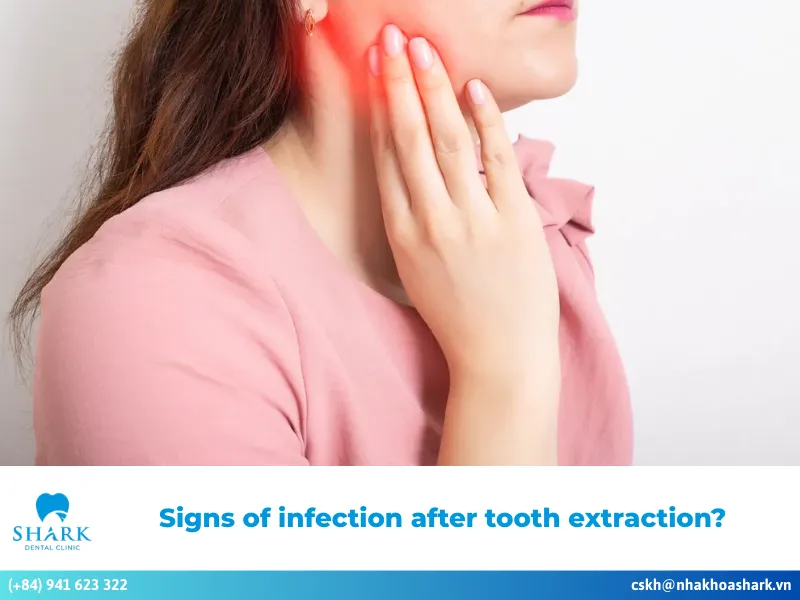



Exercising too soon after tooth extraction may dislodge the blood clot and the delicate healing tissue (often noticed by concerned patients as the white stuff after tooth extraction), leading to serious complications. So, how long should you wait to exercise after tooth extraction to ensure safety and optimal recovery? Let’s explore the recommended timelines and helpful tips to safely return to your workout routine without affecting the healing process in the article shared by Shark Dental Clinic.
What is the white stuff after tooth extraction?
After a tooth extraction, many patients notice a white or pale yellow layer forming over the socket. This appearance is usually part of the normal healing process and is associated with fibrin clot maturation and early granulation tissue formation.
This membrane serves a protective role during the early healing stage. It shields the soft tissue and underlying bone from bacterial invasion in the oral cavity while stabilizing the blood clot, which is crucial for proper tissue regeneration. If the white layer is not accompanied by symptoms such as increased swelling, prolonged bleeding, or severe pain, it is usually a positive sign that the socket is healing properly.
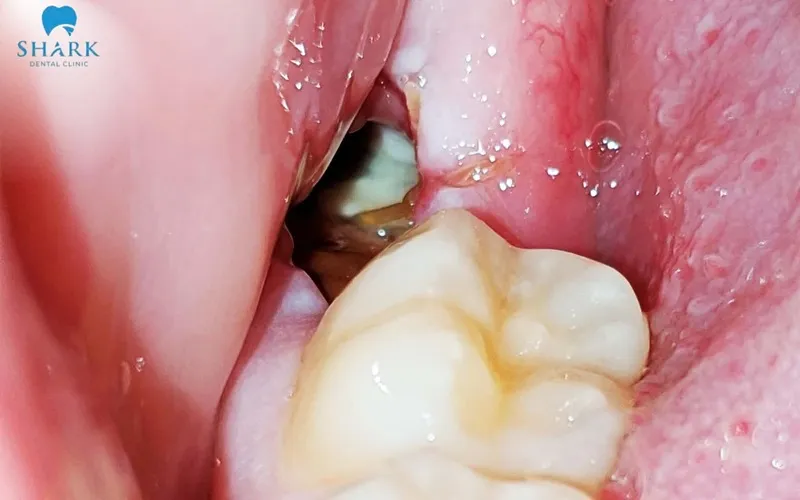
Why white stuff appears during tooth extraction healing
The appearance of the white substance after tooth extraction is commonly due to five main factors:
- Blood clot transformation: As the blood clot matures and stabilizes, it gradually changes to a creamy white or pale yellow color. This is a necessary transitional step for the clot to develop into new tissue that fills the wound.
- White blood cell response: A significant number of white blood cells gather at the socket to fight bacteria, which can make the wound surface appear lighter than the surrounding gum tissue.
- Gum tissue regeneration: As the wound begins to close, the body produces new gum tissue. In the early stages, this immature tissue often appears white before gradually turning pink and blending with the surrounding oral mucosa.
- Dry socket complication: If the blood clot becomes dislodged or fails to form, the whitish-gray alveolar bone may be exposed. This condition can cause severe pain radiating to the temple and requires immediate dental treatment.
- Food debris trapped in the socket: Food particles, such as rice, bread crumbs, or milk residue, may accumulate in the socket due to improper oral hygiene, creating uneven white patches.
- Infection: The most serious situation occurs when the white substance is actually pus. If accompanied by a strong odor, swelling, and fever, you should return to the dental clinic immediately for treatment. At that point, your doctor will likely explain why should you use Amoxicillin after tooth extraction? to clear the infection.
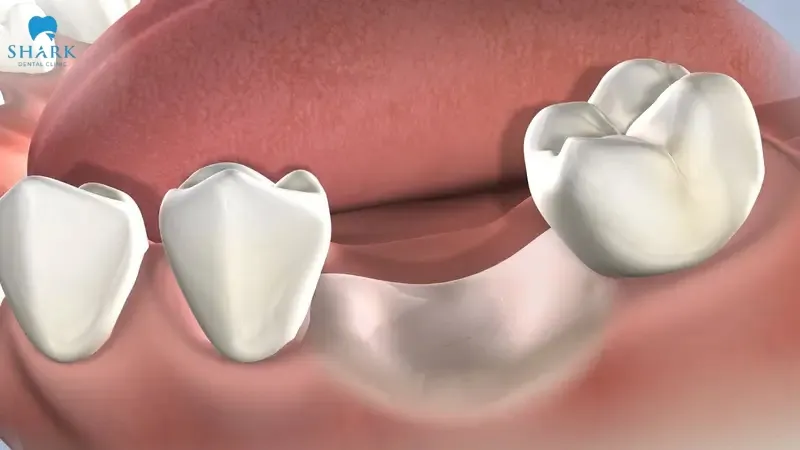
Normal healing signs vs abnormal white material
To avoid confusing the normal white substance after tooth extraction with potential complications, look for the following distinguishing features:
| NORMAL HEALING SIGNS | SIGNS OF COMPLICATIONS |
| – Mild discomfort that gradually decreases each day.
– A stable white or pale yellow layer covering the socket without unusual changes. – No unpleasant odor in the mouth. – The gum tissue does not become increasingly swollen or painful. |
– Sharp pain or significantly worsening pain 2–3 days after extraction.
– The socket appears empty, as if the blood clot has dislodged. – A persistent bad taste in mouth after tooth extraction, or an unpleasant odor. – Gums become more swollen and red instead of improving. |
Granulation tissue and blood clot formation explained
After a tooth is extracted, the body immediately activates its natural healing mechanisms at the injury site. Within the first 24 hours, a blood clot forms to cover the socket, protecting the underlying bone and nerves while creating conditions for new tissue development.
Next, the body begins producing granulation tissue—a type of immature connective tissue rich in capillaries and collagen fibers. Granulation tissue often appears creamy white or light pink and gradually covers the wound surface, replacing the initial blood clot. This is a crucial stage for gum regeneration and socket healing.
In simple terms, the blood clot acts as a temporary protective layer in the early phase, while granulation tissue serves as a transitional stage that allows the socket to heal completely and return to a stable condition.
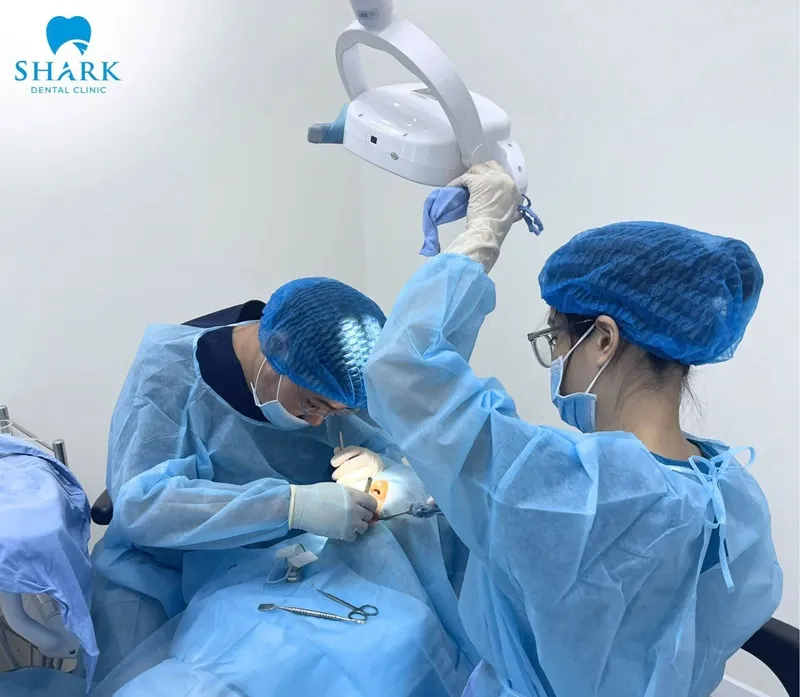
When white stuff after tooth extraction is not normal?
The white layer that appears in the socket is typically a natural sign of healing. However, it may also indicate complications such as infection or dry socket if accompanied by any of the following abnormal symptoms:
- Continuous bleeding that is difficult to control, even after properly biting on gauze.
- Severe, persistent pain that shows no signs of improvement.
- Gum swelling that worsens after 2–3 days instead of decreasing.
- Systemic symptoms, including a high fever or prolonged numbness.
If you notice any of these signs, it is important to visit a dental clinic as soon as possible for a timely examination and treatment to avoid complications that could affect your recovery process.
How to care for a tooth extraction site with white tissue
Here are some care instructions to follow when white tissue appears after a tooth extraction. These tips can help the wound heal faster and minimize complications:
- Maintain proper oral hygiene: After the first 24 hours, gently rinse your mouth with warm salt water. Avoid vigorous rinsing or forceful spitting, as this may dislodge the protective white layer.
- Follow an appropriate diet: Focus on soft, cool, and liquid foods such as porridge, soup, and smoothies. Avoid chewing directly on the extraction site to prevent tearing the granulation tissue.
- Avoid smoking and using straws: Refrain from smoking or using straws after extraction, as suction pressure can dislodge the blood clot, increasing the risk of infection and dry socket.
- Rest during the first 48 hours: The first two days are crucial for stabilizing the blood clot. Get plenty of rest, limit strenuous activities, and closely follow your dentist’s instructions.
If you are active, be sure to find out how long should you wait to exercise after tooth extraction before hitting the gym.

When to contact a dentist about white stuff after tooth extraction?
You should contact your dentist if you experience any of the following signs that may indicate complications requiring early evaluation:
- Pain that worsens after 2–3 days, especially severe pain radiating to the ear, eye, or temple, or a persistent headache after tooth extraction.
- The socket appears empty or the blood clot is no longer visible, accompanied by deep sensitivity.
- Increased swelling instead of improvement, with red and tight gum tissue.
- Prolonged or uncontrolled bleeding.
- Persistent bad odor, unusual taste, or abnormal discharge.
- Fever or general fatigue after the extraction.

Through the information shared by Shark Dental Clinic, it can be seen that in most cases, white stuff after tooth extraction is a sign of natural healing associated with granulation tissue formation and gum regeneration. However, if it is accompanied by severe pain, significant swelling, or foul odor, you should seek examination promptly. Proper monitoring and care will help the extraction site heal more quickly and safely, giving you peace of mind throughout your recovery.