

Stitches after tooth extraction are an important part of the recovery process because they help protect the treated area and support faster, more stable healing. They are often used to assist the gum tissue in closing properly after the tooth has been removed. However, not everyone clearly understands how to care for the extraction site in a safe way or how to achieve the best healing outcome afterward. To better understand this condition and the proper aftercare steps, let Shark Dental Clinic help you explore the detailed information below.
Why did I get stitches after a tooth extraction?
After a tooth is removed, the empty socket and the surrounding gum tissue need time to heal, recover, and regenerate properly. Placing stitches after tooth extraction helps bring the gum edges closer together, creating better conditions for the extraction site to close in the correct way. As a result, the healing process becomes more stable and organized, while also helping reduce prolonged bleeding and preventing the soft tissue from shifting during the early stage of recovery.
In addition, stitches after tooth extraction play an important role in protecting the blood clot after tooth extraction. This blood clot acts as a natural protective layer that covers the bone and nerves underneath. When the clot remains secure and undisturbed, the risk of complications such as dry socket can be significantly reduced. This allows the wound to heal faster, more comfortably, and with fewer post-extraction problems.
In many cases, the dentist will recommend suturing when the procedure involves greater soft tissue intervention, such as when the gum must be opened more widely or when the tissue needs to be reshaped and repaired. In these situations, using stitches after tooth extraction is an important step to improve safety and support the most effective healing outcome possible.
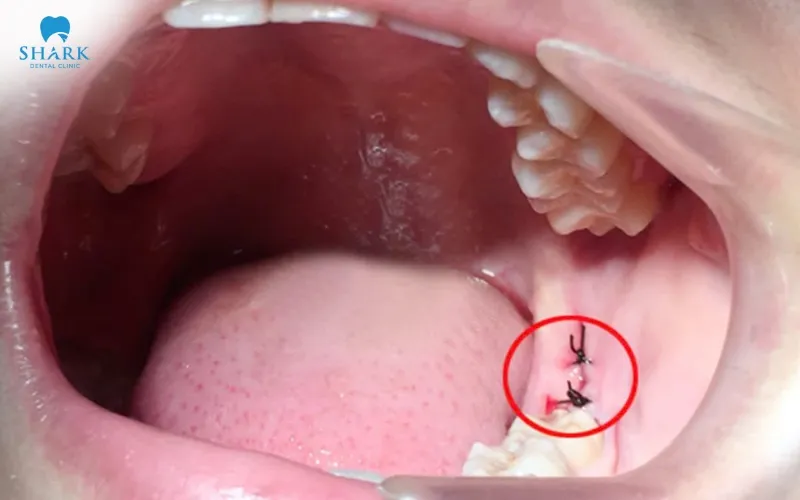
Types of stitches used in tooth extractions
After a tooth extraction, depending on the level of treatment performed and the condition of the gum tissue, the dentist will choose the most appropriate type of suture to support healing. Today, there are two common types of stitches after tooth extraction frequently used in dentistry:
Absorbable stitches
This type of suture is often preferred by many dentists because of its convenience, comfort, and safety. Absorbable stitches after tooth extraction are made from materials that naturally break down in the body over time, allowing the stitches to dissolve gradually without needing to be manually removed.
Typically, the stitches begin to loosen after several days and may disappear completely within about 1 to 2 weeks, depending on each person’s healing response, oral condition, and tissue recovery speed. Because of this, patients usually do not need to return for stitch removal, which helps save time and makes the recovery period feel easier and more comfortable.
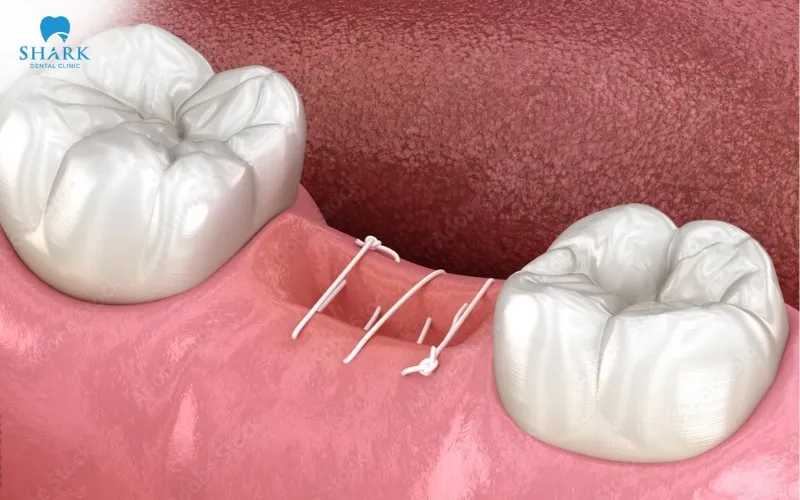
Non-absorbable stitches
In some situations where stronger support and greater wound stability are required, the dentist may choose non-absorbable stitches after tooth extraction, which are commonly made from materials such as silk or nylon. These sutures provide good durability and help keep the wound secure throughout the tissue healing process.
However, once the gum has healed sufficiently, the patient will need to return to the dental clinic for stitch removal according to the scheduled follow-up appointment, usually within 7 to 14 days. The removal process is generally quick, gentle, and does not cause significant discomfort for most patients.
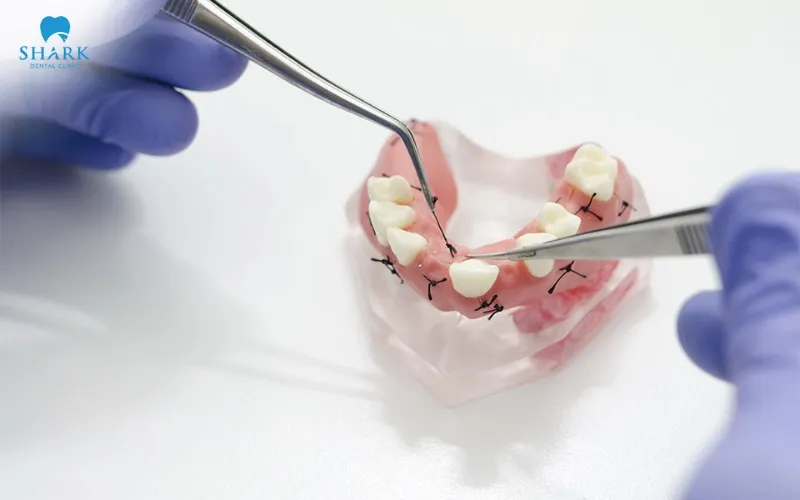
Aftercare for your stitches after tooth extraction
After a tooth has been removed and the wound has been sutured, proper care plays an important role in helping the area heal quickly and reducing the risk of complications. Taking the right steps during recovery can protect the extraction site, keep the stitches stable, and make the healing process more comfortable. Below are important guidelines you should follow after receiving stitches from a tooth extraction.
Maintain good oral hygiene
You should continue brushing your teeth twice a day, but it is important to do so gently and avoid brushing directly over the extraction area during the first few days. Careful cleaning helps maintain oral hygiene without placing unnecessary pressure on the healing tissue. After the first 24 hours, you may perform a gentle salt water rinse after tooth extraction. This can help keep the mouth clean, support antibacterial protection, soothe the tissues, and encourage better healing. Keeping the mouth clean is one of the most important parts of a smooth recovery.
Avoid disturbing the stitches
During the healing period, you should avoid touching the stitched area with your tongue, fingers, or any objects. Repeated contact or pressure can cause the stitches to loosen, shift, or come out too early. This may interrupt the healing process and increase the chance of irritation or infection.
Be careful with your diet
For the first few days after extraction, it is best to choose soft and easy-to-swallow foods such as porridge, soup, yogurt, mashed potatoes, or eggs. These foods are gentle on the mouth and reduce stress on the treated area. At the same time, you should avoid hard, crunchy, sticky, or overly chewy foods, as they may place pressure on the wound and affect the healing process.

>>> See more: What are the best foods after tooth extraction?
When to expect the stitches to dissolve?
In general, this type of stitch often begins to break down during the first week after the procedure. The time it takes for dissolvable stitches after tooth extraction to dissolve is not exactly the same for every person. It usually depends on individual healing ability, body response, and the recovery speed of the gum tissue.
In some cases, the stitches may loosen on their own and fall out, which you may easily notice. In other cases, patients may barely realize the process is happening because the material gradually dissolves naturally inside the mouth over time. Both situations can be completely normal, depending on how the tissue heals and how the sutures respond in the oral environment.
For cases where non-dissolvable stitches after tooth extraction are used, the stitches will not disappear on their own. Instead, they remain in place until the gums have healed with enough stability. At that stage, the dentist will schedule a follow-up appointment to remove them, which is commonly done within 7 to 14 days after the extraction. You should always follow your dentist’s instructions and attend the scheduled recheck visit to support the best healing outcome possible.
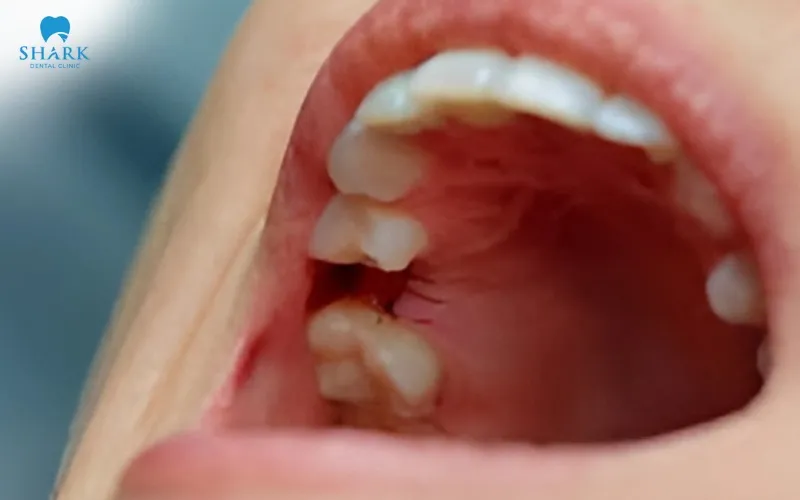
Overall, stitches after tooth extraction often play an important role in protecting the blood clot that forms at the extraction site. This clot serves as a natural protective barrier that covers the underlying bone and nerves, helping reduce the risk of complications such as dry socket. With the information shared by Shark Dental Clinic, we hope you now have a clearer understanding of this recovery stage and more useful knowledge for protecting and caring for your oral health in the safest and most effective way possible.