

Is a kids tooth extraction truly necessary? What exactly does the procedure involve, and how can parents support their child in recovering quickly and comfortably after the extraction? These are among the most common concerns and questions that many parents frequently have. The article below provides detailed, useful, and easy-to-understand information, helping parents thoroughly address and gain a clearer understanding of all the concerns mentioned above!
When is tooth extraction necessary for children?
Tooth extraction for kids is typically recommended when a child presents with one of the following conditions:
- Baby teeth that do not fall out naturally: At a certain stage of development, a child’s primary teeth will become loose and fall out on their own to make room for permanent teeth. However, if the baby teeth remain firmly in place and do not shed naturally, tooth extraction for kids may need to be considered as a supportive solution.
- Severe tooth decay: Children with advanced dental caries, where the tooth crown or root structure has been significantly damaged or destroyed, may require a tooth extraction to prevent the spread of infection to adjacent teeth.
- Chipped or fractured teeth: In cases where a tooth is chipped, cracked, or broken due to trauma or impact, extraction may also be considered. In some situations, the broken edges may rub against soft tissues, potentially causing gum irritation or bleeding.
- Overcrowded teeth: In certain cases where teeth grow too closely together and there is insufficient space for permanent teeth to erupt properly, dentists may recommend tooth extraction for kids to create adequate spacing and support proper dental alignment.
How to know if your child might need an extraction?
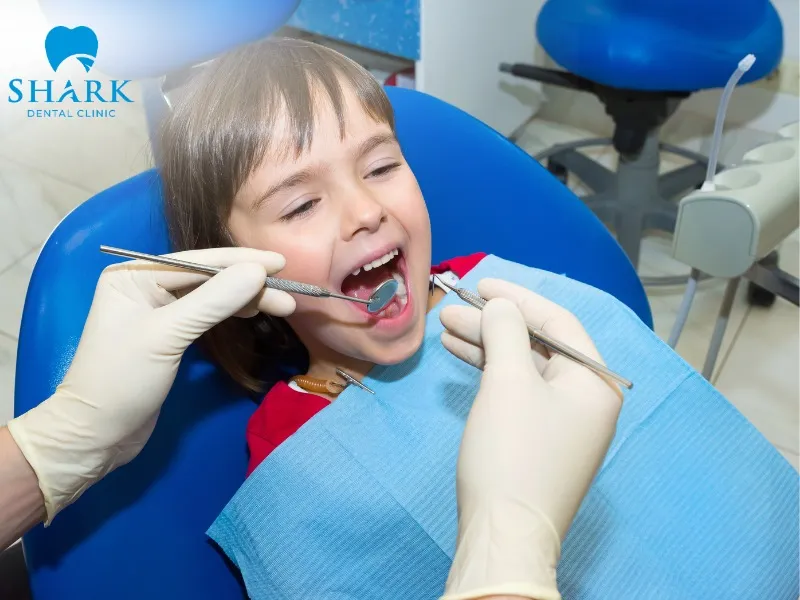
There are several common signs that can help parents recognize when kids tooth extraction may be necessary:
- Shark teeth (double row of teeth): If parents notice new teeth erupting either behind or in front of the gums while the baby teeth are still firmly in place, it is advisable to take the child for a dental examination. In such cases, tooth extraction for kids may be required to remove the retained baby teeth.
- Loose teeth that do not fall out: When a tooth becomes loose but does not naturally fall out, especially when accompanied by swollen, red gums or tooth pain, it may indicate the need for professional evaluation and possible kids tooth extraction.
- Persistent tooth pain: Children who experience prolonged toothache, frequently refuse to eat, or become irritable and fussy should be taken for timely dental check-ups. These symptoms may signal underlying issues that require tooth extraction for kids.
- Severely broken teeth: If a child has a tooth with a large fracture or extensive damage, this is also a warning sign that dental examination is necessary, and the extraction of the tooth may be considered as an appropriate treatment option.

What to expect during a kids tooth extraction?
Tooth extraction for kids is a necessary dental procedure in certain situations, but it must always be carried out with great care and caution to ensure the child’s overall safety, comfort, and oral health throughout the process.
Evaluation and X-rays
Before performing tooth extraction for kids, the dentist will carefully examine the child’s oral condition to assess overall dental health. This includes determining the direction of permanent tooth eruption, evaluating the level of root resorption of the baby tooth, and checking surrounding gum and bone conditions.
If necessary, X-rays may be taken to provide a clearer view of the underlying structures. At the same time, any inflamed or infected areas will be treated in advance to reduce the risk of complications or infection spread during kids tooth extraction.
Numbing and comfort
Children are particularly sensitive during dental procedures. Therefore, before and during the kid’s tooth extraction, the dentist will apply local anesthesia to numb the treatment area and minimize discomfort.
In addition, creating a calm and reassuring environment is important to help the child feel more relaxed. This helps reduce fear and encourages better cooperation throughout the tooth extraction for kids process.
Tooth removal
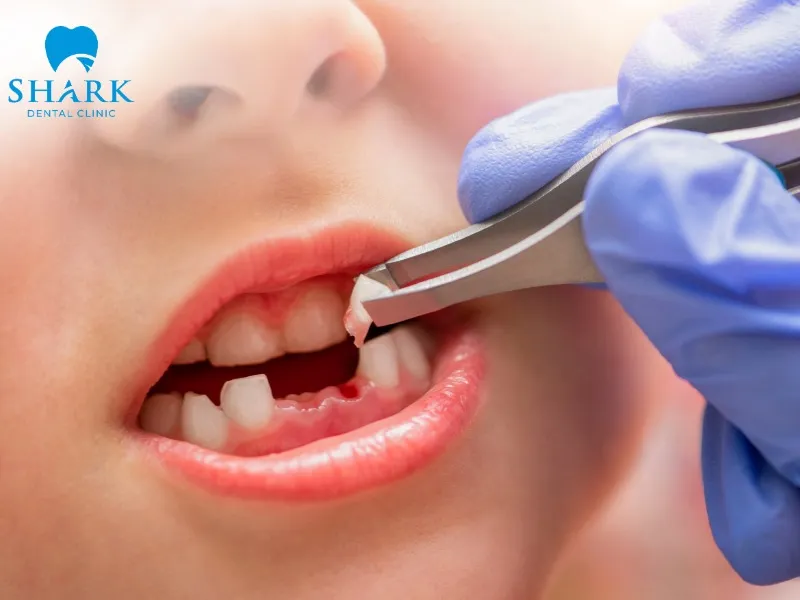
Once the area is fully numbed, the dentist will proceed with kids tooth extraction using sterile dental instruments. A small, precise incision may be made if needed to assist in removing the tooth and any remaining root fragments.
This step is carried out carefully and efficiently to ensure safety, while minimizing discomfort and avoiding unnecessary impact on surrounding tissues during tooth extraction for kids.
Post-procedure care
After the tooth is extracted, the dentist will have the child bite down firmly on a cotton pad for about 30 minutes to help form a blood clot. After that, parents will be given instructions on how to care for the child at home, including taking prescribed medications, maintaining oral hygiene, and providing appropriate nutrition.
What is the procedure for baby teeth extraction?
The process of kids’ tooth extraction must follow a standardized and carefully controlled procedure to ensure both effectiveness and safety, in accordance with healthcare guidelines:
- Step 1: General examination and consultation: The dentist performs a comprehensive oral health check to assess the level of tooth looseness, detect any infections, and evaluate overall dental conditions. Parents are then advised on the appropriate extraction method, as well as the number of teeth that may need to be removed to achieve optimal results while maintaining the child’s oral health.
- Step 2: Cleaning, disinfection, and anesthesia: After the initial assessment, the child’s oral cavity is thoroughly cleaned and disinfected to eliminate bacteria. Depending on the specific case, local anesthesia will be administered, either through injection or topical application, to reduce discomfort and ensure a more comfortable tooth extraction for kids experience.
- Step 3: Tooth extraction procedure: The dentist proceeds with the child’s tooth extraction, removing damaged, decayed, or infected teeth using sterile instruments. This step requires precise technique, careful handling, and efficient execution to avoid unnecessary injury to the surrounding soft tissues.
- Step 4: Bleeding control and post-extraction monitoring: Finally, gauze is placed to control bleeding, and the child’s condition is closely monitored after the procedure. In some cases, medications such as pain relievers or anti-inflammatory drugs may be prescribed to reduce discomfort and prevent infection following tooth extraction for kids.

Recovery tips for kids tooth extraction
After kids tooth extraction, parents should follow some important tips below:
- Bleeding control time: After the extraction, parents should ensure that the child bites firmly on gauze for at least 30 minutes. This is an extremely important step, as it helps stabilize the blood clot, prevents prolonged bleeding, and reduces the risk of infection after kids tooth extraction.
- Diet and nutrition: Within the first 1–2 days after tooth extraction for kids, children should be given soft, easy-to-chew, and easy-to-swallow foods such as porridge, soup, broth, or non-cold yogurt. Parents should strictly avoid foods that are too hot, too hard, chewy, or contain small particles that may irritate the extraction site.
- Cold compress: If the cheek area around the extraction site becomes swollen, parents can apply a cold compress. This is a simple and effective method to help reduce swelling and discomfort following kids tooth extraction, and it can be easily done at home.
- Oral hygiene: Parents should guide children to brush their teeth 2–3 times per day using a small, soft-bristled toothbrush. Care should be taken to avoid direct contact with the extraction site to prevent irritation.
- Monitoring unusual signs: Parents need to carefully observe any abnormal symptoms after kids tooth extraction. If the child experiences high fever, severe pain, loss of appetite, or unusual discomfort, they should contact a dentist promptly for timely examination and appropriate management.
>>> See more: What are the best foods after tooth extraction?

Will tooth extraction for kids too early affect adult teeth?
Extracting baby teeth too early can have an impact on the development and eruption of permanent teeth. When a primary tooth is removed prematurely, the adjacent teeth may gradually tilt or shift into the empty space. This can reduce the space available for permanent teeth, increasing the risk of misalignment, improper eruption, or even impacted teeth, which may affect the overall aesthetics of the dental arch.
In addition, the absence of teeth over a prolonged period can reduce mechanical stimulation to the jawbone. In some cases, this may influence a child’s ability to chew effectively or even affect speech development. Therefore, when kids tooth extraction is necessary at an early stage, dentists may recommend the use of a space maintainer to preserve proper spacing for future permanent teeth.

Hopefully, this information helps parents better understand kids tooth extraction, including when it is needed and how to properly care for their child afterward. To support a healthy, well-aligned smile in the future, parents should choose a reputable dental clinic with highly qualified and experienced dentists.