
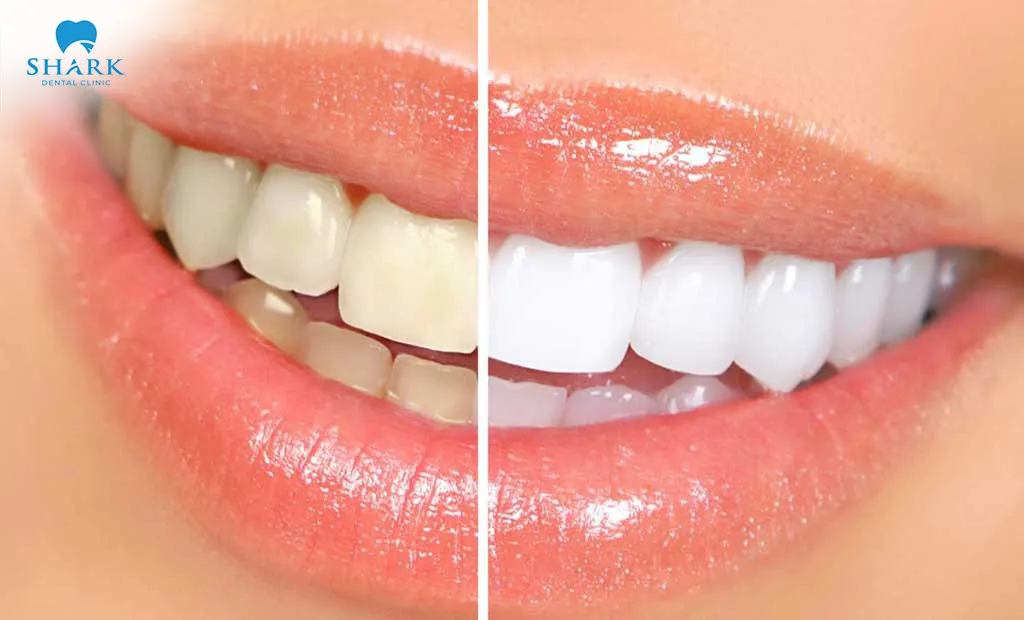
Teeth whitening is a cosmetic dental procedure that removes stains and discoloration from the tooth surface using modern whitening techniques. Many people considering this treatment often ask, “Can teeth whitening cause gum recession?” and wonder whether there are any effects on their oral health after the procedure. So, can tooth whitening damage your gums, and what should you expect after treatment? Explore the insights and recommendations shared by the dental experts at Shark Dental Clinic in the article below.
Can teeth whitening cause gum recession?
According to dental specialists, teeth whitening may cause temporary gum irritation or mild chemical burns to the gum tissue, which can sometimes create the sensation that the gums have receded. This occurs because high-concentration peroxide compounds used in whitening treatments may irritate the soft tissues when they come into contact with the gums, leading to swelling, tenderness, and discomfort.
In some cases, teeth whitening may contribute to gum problems when the procedure is performed at unreliable facilities or when whitening agents with excessively high concentrations are used without following proper safety guidelines and professional standards.
What is gum recession and why it happens?
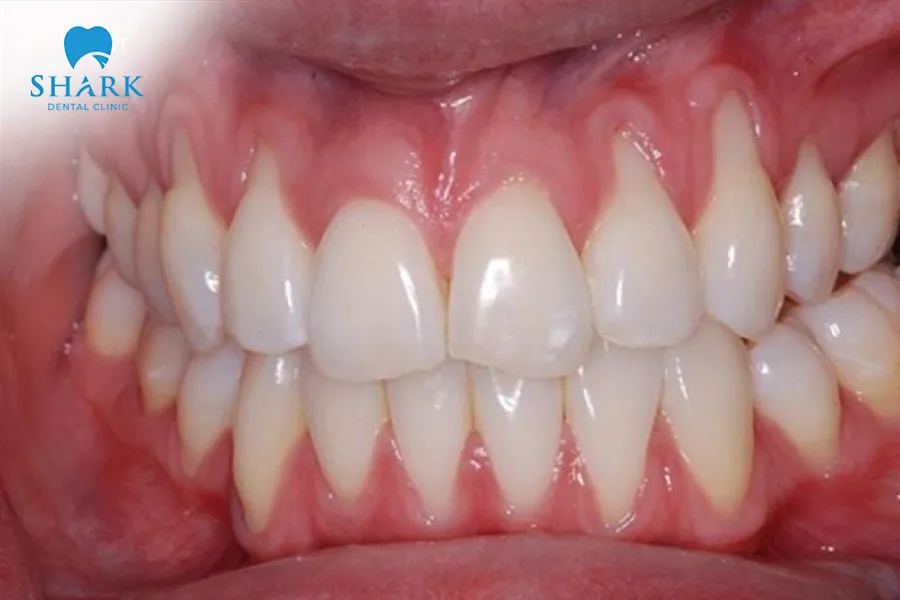
Gum recession is a condition in which the gum tissue surrounding the teeth gradually shrinks or pulls away from the tooth surface, exposing more of the tooth root. This condition can develop for a variety of reasons, including improper oral hygiene practices, hormonal changes, dental trauma, oral infections, and other contributing factors that affect gum health.
In most cases, gum recession is accompanied by several noticeable signs and symptoms, including:
- Swollen gums accompanied by discomfort or aching pain after teeth whitening.
- Persistent bad breath, even when oral hygiene is maintained carefully.
- Teeth that appear loose or show increased exposure of the tooth roots.
- Gum tissue that becomes swollen, painful, darker in color, or shows signs of inflammation.
- Exposed tooth roots that may appear off-white, yellowish, or slightly darkened.
- Increased tooth sensitivity and discomfort when pressure is applied to the affected teeth.
Common causes of gum recession beyond whitening
There are many different factors that can contribute to gum recession, and some of the most common causes include the following:
- Harmful bacteria: Poor oral hygiene can lead to the buildup of plaque and harmful bacteria around the teeth and gums. Over time, the gums may become inflamed and infected, increasing the risk of periodontal disease, which is one of the leading causes of gum recession.
- Improper oral hygiene practices: Brushing your teeth too aggressively or using dental floss incorrectly can gradually wear down tooth enamel and create excessive friction against the gum tissue. Over time, this repeated irritation may contribute to gum recession.
- Genetic factors: In some cases, gum recession may be linked to genetics. Individuals who inherit thinner gum tissue from their parents often have a naturally higher risk of developing receding gums compared to others.
- Harmful oral habits: Certain habits, such as teeth grinding or excessive clenching, can place continuous pressure on the teeth and supporting structures. This ongoing stress may affect the gums, contribute to tooth misalignment, and increase the likelihood of gum recession.
- Hormonal changes: Hormonal fluctuations during pregnancy and after childbirth can make the gums more sensitive and susceptible to inflammation. As a result, women may be at a greater risk of developing gum-related conditions that can contribute to gum recession.
- Gum tissue trauma: External forces such as accidents, injuries, or impacts to the mouth can damage the gum tissue and supporting structures, potentially causing the gums to recede and leading to additional oral health concerns.
Signs of gum damage after teeth whitening
There are several signs that may indicate gum tissue damage or irritation following a teeth whitening procedure, including:
- Pain and discomfort: One of the most noticeable signs of gum irritation after whitening is a burning sensation, soreness, or discomfort around the gumline and tooth roots. This symptom is often temporary but should be monitored closely.
- Changes in gum color: The gums may change color, appearing whitish, brownish, or developing small white spots on the surface. These changes are often associated with mild chemical irritation or superficial burns caused by contact with whitening agents.
- Inflammation and swelling: The gum tissue may become red, swollen, inflamed, and irritated after the whitening procedure, especially if the whitening gel comes into direct contact with the gums.
- In addition to these common symptoms: More severe gum damage after teeth whitening may involve stronger irritation, ulceration, or bleeding. Some individuals may experience persistent pain that does not improve over time, while severe cases can lead to infection, significant swelling, or the formation of pus around the affected area.
How to prevent gum irritation during whitening?
To minimize the risk of gum irritation and ensure a safe whitening experience, it is important to undergo treatment at a reputable dental clinic and follow proper safety protocols throughout the whitening process.
When whitening at a dental clinic?
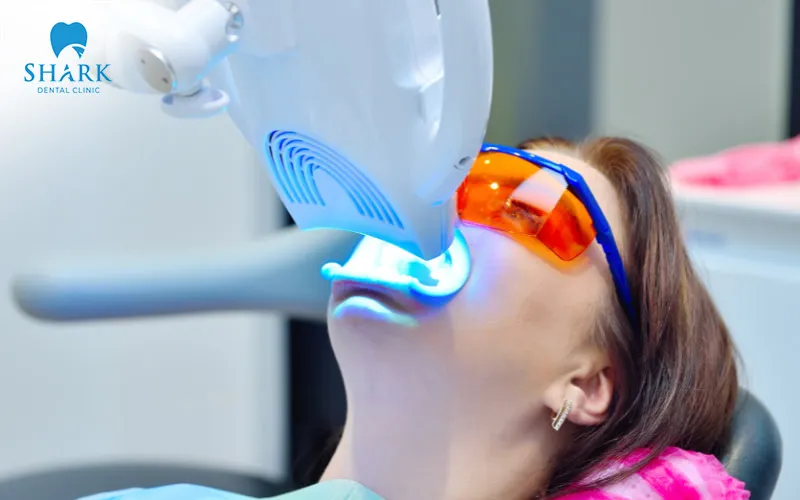
- Use protective gum gel: The dentist will apply a protective barrier gel over the gums and light-cure the protective barrier using a dental curing light. This creates a protective shield that helps prevent the whitening agent from coming into contact with the gums and surrounding soft tissues.
- Custom-fit whitening trays: The dentist will design whitening trays that fit precisely over your teeth. A properly fitted tray helps prevent the whitening gel from leaking onto the gums and reduces the risk of irritation or tissue damage.
When whitening teeth at home?
If you choose to whiten your teeth at home, it is important to follow several precautions to avoid affecting the teeth and gum tissues:
- Apply the whitening gel correctly: Use only a small amount of whitening gel for each tooth. Avoid placing the gel too close to the tray edges, as excess gel may overflow and come into contact with the gums.
- Remove excess gel: Use a damp cotton swab or a soft cloth to wipe away any excess whitening gel. This helps prevent the gel from spreading onto the gumline and causing irritation.
- Follow the recommended wearing time: Always wear the whitening tray for the amount of time instructed by your dentist. Do not extend the treatment duration or use higher-concentration whitening products unless specifically recommended by a dental professional.
Safe teeth whitening options for sensitive gums
To whiten your teeth safely when you have sensitive gums, it is important to follow the treatment methods and recommendations provided by a dental professional. In particular, you should consider using whitening products with lower concentrations, wearing professionally designed whitening trays, and prioritizing the use of protective gum gels to minimize irritation and protect the gum tissue.
Some important criteria to consider include:
- Choose the right whitening method: Choose a whitening method that is appropriate for sensitive gums. Professional laser teeth whitening or Plasma technology at a dental clinic helps protect the lips and gums, reducing the risk of irritation and unwanted effects on the teeth.
- Have your oral health evaluated first: Before whitening your teeth, you should have your gums checked to ensure there are no issues such as periodontal disease or gum inflammation that could affect the treatment process.
- Follow proper aftercare practices: Use toothpaste for sensitive teeth and fluoride products to help strengthen enamel and soothe the gums. Proper oral care can help reduce sensitivity and support gum health after whitening.
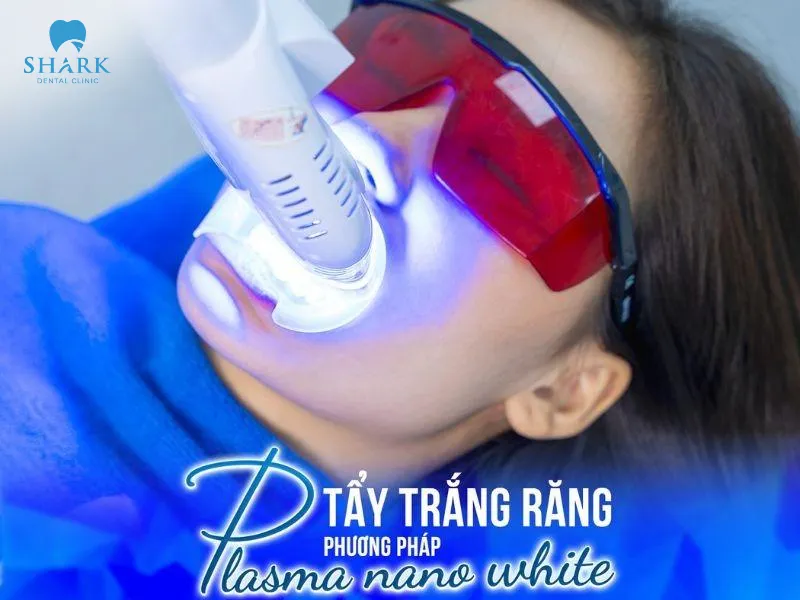
The question “Can teeth whitening cause gum recession?” has been thoroughly explained by dental specialists through the information presented above. For individuals who are concerned about gum recession or other gum-related complications after teeth whitening, choosing a reputable dental clinic and following appropriate safety protocols are essential steps. Shark Dental Clinic is considered a trusted choice by many patients, offering modern teeth whitening technologies designed with safety and quality standards in mind. Hopefully, the information shared in this article will help you better understand and make informed decisions about teeth whitening treatment, and minimize the risk of gum-related complications while achieving a brighter smile.