

The Piezotome ultrasonic surgical device is a technology that is applied in many modern dental procedures, particularly in cases that involve intervention on bone tissue. Thanks to its mechanism of operation, which relies on ultrasonic vibration combined with a specialized working tip, the device helps the dentist to carry out procedures in line with the treatment plan that has been set. In the article below, Shark Dental Clinic will help you gain a clearer understanding of this particular device.
What is the Piezotome ultrasonic surgical device?
The Piezotome ultrasonic surgical device is a piece of equipment that applies ultrasonic vibration technology, combined with specialized working tips, in order to act upon bone tissue during dental surgery. Unlike traditional rotary instruments, the Piezotome tip operates according to a mechanism of ultrasonic vibration, and it has been specifically designed for procedures carried out on mineralized tissue.
Depending on the type of working tip being used and on the operating mode that has been selected, the device can help the dentist to create a cutting line, to split or reshape bone tissue during the course of treatment. The decision to use Piezotome ultrasonic surgery is made by the dentist based on the type of surgery involved, the anatomical location concerned, and the specific condition of each individual patient.
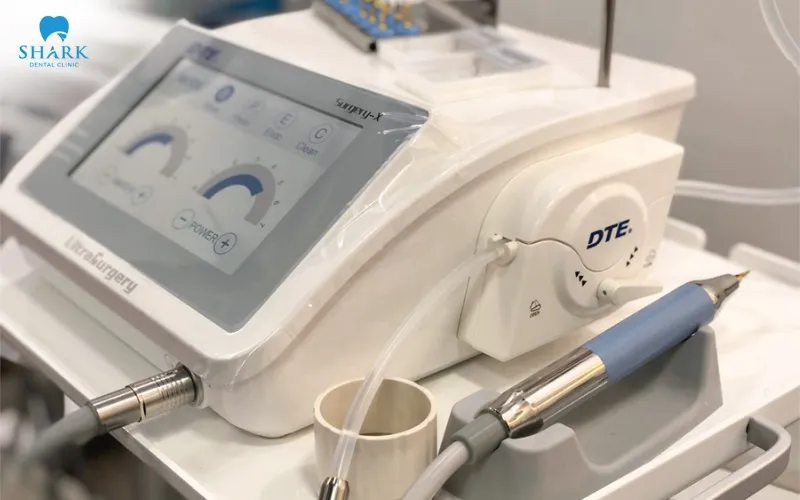
The operating principle of the Piezotome device
The Piezotome ultrasonic surgical device operates by transmitting ultrasonic vibration to a specialized working tip. When this tip comes into contact with bone tissue, it helps to create a cutting line in whichever direction is being controlled directly by the dentist.
During the course of the surgical procedure, an irrigation solution is used in order to help provide cooling, to remove any debris that is produced, to improve the dentist’s visibility, and to help control the temperature within the surgical area itself.
That being said, the Piezotome device does not automatically recognize anatomical structures, nor does it stop on its own in every situation. For this reason, it is still the dentist who directly controls the position, the amount of force applied, the duration of the procedure, and the choice of working tip that is suitable for each individual condition.
Applications of the Piezotome ultrasonic surgical device in dental treatment
The Piezotome ultrasonic surgical device is used in many dental procedures that involve intervention on bone tissue. Depending on the dentist’s indication and on each specific case, the device may be applied in the following situations.
- Extraction of wisdom teeth or impacted teeth.
- Sectioning of tooth roots.
- Opening or reshaping of bone.
- Sinus lifting and bone grafting.
- Alveolar ridge splitting or expansion.
- Preparation of the implant site in certain cases.
- Periodontal surgery that involves intervention on bone tissue.
That said, not every case of tooth extraction or implant placement requires the use of the Piezotome device. The choice of equipment is something that the dentist considers carefully, based on the type of surgery involved and on the actual condition of each individual patient.
How does the Piezotome ultrasonic surgical device help the dentist?
In procedures that involve intervention on bone tissue, the Piezotome ultrasonic surgical device helps the dentist to carry out procedures in a manner that is consistent with the treatment goals that have been set. Specifically, the device provides the following forms of support:
- It helps to create a bone-cutting line that remains under careful control at all times.
- Its working tip is small in size, which helps with access to the treatment area as indicated.
- Its irrigation system helps to keep the working area clean and clear throughout the entire course of the surgical procedure.
- Its mechanism of action, which is specifically targeted at mineralized tissue, may help to limit any unnecessary effects on the surrounding soft tissue, provided that the device is used according to the correct indication and the correct technique.
- It offers a wide range of different working tips for the dentist to choose from, and the particular tip selected will depend on the specific surgical goal that is involved in each case.
The procedure for using the Piezotome ultrasonic surgical device in treatment
Depending on the type of surgery and the treatment plan involved, the Piezotome ultrasonic surgical device is applied according to a procedure that consists of the following steps:
- Step 1 – Examination and diagnostic imaging: The dentist assesses the overall condition of the patient’s teeth and gums, indicates whichever diagnostic imaging methods are considered necessary, and determines the appropriate level of intervention that will be required.
- Step 2 – Development of the treatment plan: Based on the results of the examination, the dentist draws up a treatment plan and determines the scope of intervention that is appropriate for each specific case.
- Step 3 – Aseptic preparation and pain control: The treatment area is prepared according to a proper aseptic procedure, and at the same time, appropriate pain-control measures are carried out before the surgical procedure itself is allowed to begin.
- Step 4 – Selection of the working tip and operating mode: The dentist selects the working tip and sets the operating mode that is appropriate for the surgical goal in question.
- Step 5 – Carrying out the surgical procedure: The Piezotome device is used in order to support the procedures being carried out on the bone tissue, and it is used in combination with the irrigation system throughout the entire course of the procedure.
- Step 6 – Checking and treating the surgical area: Once the necessary procedures have been completed, the dentist checks and treats the surgical area in line with the treatment plan.
- Step 7 – Aftercare instructions and follow-up appointments: The patient is given instructions on how to care for the area after treatment, and a follow-up appointment is scheduled in line with the dentist’s recommendation.
Notable features of the Piezotome ultrasonic surgical device
The Piezotome ultrasonic surgical device is applied in many dental procedures thanks to its ability to support procedures carried out on bone tissue. Set out below are some of the device’s most notable features:
- Specialized working tips, suitable for a wide range of surgical goals and procedures.
- Helps to control the bone-cutting line throughout the course of treatment.
- Combines an irrigation system during operation, which helps to keep the working area clean.
- Can be applied in procedures such as implant placement, tooth extraction, and surgery that involves intervention on bone tissue.
- Helps the dentist operate in locations that require a high degree of control.
Does using the Piezotome device mean there will be no swelling or pain at all?
Many people believe that using the Piezotome ultrasonic surgical device will completely prevent any swelling or pain after treatment. However, this is not entirely accurate. The degree of swelling, pain, or discomfort experienced after surgery still depends on a number of factors, such as the level of difficulty of the case, the extent of the intervention carried out on the tissue, the length of time the procedure takes, the presence of any inflammation, the patient’s individual constitution, their overall general health, as well as how each individual patient cares for the area after treatment.
The Piezotome is a device that helps the dentist during procedures carried out on bone tissue; it is not a technology that guarantees a patient will experience absolutely no swelling or pain whatsoever after surgery.
Limitations of the Piezotome ultrasonic surgical device
Although it is applied in many dental procedures, the Piezotome ultrasonic surgical device still has certain limitations. The decision to use this device needs to be carefully considered by the dentist, based on each specific case.
- The length of time the procedure takes can vary quite considerably, depending on the density of the bone involved and on the particular type of procedure being carried out.
- The correct working tip must be carefully selected, and appropriate operating parameters must be set in order to suit the case in question.
- It cannot completely replace other surgical instruments.
- It is not the case that every single situation will necessarily benefit from the use of the Piezotome device.
- The effectiveness of the device still depends heavily on the treatment indication, as well as on the dentist’s own technique and experience.
Frequently asked questions
While learning about this device, many people still have a number of questions that need to be answered. Set out below are some of the most frequently asked questions, along with detailed answers for you.
Is the Piezotome a painless tooth-extraction machine?
The answer is no. The Piezotome device is a piece of equipment that supports procedures carried out on bone tissue during dental surgery; it is not a painless tooth-extraction machine. Pain control is carried out by means of anesthesia, or by whichever appropriate method the dentist indicates.
Does every wisdom tooth extraction require the use of a Piezotome?
Not every case of wisdom tooth extraction requires the use of a Piezotome. The choice of equipment depends on the position of the tooth, the degree to which it is misaligned or impacted, the structure of the bone, as well as the dentist’s treatment plan.
Is it still possible to experience swelling after surgery?
Yes, it is possible to experience swelling, since swelling is a reaction that can occur after surgery, and the degree of swelling will vary from one person to another, depending on the condition of their teeth and gums, the extent of the intervention involved, and the body’s own capacity for recovery.
In summary, the Piezotome ultrasonic surgical device helps the dentist to carry out procedures on bone tissue in certain dental procedures. Its selective mechanism of action on mineralized tissue may help to limit unnecessary effects on soft tissue when the device is used according to the correct indication and technique. That said, the degree of swelling, pain, and bleeding, as well as the risk of complications, still depends on the type of surgery, the extent of the intervention, the patient’s condition, and the dentist’s level of experience.
At Shark Dental Clinic, the decision to use the Piezotome device is carefully considered by the dentist, based on the actual condition and the treatment plan for each individual case. Contact the hotline at 1800 2069 to arrange an examination and receive useful advice.