

Porcelain crown vs composite bonding are both popular restorative dental solutions chosen by many patients today. So, what are the main differences between porcelain crowns and composite bonding? The following article will explain these distinctions clearly to help you understand each treatment option more easily!
Understanding porcelain crown vs composite bonding
Porcelain crowns and cosmetic composite bonding are widely preferred because both treatments offer several practical benefits. Depending on your specific oral condition, treatment needs, and personal circumstances, you can choose the method that is most suitable for your teeth.
What is a porcelain crown?
A porcelain crown is a cosmetic restorative treatment that uses a high-quality ceramic crown to cover the entire prepared portion of a natural tooth. To carry out this procedure, the dentist must carefully calculate and remove a portion of the tooth structure to create a stable foundation for the crown.
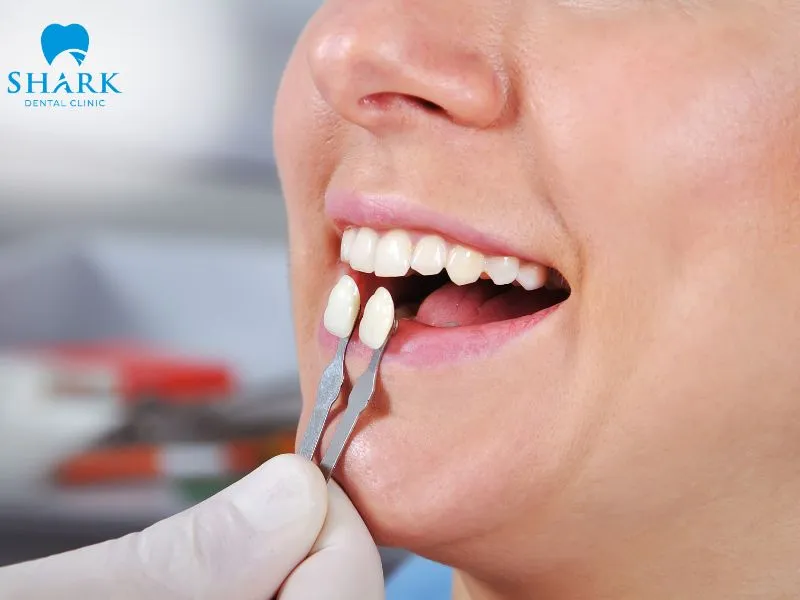
The porcelain crown is individually designed with a size, shape, and shade that closely resemble the natural tooth. This customized design helps restore the appearance of the treated tooth while providing a highly aesthetic and natural-looking result.
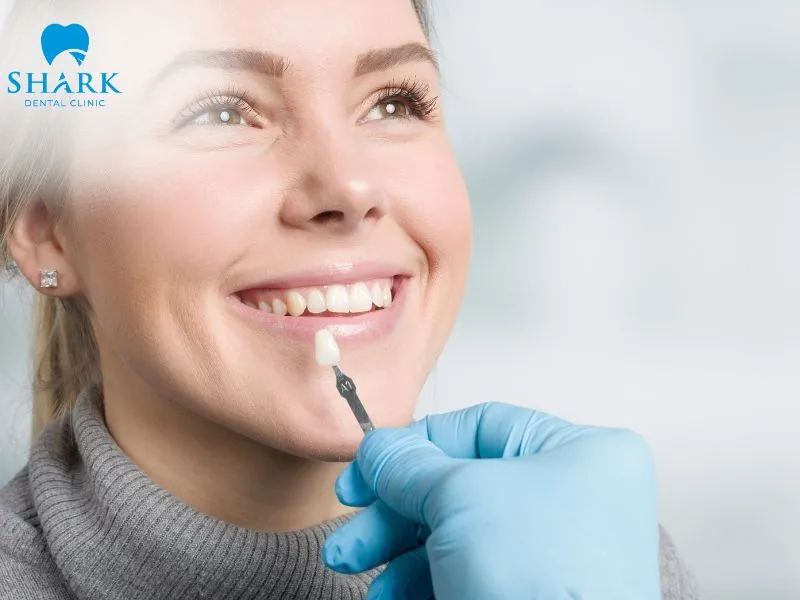
What is composite bonding?
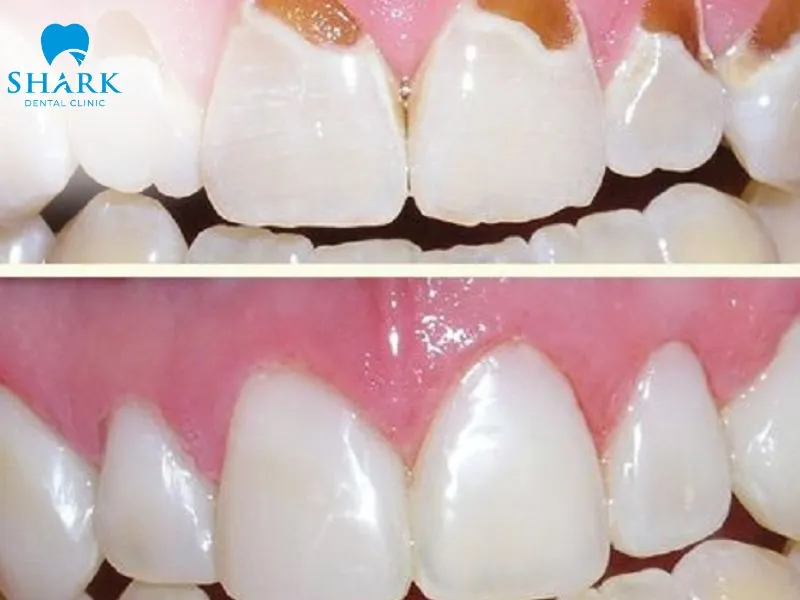
Composite bonding is a cosmetic dental treatment that uses a filling material made from composite resin to repair areas affected by tooth decay, chips, or minor damage. The dentist applies the composite material directly to the damaged area of the tooth.
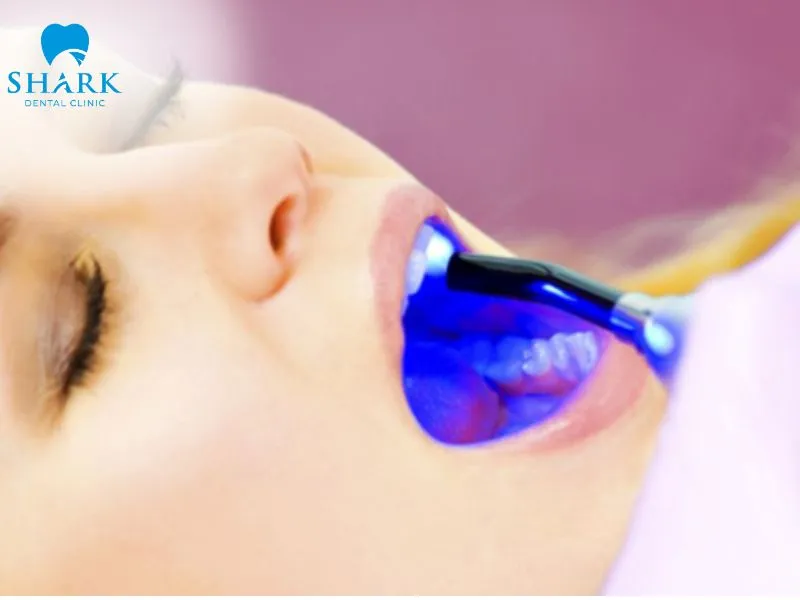
A blue curing light is then used to harden and secure the filling material. This approach limits unnecessary removal of healthy natural tooth tissue and helps maintain safety for the patient’s overall oral health.
Key differences between porcelain crown vs composite bonding
Porcelain crown vs composite bonding differ in several important aspects, including the following:
- Level of natural tooth alteration: Porcelain crown treatment requires the dentist to remove part of the natural tooth enamel. This creates sufficient space and an appropriate shape for the porcelain crown to be placed. In contrast, composite bonding generally does not require tooth preparation. The dentist only removes and cleans infected or damaged tooth tissue, helping preserve as much of the original tooth structure as possible.
- Treatment technique: Porcelain crown placement involves a more complex process and requires advanced dental techniques, so treatment may need to be completed over several appointments. The dentist first prepares the tooth and then takes an impression or digital scan so the porcelain crown can be fabricated. By comparison, composite bonding follows a simpler procedure and can often be completed during a single dental appointment.
- Durability: Porcelain crowns are designed to withstand normal biting and chewing forces. They may last approximately 10 to 20 years when properly maintained. Composite fillings provide only moderate resistance to pressure and may chip, loosen, or detach when the patient bites hard objects or the restoration is exposed to strong external force.
- Aesthetic appearance: Porcelain crowns are manufactured with a shade, size, and overall shape designed to resemble natural teeth. Their naturally translucent and glossy surface provides excellent aesthetic results. Composite resin, however, can become discolored after a period of use and may not maintain its original aesthetic appearance over the long term.
- Cost: Composite material is more affordable, and the treatment procedure can be completed relatively quickly. This makes composite bonding suitable for mild cases of tooth decay, small chips, or limited structural damage. Porcelain crown treatment is more expensive. If a porcelain crown cracks, breaks, or becomes damaged, it usually needs to be replaced with a new restoration rather than repaired.

Direct comparison: Procedure, durability, and cost
To help you evaluate the available treatment options and make a suitable decision about restoring your teeth, the following section provides a detailed comparison between porcelain crowns and composite bonding.
Treatment process and timeline
Composite bonding has a relatively simple and fast treatment process, usually taking only around 30 to 60 minutes during a single dental appointment. The dentist first removes and cleans all decayed or infected tooth tissue, then applies the composite material directly to the tooth surface. Finally, a blue curing light is used to harden and secure the filling material firmly in place.
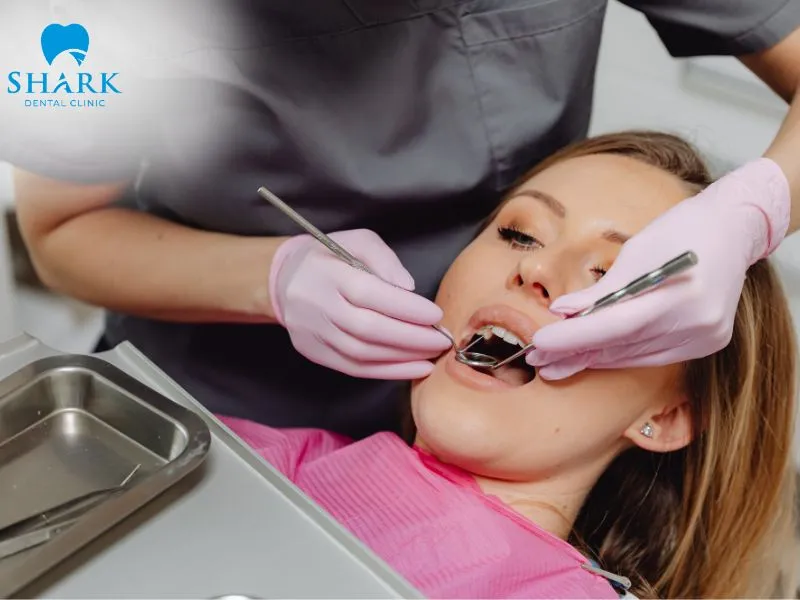
In contrast, the porcelain crown procedure is considerably more complex and usually requires more time to complete. The dentist must take an impression of the natural tooth and send it to a dental laboratory, where the porcelain crown is manufactured. Next, part of the tooth enamel is removed to create a strong, stable foundation for the crown. The porcelain crown is then attached over the prepared tooth. This procedure must be performed under appropriate infection-control conditions to help prevent cross-contamination during the restoration process.
Lifespan and durability
Porcelain crowns generally provide greater strength, better durability, and a considerably longer lifespan than composite filling materials. A porcelain crown typically lasts around 10 to 20 years, while composite material generally lasts only about 3 to 7 years. Composite restorations are more likely to chip or become discolored during use, particularly when they frequently come into contact with deeply colored foods.
Aesthetic results and stain resistance
In terms of aesthetic appearance, both porcelain crowns and composite bonding can initially make the restored teeth look brighter, cleaner, and noticeably whiter. However, after an extended period of use, porcelain crowns can continue to maintain an even, natural-looking white shade. Composite fillings, on the other hand, may gradually become discolored or yellow, and the surface may become rougher, stained, or lose its original polish.
Cost comparison and long-term value
Regarding the initial treatment cost, composite fillings are the more economical option, generally costing approximately VND 300,000 to VND 1,000,000 per tooth. Porcelain crowns are more expensive, with prices ranging from around VND 2,000,000 to VND 10,000,000 per tooth. However, because porcelain crowns offer better durability, crown treatment may provide greater cost efficiency when considered over the long term.

When to choose composite bonding?
Composite bonding is a widely used restorative dental method that is financially accessible and suitable for the budgets of many patients. Cosmetic composite treatment may be considered in the following situations:
- Mild tooth decay: If a tooth has mild decay or limited structural damage and the tooth tissue has not been severely damaged, composite bonding may be an appropriate option.
- Minor tooth chips: In some cases, composite bonding may be recommended when a tooth has a small chip along the biting edge. This option may be suitable when the damage is limited and does not involve the dental pulp.
- Small gaps between teeth: People with slightly spaced teeth or small gaps between neighboring teeth may use composite bonding to improve their appearance.
- Preserving natural tooth structure: For people who want to preserve as much of their original tooth structure as possible, composite bonding can be an ideal treatment choice.
When a porcelain crown is the better option?
Porcelain crown treatment is an ideal dental restoration method that can improve the original shape and color of a damaged or discolored tooth. A porcelain crown may be the more suitable option in the following situations:
- Severely chipped or broken teeth: If more than half of the tooth crown has fractured and there is not enough remaining tooth structure for a composite filling, a porcelain crown should be considered.
- Root canal-treated teeth: When the dental pulp becomes infected and root canal treatment is required, a crown or another suitable restoration may be required, depending on the tooth’s location and the amount of remaining tooth structure. The restoration helps protect the treated tooth from fracture and reinfection and supports comfortable eating, normal chewing, and other daily oral activities after treatment.
- Severe tooth decay: A porcelain crown may be necessary when tooth decay is extensive, the damaged area is large, or the damaged tooth margins have become clearly exposed and weakened.
- Severe tooth discoloration: If a tooth is heavily stained by antibiotics or has become significantly yellow, porcelain crown treatment may be used to restore a brighter and more even appearance.
How to maintain your dental restoration?
Both porcelain crowns and composite fillings require a proper oral care and hygiene routine after treatment. The following recommendations can help protect the restoration and maintain its condition and appearance over the long term:
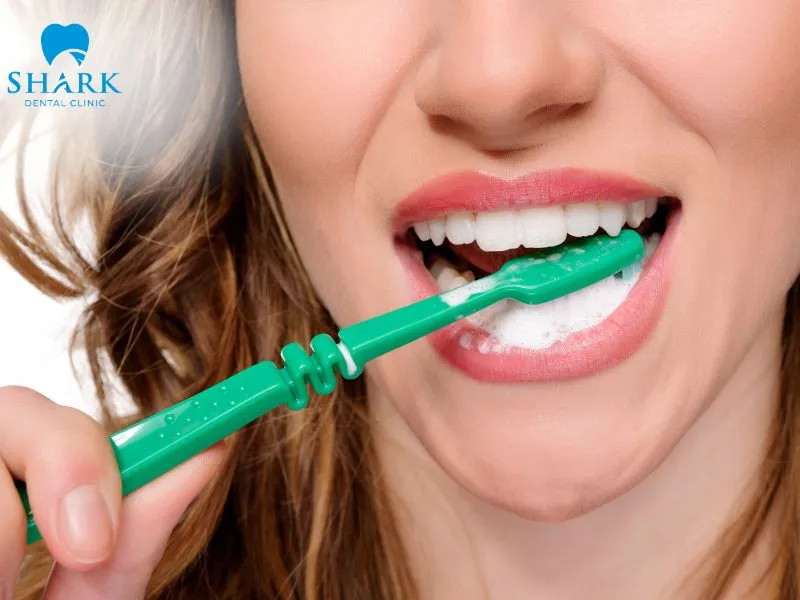
- Oral hygiene: Brush your teeth at least two to three times each day. Choose a toothbrush with soft bristles and brush gently along the teeth and gumline using the technique recommended by your dentist to remove food debris and bacteria from the mouth.
- Diet: You should consume a varied and balanced range of foods. However, limit foods that contain high levels of acid or sugar, as well as heavily processed products.
- Limit deeply colored foods: While using porcelain crowns or composite fillings, reduce your consumption of strongly colored foods and drinks, including curry, turmeric, and coffee. These products may affect the appearance of the restoration over time.
- Avoid harmful habits: Porcelain crowns and composite fillings may chip, crack, wear, or become detached or even become detached if you regularly grind your teeth, bite your fingernails, use your teeth to open bottle caps, or bite hard objects.
The information above has explained the main points regarding porcelain crown vs composite bonding. Each restoration method has its own advantages and disadvantages and may be suitable for different patient needs. To determine the most appropriate dental restoration for your condition, consult a dentist for a professional examination and personalized advice.
>>> See more: Can i get a filling instead of a crown?