

Tooth loss combined with severe jawbone loss once created significant challenges for many patients seeking tooth restoration. However, the zygoma implant has become an optimal solution for these complex cases by providing a stable and effective alternative when standard implants are not suitable. With its ability to restore chewing function and support a secure smile, this method is gaining increasing attention from many patients today. To better understand this treatment option, let Shark Dental Clinic help you explore the detailed information below.
What is a zygoma implant?
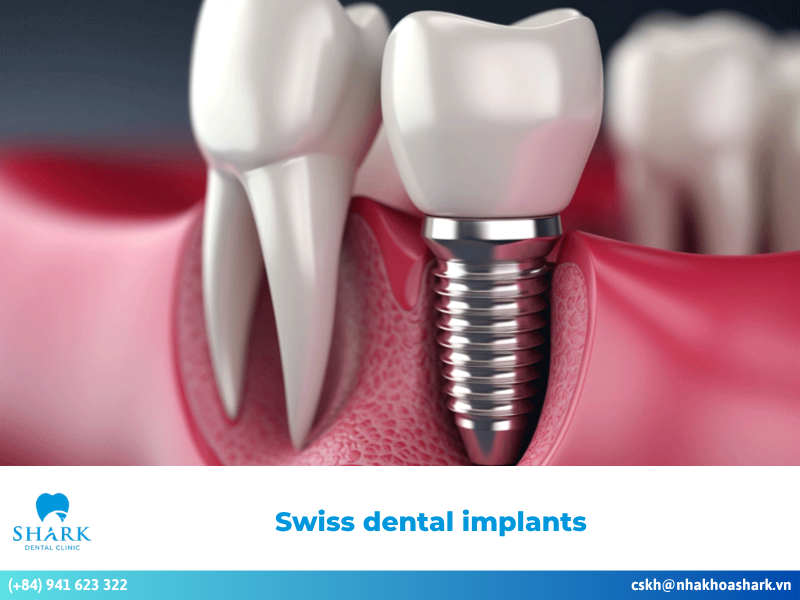
A zygoma implant, also known as zygomatic bone implant placement or zygoma implant treatment, is an advanced dental implant technique indicated for patients who have missing teeth together with severe jawbone loss and who do not have sufficient bone volume for conventional implant placement. Instead of inserting the implant fixture directly into the jawbone, the dentist uses specially designed long implants that are anchored into the cheekbone, an area with denser and stronger bone structure.
Because of their elongated and slender design, and because they are selected according to the position of each missing tooth area, zygoma implant fixtures can effectively support partial bridges or full-arch restorations depending on the condition of each patient. This technique is considered an optimal restorative solution for complex and challenging cases, helping improve chewing ability and restore dental aesthetics in a noticeable way.
However, due to the complex nature of the procedure, this treatment requires a highly skilled dentist together with the support of modern equipment and advanced technology to ensure precision, safety, and predictable outcomes throughout every stage of treatment.
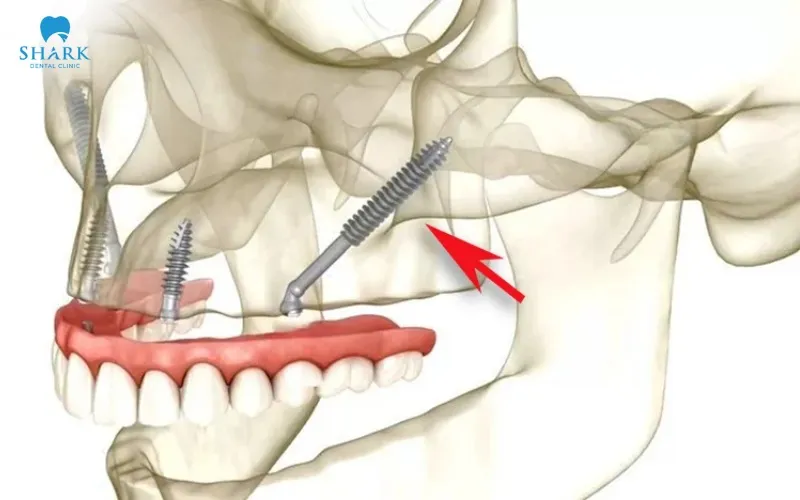
How zygoma implants work: The biomechanics
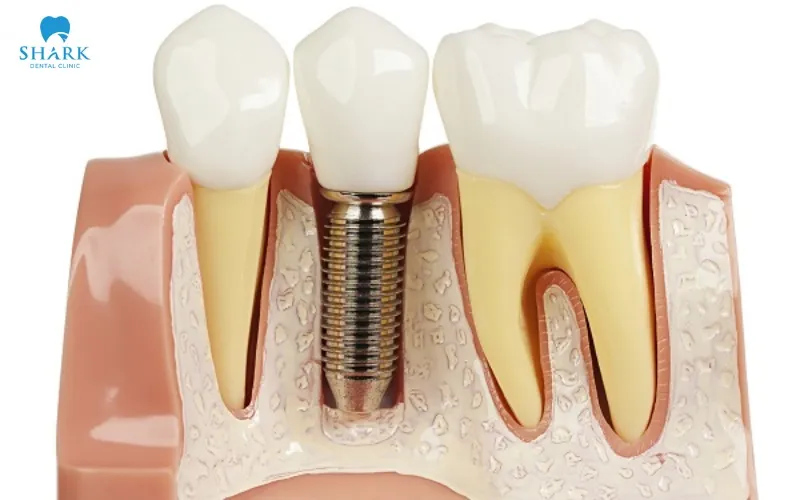
Zygoma implant treatment works based on biomechanical principles by utilizing the dense and solid bone structure of the cheekbone area to create a stable anchorage point for the implant fixture. Unlike traditional implants that are placed vertically into the jawbone, a zygoma implant is longer and is inserted at an angle, extending from the upper posterior tooth region toward the cheekbone. This design helps provide strong initial stability immediately after placement.
Because the implant is anchored in a high-density bone area, it has good load-bearing capacity and helps reduce the risk of implant looseness or instability. After placement, the process of osseointegration begins, during which bone tissue develops and bonds closely to the surface of the implant fixture, creating one strong and unified structure.
From a biomechanical perspective, chewing forces are transferred from the final restoration to the implant fixture and then distributed evenly to the cheekbone, rather than concentrating pressure on the jawbone area that has already experienced bone loss. This not only helps improve chewing efficiency and oral function but also contributes to maintaining jaw stability and delivering long-lasting, durable restorative results.
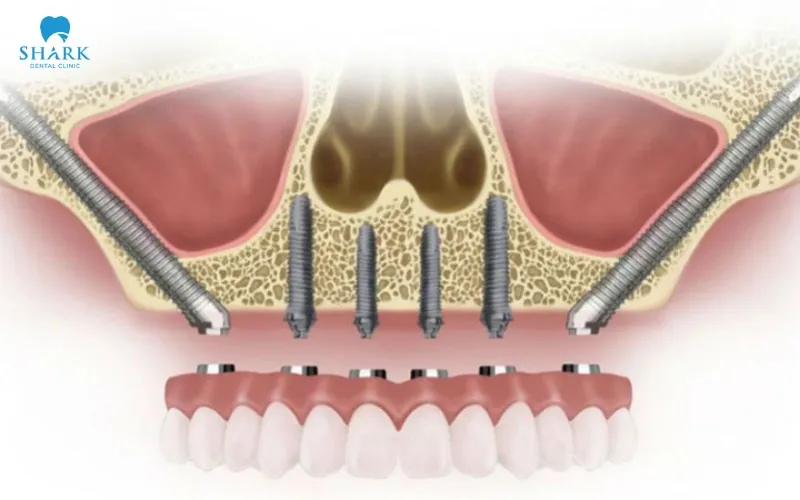
Tooth loss combined with severe jawbone loss once created significant challenges for many patients seeking tooth restoration. However, the zygoma implant has become an optimal solution for these complex cases by providing a stable and effective alternative when standard implants are not suitable. With its ability to restore chewing function and support a secure smile, this method is gaining increasing attention from many patients today. To better understand this treatment option, let Shark Dental Clinic help you explore the detailed information below.
Who should consider zygomatic dental implants?
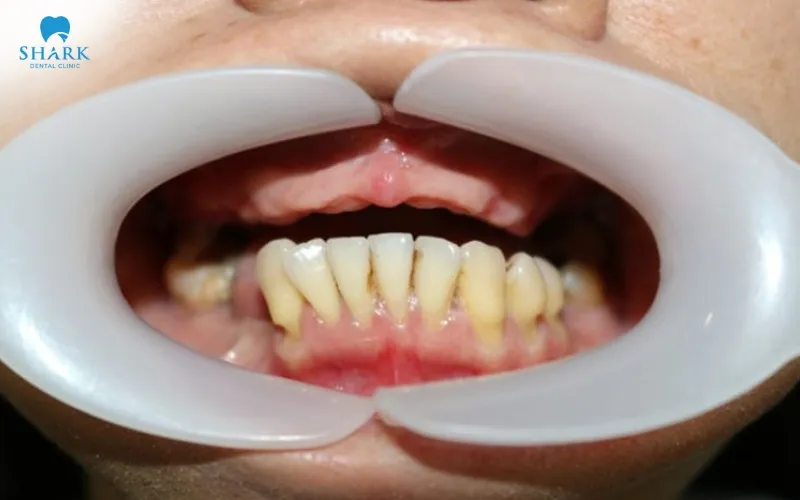
A zygoma implant is an advanced treatment solution that is usually recommended for patients with missing teeth, together with severe jawbone loss, especially when conventional implant methods are difficult to perform successfully. This technique is commonly considered in complex cases where standard implant placement may not provide predictable support. Below are the groups of patients who may consider this option:
- People missing all upper teeth with severe bone loss: Patients who have lost all upper teeth and also have advanced bone resorption in the upper jaw may not have enough bone volume for regular implants.
- People with severe bone deficiency in the posterior maxilla: Some patients face the challenge of getting dental implants with bone loss in the posterior upper jaw, which would otherwise require more complex procedures such as sinus lifting or bone grafting to ensure adequate support for the restoration.
- Patients with previous sinus lift or bone graft failure: For individuals who have already undergone bone augmentation procedures but did not achieve the desired results, a zygoma implant may be considered as a replacement solution.
- People with failed conventional implants: Patients whose traditional implants did not integrate successfully because of inadequate upper jawbone support may also transition to this method to improve the possibility of successful restoration.
- People with facial defects or bone loss from disease or trauma: Patients with jaw or facial defects caused by trauma, congenital conditions, cancer treatment, or tumor removal surgery may also be suitable candidates for this treatment, depending on their clinical condition.
The benefits of zygomatic implants for patients
A zygoma implant is an advanced restorative solution for patients with tooth loss and severe jawbone deterioration. In addition to helping restore missing teeth effectively, this treatment can provide many important benefits for patients, as outlined below:
- Shorter treatment time: Because it can reduce the need for procedures such as bone grafting or sinus lifting, the overall dental implant procedure may be more streamlined. This efficiency can help decrease the number of surgeries required and significantly shorten the total treatment time.
- Temporary teeth in a short time: After treatment, temporary teeth may be attached within approximately 1 to 3 days. This helps patients improve daily function, appearance, and comfort more quickly.
- Natural aesthetic restoration: The restored teeth and gums are designed to create a balanced and harmonious appearance. This can provide a more natural look and help patients feel more confident when speaking and smiling.
- Improved chewing function: Because a zygoma implant offers high stability, patients can eat more comfortably without concerns commonly associated with removable dentures, such as looseness or displacement.
- Effective option for severe bone loss cases: For patients who are not suitable candidates for conventional implants, this method can be an effective way to restore chewing ability and support jaw structure.
- Reduced risks related to bone grafting: Since bone grafting may not be required, patients can avoid the possible risks and complications associated with graft donor areas or grafted sites.
- Strong stability and long-term durability: The implant is anchored in the cheekbone, which is a strong and dense bone area. This helps improve load-bearing capacity and supports durable restorative results over time.
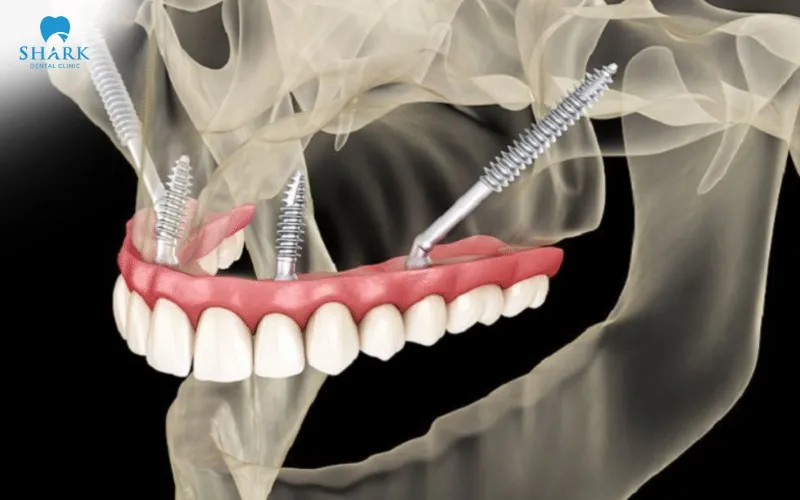
The surgical procedure: What to expect
A zygoma implant procedure is a complex surgical treatment that requires careful preparation and must be carried out step by step according to proper clinical standards to ensure safety and long-term effectiveness. Understanding each stage can help patients feel more prepared and confident before treatment. Below are the main steps you should know about:
Step 1: Comprehensive 3D imaging and digital planning
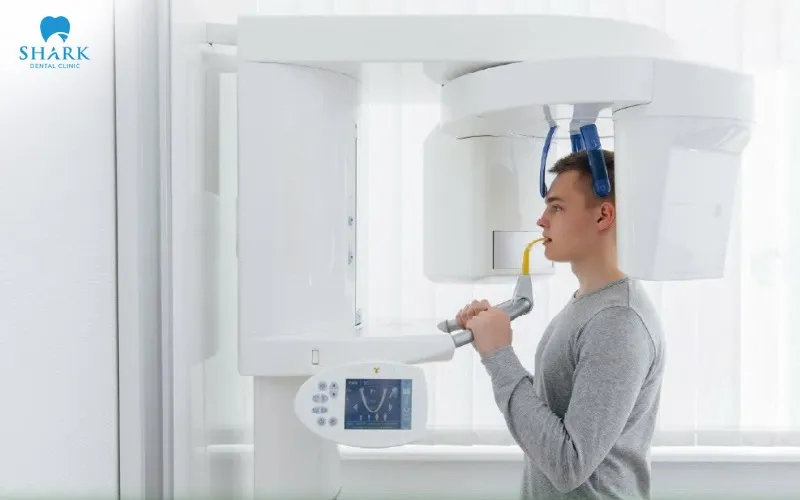
The dentist begins with a comprehensive examination, together with Cone Beam CT 3D imaging, to accurately evaluate the jawbone structure, the cheekbone area, and other related anatomical regions. This information is then transferred into specialized planning software to simulate the implant procedure in advance. Through digital planning, the dentist can determine the exact implant position, insertion angle, and implant length with greater precision. This process also helps anticipate possible situations before surgery and supports a safer, more predictable treatment plan for the zygoma implant procedure.
Step 2: The surgical placement under sedation
After the treatment plan has been completed, the surgery is performed in a sterile environment with the support of modern equipment and advanced technology. The patient receives local anesthesia or sedation to help maintain comfort throughout the procedure. The specially designed zygoma implant fixture is then placed into the cheekbone according to the pre-planned position and direction. This guided approach helps ensure a high level of accuracy and safety during surgery.
Step 3: Attaching the temporary bridge
One of the outstanding advantages of this treatment is the ability to restore function quickly. After approximately 1 to 2 days, the patient may receive a fixed temporary bridge. This temporary restoration helps improve appearance, supports daily confidence, and restores basic chewing function soon after surgery.
Step 4: Final restoration and follow-up
Over the next 3 to 6 months, the zygoma implant gradually integrates fully with the cheekbone. Once the required stability has been achieved, the dentist takes impressions and places the final fixed ceramic restoration to complete the treatment process. At the same time, the patient is scheduled for regular follow-up visits so healing can be monitored properly and the long-term restorative result can be maintained in a stable and durable way.
Zygoma implants vs. traditional implants: A comparative table
To better understand the differences between a zygoma implant procedure and traditional implant treatment, you can refer to the comparison table below. This comparison helps you more easily recognize the key advantages of each method and compare which solution may be more suitable for your current oral condition.
| Criteria | Zygoma Implant | Traditional Implant |
| Implant placement position | Anchored into the cheekbone, in an area with stronger and denser bone | Placed directly into the jawbone |
| Implant length | Longer length, approximately 30 – 60 mm | Approximately 10 – 16 mm |
| Jawbone requirement | Does not require sufficient jawbone volume | Requires adequate bone density and bone volume |
| Bone grafting/ sinus lift | Not required | Often necessary when the bone is insufficient |
| Recovery time | Faster, approximately 4 – 6 months | Approximately 8 – 12 months |
Frequently asked questions
Below are some of the most common questions people ask when learning about zygoma implant treatment. These answers can help you gain a clearer and more practical understanding before deciding whether this advanced dental solution is right for you.
Are zygomatic implants painful?
The zygoma implant procedure is usually performed under anesthesia or sedation, so patients generally do not feel pain during the treatment itself. After surgery, some mild soreness, pressure, or swelling may occur, but these symptoms are typically well controlled with medication and usually decrease gradually after a few days.
How long do zygoma implants last?
When performed with proper technique and followed by good oral care, zygoma implant treatment can remain stable for many years, and in some cases for decades. Longevity depends on several important factors such as the patient’s healing response, daily oral hygiene habits, and regular follow-up visits.
Can patients with osteoporosis receive zygomatic implants?
People with osteoporosis may still be considered candidates for zygoma implant treatment because the implant is anchored into the cheekbone, which is generally denser and stronger than the upper jawbone. This can make the procedure a possible option even in cases where conventional implants may be more challenging. However, a detailed clinical examination is still necessary before treatment is recommended. The dentist will carefully evaluate bone condition, medical history, and overall health status to determine whether the procedure can be performed safely and effectively.
In summary, zygoma implant treatment is an advanced dental technique designed for patients who have lost teeth and experienced severe jawbone loss, making conventional implant placement unsuitable. This method can shorten the treatment process, improve stability, and provide greater comfort for many patients. With the information above, Shark Dental Clinic hopes you now have a broader and clearer understanding of this treatment option, helping you make informed decisions while protecting and improving your oral health in the safest and most effective way possible.