


Examination and diagnosis
The doctor checks the condition of the tooth, evaluates prior root canal treatment, and orders appropriate X-rays

X

Apical surgery is considered when periapical lesions persist after root canal treatment, or when coronal retreatment is unsuitable or difficult to perform. Book an appointment so the doctor can assess your condition and advise on a suitable treatment plan.
 45–90 minutes
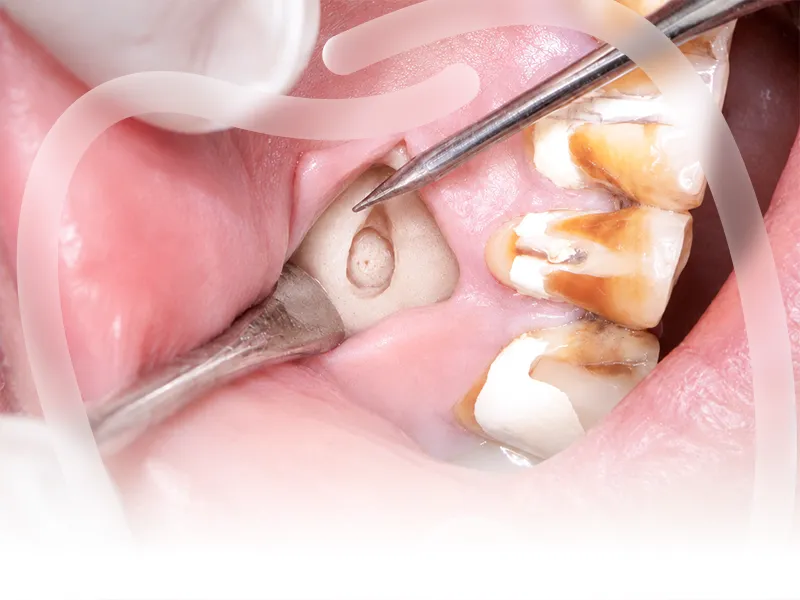

May be considered when
 The tooth remains restorable and worth preservingThe remaining periodontal and dental tissue meets treatment conditionsPeriapical lesions persist after root canal treatmentCoronal retreatment is difficult to perform or risks affecting an existing restoration
Needs a thorough examination and assessment for
 Women who are pregnantPeople with uncontrolled systemic conditionsPeople taking anticoagulant medication, or medication affecting bone metabolismPeople with a history of allergies to medications or dental materialsPeople currently experiencing acute infection or mucosal injuryPeople with periodontal disease that has not been stabilized
Apical surgery
 The surgery treats one or more root apices depending on the location of the lesion
The retrograde root-end filling material is selected as indicated
X-ray imaging supports assessment of the periapical lesion and the quality of prior root canal treatment
A Piezotome may assist with hard-tissue procedures in suitable cases
The surgery treats one or more root apices depending on the location of the lesion
The retrograde root-end filling material is selected as indicated
X-ray imaging supports assessment of the periapical lesion and the quality of prior root canal treatment
A Piezotome may assist with hard-tissue procedures in suitable cases

Infection control
X-ray equipment is used to support diagnosis. A Piezotome ultrasonic device may be considered by the doctor to assist with bone-related procedures, depending on indication — not every case defaults to using a Piezotome
Reusable instruments are collected via a one-way flow, cleaned, packaged, sterilized, and stored before being used in treatment. Chair surfaces and contact areas are cleaned between patients. Single-use supplies are replaced for each case
The doctor checks the condition of the tooth, evaluates prior root canal treatment, and orders appropriate X-rays

The treatment plan is explained, and anesthesia is administered before surgery

The gum flap is raised to access the bone area around the apex

Diseased tissue and the portion of the root apex requiring treatment are removed

The root end is prepared and retrograde-filled with a suitable material when indicated

The surgical area is cleaned, bleeding is controlled, the gum flap is repositioned, and the wound is sutured
Care and medication instructions are provided, along with a healing check-up appointment
Follow the doctor’s instructions and apply a cold compress to the outside of the face on the first day
Prioritize soft foods and avoid putting pressure on the surgical area
Take all prescribed medication and return for follow-up visits and suture removal on schedule

After apical surgery, the tooth needs to be monitored through clinical examination and X-rays according to the doctor’s schedule. The likelihood of preservation depends on the endodontic condition, extent of damage, quality of restoration, periodontal health, and each individual’s healing process. For this reason, tooth preservation cannot be guaranteed in every case.
Patients should keep their records, invoices, and warranty card if available, and should return for follow-up visits as scheduled so the doctor can monitor recovery and address any signs of abnormality at an early stage. The warranty policy is applied in accordance with current regulations and the conditions of each individual service or material.
Warranty


