


Examination and diagnosis
The doctor takes a health history, reviews current medications, examines the teeth, and orders X-rays as appropriate

X

Upper and lower wisdom teeth, along with difficulty levels ranging from 1 to 4, are classified in order to support the assessment of the condition, treatment planning, and cost determination; this classification does not represent independent extraction methods in itself. Schedule an examination so that the doctor can assess your case and advise you on a suitable approach going forward.
 20 to 90 minutes

May be considered for
 People whose wisdom tooth or impacted tooth has been determined by the doctor to require extractionThose whose general health meets the necessary conditions for the procedure following an examination
Needs a thorough examination and assessment for
 Women who are pregnantPeople with uncontrolled systemic conditionsPeople taking anticoagulant medication, or medication affecting bone metabolismPeople with a history of allergies to medications or dental materialsPeople currently experiencing acute infection, or mucosal injuryPeople with periodontal disease that has not been stabilizedTeeth positioned close to a nerve canal, the maxillary sinus, a neighboring tooth, or with complex anatomy
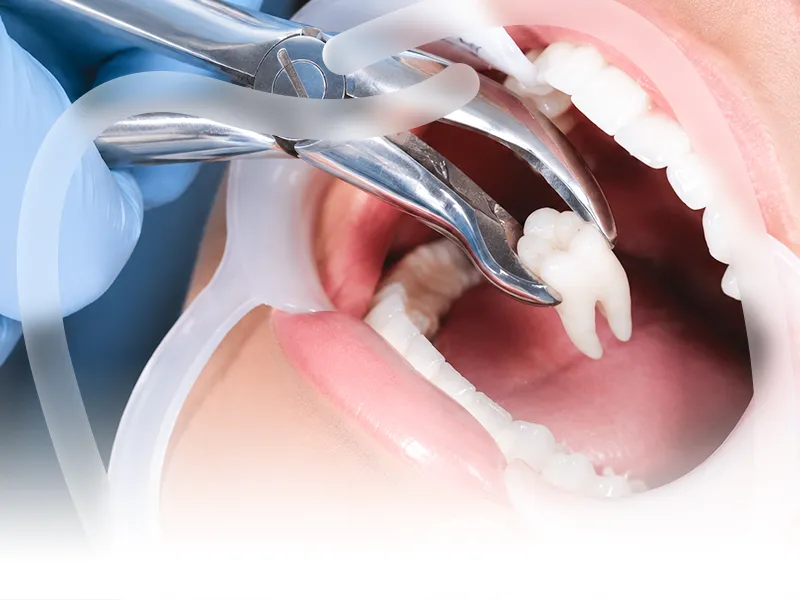
 Wisdom tooth extraction using a method suited to the tooth's location and level of difficulty
Extraction of an impacted tooth as indicated by the doctor
Extraction using a Piezotome device, which assists with working on hard tissue through ultrasonic vibration in suitable cases
Wisdom tooth extraction using a method suited to the tooth's location and level of difficulty
Extraction of an impacted tooth as indicated by the doctor
Extraction using a Piezotome device, which assists with working on hard tissue through ultrasonic vibration in suitable cases

Sterilization control
A full-arch X-ray machine is used to help assess the condition of the tooth. In suitable cases, the doctor may recommend the use of a Piezotome device — an ultrasonic surgical technology that assists with selective bone cutting, helping to limit trauma to the surrounding tissue
Reusable instruments are collected and processed through a one-way flow, including cleaning, packaging, autoclave sterilization, and storage to proper standards, before being brought into use for a new treatment. Chair surfaces and other contact areas are cleaned and disinfected between patients. Single-use supplies are also replaced for every treatment session in order to help limit the risk of cross-infection
The doctor takes a health history, reviews current medications, examines the teeth, and orders X-rays as appropriate

The difficulty of the extraction is assessed, the risks are discussed, and an approach is agreed upon with the patient

Local anesthesia is administered, and the tooth is exposed if needed to facilitate the extraction

The tooth is removed using a technique suited to the case, in order to limit trauma to the surrounding tissue

The socket is cleaned, and the wound is sutured closed when necessary

Guidance on post-extraction care is provided, and a follow-up visit is scheduled
Bite down on the gauze as instructed by the doctor, and avoid rinsing your mouth vigorously, spitting, or using a straw on the first day
Apply a cold compress to the outside of the cheek, prioritize soft, cool foods, and take any prescribed medication exactly as directed
Do not smoke or consume alcohol during the healing period
Contact the clinic immediately if bleeding does not subside, if you develop a fever, if swelling increases after several days, or if you experience difficulty breathing, difficulty swallowing, or prolonged numbness

Tooth extraction is a procedure whose healing process needs to be monitored, and it is not covered by a warranty policy in the same way that a restorative service is. Patients need to follow the after-care instructions, take any medication exactly as prescribed, and return for follow-up visits as scheduled. Any additional items arising from addressing an abnormal situation are handled according to the underlying cause and current clinic policy.
Warranty


