


Examination and data collection
The dentist carries out a comprehensive examination, takes a Cone Beam CT scan, takes photographs, and collects scan data

X

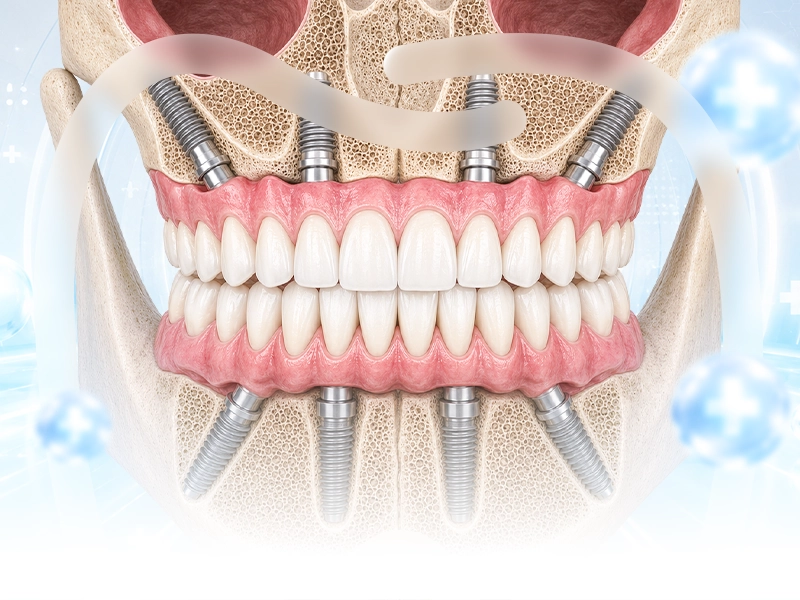
All-on-4, All-on-5, and All-on-6 refer to the specific number of implant posts used to support a full-arch restoration; this is not something that patients simply choose for themselves based on budget, without first undergoing a proper assessment of their bone and their bite. Book an examination today to receive personalized advice on the full-arch implant option that is right for you.
 3-6 months

May be considered suitable when
 The teeth and gums meet the necessary conditions for surgeryThe bone meets the necessary conditionsOral hygiene is at an appropriate level
Requires a thorough examination and careful assessment when
 The patient is a woman who is currently pregnantThe patient has a systemic condition that has not yet been brought under controlThe patient is taking blood-thinning medication or medication that affects bone metabolismThe patient has a history of allergic reactions to medication or to dental materialsThere is an acute infection or damage to the mucous membrane presentThe patient expects that "a fixed set of teeth will be possible in absolutely every case"Gum disease, a smoking habit, and any underlying systemic conditions all need to be assessed and properly managed both before and after treatment
Full-arch Implant
 A fixed full-arch restoration supported on 4 implant posts
A fixed full-arch restoration supported on 5 implant posts
A fixed full-arch restoration supported on 6 implant posts
Implant post brands used: Biotem, Dentium, Bio-3, Kontact, and Straumann SLA/SLActive
A fixed full-arch restoration supported on 4 implant posts
A fixed full-arch restoration supported on 5 implant posts
A fixed full-arch restoration supported on 6 implant posts
Implant post brands used: Biotem, Dentium, Bio-3, Kontact, and Straumann SLA/SLActive

infection control
A surgical guidance system for positioning the implants, X-ray imaging or Cone Beam CT scanning, a Piezotome device, an intraoral scanner, and CAD/CAM technology may all be used to support different stages of the treatment, depending on what is indicated
Reusable instruments are collected and processed following a strict one-way workflow that includes cleaning, packaging, sterilization, and storage in accordance with proper standards before being brought into use for a treatment case. The surfaces of the treatment chair and any other contact areas are cleaned and disinfected between each patient visit. Single-use supplies are also replaced with fresh items for every individual treatment case
The dentist carries out a comprehensive examination, takes a Cone Beam CT scan, takes photographs, and collects scan data

The dentist checks the patient’s remaining teeth, the quality of their bone, the maxillary sinus, the position of the relevant nerves, the bite, and any underlying medical conditions

The dentist determines the number of implant posts needed and decides on either a temporary or a final restoration

The dentist proceeds to extract any teeth that can no longer be preserved, treats the bone where indicated, and places the implants according to the treatment plan

A temporary restoration is fitted once the necessary conditions have been met

The dentist monitors the period of bone integration, then takes an impression or a digital scan and attaches the final restoration
The dentist monitors the condition of the implants and the restoration, and provides guidance on ongoing care
Give priority to soft foods appropriate to each stage of recovery. Do not chew hard foods or increase chewing force on your own initiative without first receiving guidance from your dentist
Clean the area underneath the dental bridge using specialized cleaning tools
Do not smoke, and keep your blood sugar levels and any underlying medical conditions well controlled
Visit the dental clinic according to your dentist’s scheduled appointments so that the implants, the gum tissue, the connecting screws, and your bite can all be checked

The warranty policy is clearly divided between the implant posts, the connecting components, and the restoration itself. Complications such as peri-implantitis caused by improper hygiene, smoking, or a failure to attend follow-up visits are assessed separately by the dentist and should not be regarded as a defect in the materials used.
Patients should keep their records, receipts, and warranty card if one has been provided, and should also attend follow-up visits according to their scheduled appointments, so that the dentist can monitor their condition and address any unusual issues as early as possible.
The warranty policy is applied in accordance with current regulations and the specific conditions attached to each individual service or material.
Warranty


