

Diamond braces are an advanced orthodontic method that utilizes premium dental materials, showcasing elegance and luxury. This treatment is increasingly favored by individuals who desire straight, healthy teeth while also valuing aesthetics during their orthodontic journey. So, what is the procedure for diamond braces, how much do they cost, and why should you consider them? In this article, Shark Dental Clinic will provide detailed answers to all your questions.
What are diamond braces?
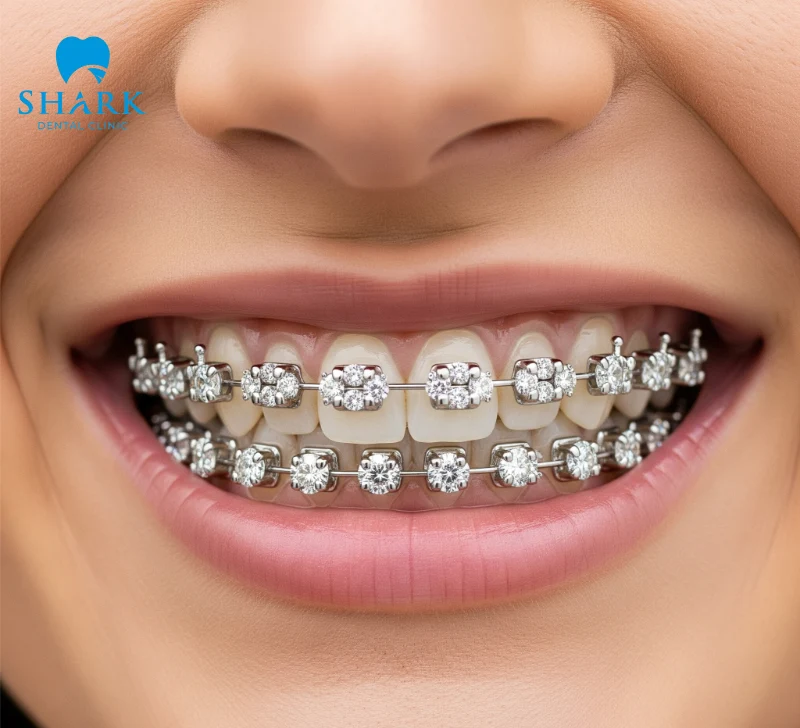
Diamond braces are an orthodontic method designed to align misaligned teeth using appliances made from stainless steel. Unlike traditional braces that use colored elastic bands, diamond braces utilize clips to secure the archwire in place. This method is suitable for both children and adults in need of orthodontic treatment.
Why choose diamond braces?
Diamond braces are a modern orthodontic solution that offers many outstanding advantages and benefits. Below are some of the reasons why this method is increasingly chosen by many people:
- Effective results: Diamond braces use smaller orthodontic appliances compared to traditional metal braces, providing excellent alignment results while minimizing bulkiness during treatment.
- Comfortable experience: The brackets of diamond braces are approximately 30% smaller than conventional brackets. Additionally, they protrude less, which helps avoid contact with gums and other soft tissues, resulting in greater comfort during eating and daily activities.
- Gentle and efficient pressure: Diamond braces can exert stronger and more precise force on teeth without causing discomfort or pain, allowing the alignment process to proceed more smoothly and efficiently.
- Versatility: Diamond braces are effective for a variety of dental conditions, including crowded teeth, gaps, misalignment, protrusion, and underbites. An orthodontist will recommend the most suitable treatment plan based on your specific needs.
- Suitable for all ages: Thanks to their compact design, diamond braces can be effectively used for both adults and children. This versatility contributes to their growing popularity.
- Aesthetic appeal: With smaller brackets, diamond braces offer a higher level of aesthetics. Patients can feel more confident and at ease in social interactions while wearing them.
- Easy cleaning and maintenance: The small brackets facilitate easier cleaning, helping maintain oral hygiene throughout the treatment process.
Given these remarkable advantages, it’s no surprise that diamond braces are becoming an increasingly popular choice for patients seeking an effective, comfortable, and aesthetically pleasing orthodontic solution.
How does the diamond braces process work?
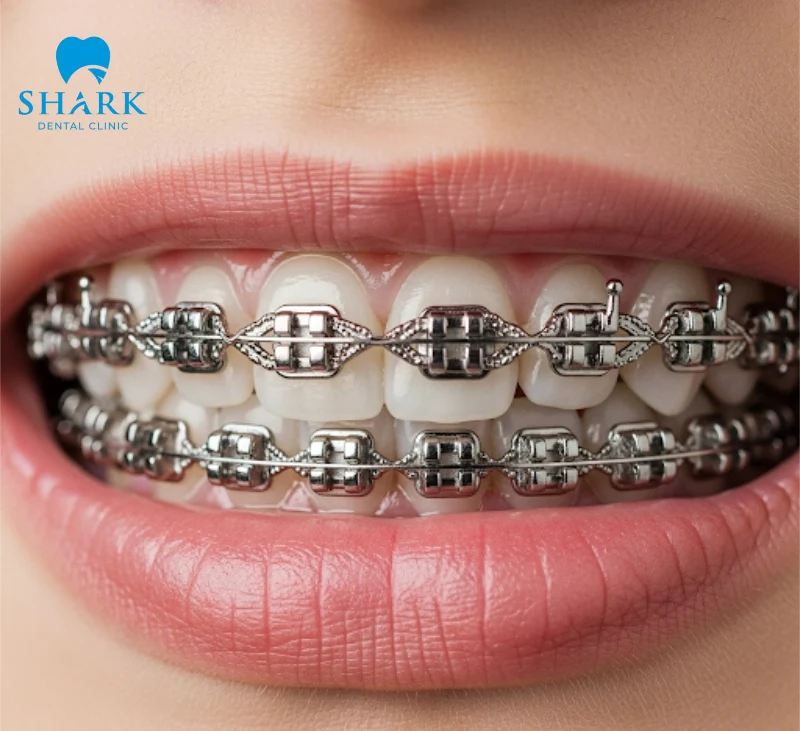
The process of getting diamond braces is similar to that of traditional metal braces and consists of the following key steps:
- Step 1: Examination and X-ray
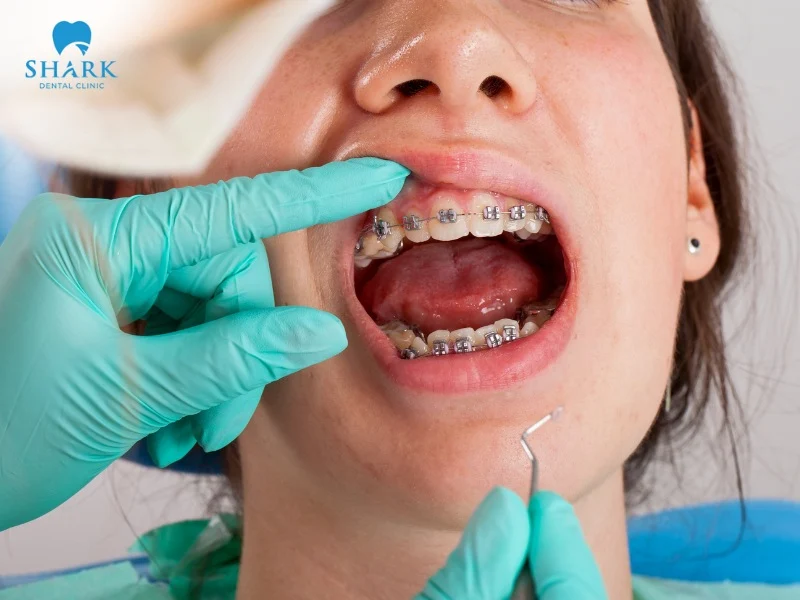
At a reputable dental clinic, the orthodontist will first examine and assess the patient’s oral health to identify any existing issues, such as gaps, misalignment, or malocclusion. A panoramic X-ray will also be taken to evaluate the jawbone structure. Based on these findings, the dentist can recommend the most suitable orthodontic method.
- Step 2: Treatment planning and dental impressions
Using the results from the clinical examination, the orthodontist will propose a personalized treatment plan that considers the patient’s dental condition and financial situation. The dentist will then take dental impressions to create brackets of the appropriate size, ensuring both effectiveness and aesthetics throughout the treatment.
- Step 3: Spacers and bracket placement
If necessary, spacers will be placed between the teeth to create space for the archwire and brackets, which typically takes about 3–7 days. After that, the entire oral cavity is thoroughly cleaned before attaching the brackets. The archwire is then inserted into the bracket slots and secured with elastics or self-ligating clips. This step usually takes about 60–90 minutes.
- Step 4: Follow-up visits
Approximately one month after the braces are placed, patients will return for follow-up appointments. These visits allow the orthodontist to monitor tooth movement and make timely adjustments to the archwire tension, ensuring optimal aesthetic and functional results.
- Step 5: Braces removal and retainers
After 18–24 months, the brackets are removed, and retainers are fitted to stabilize the new positions of the teeth. This helps patients achieve a straight and beautiful smile as intended.
Diamond braces vs. Regular braces: Which is right for you?
Before determining whether diamond braces or regular braces are more suitable for you, it’s essential to understand the similarities and differences between the two methods.
Both diamond braces and regular braces share a similar structure, which includes:
- Separators: These are placed between teeth to create space for the archwire and brackets.
- Brackets: Square-shaped devices fixed to each tooth that help guide the teeth into their desired positions.
- Ligatures: These attach the archwire to the brackets, ensuring that the orthodontic appliances stay in place during treatment.
- Additional components: Depending on the complexity of the case, this may include springs, elastic bands, orthodontic caps, or even a Palatal Expander to widen the upper jaw if there is significant crowding or a crossbite.
Both types of braces operate under the same principle – applying gentle pressure to move misaligned teeth into the correct position along the dental arch.
Key Differences:
| Diamond Braces | Regular Braces |
| Use self-ligating clips to hold the archwire in place | Use colored ligatures to attach the archwire to the brackets |
| Braces are more compact in size | Braces are larger in size |
| No color change; use an opening-and-closing clip system | Colors can be changed flexibly for personalization |
Based on these similarities and differences, it is clear that both diamond braces and regular braces are suitable for a wide range of patients.
Regular braces are often more popular among younger individuals, as their colorful ligatures allow for personalization. In contrast, diamond braces are typically preferred by middle-aged or older patients, as their smaller size offers greater comfort, less irritation, and ease during eating and daily activities.
How much does diamond braces cost in Vietnam?
In dental clinics across Vietnam, the cost of diamond braces ranges from $1500 to $4900 per treatment course. This pricing is not fixed and can vary significantly between clinics based on several factors, like patient’s dental condition, type of brackets used, duration of the treatment, and any additional clinical requirements.

In conclusion, we have provided essential information regarding diamond braces. This orthodontic method offers numerous advantages and is favored by many patients. We hope this information helps you gain a clearer understanding of diamond braces and orthodontics in general, enabling you to make an informed decision that best suits your dental condition.
>>> See more: Retainer that looks like braces