
Dental caps and porcelain veneers are among the most commonly used dental materials, helping effectively conceal imperfections such as tooth discoloration and staining. To help you gain a clearer understanding and make the right restorative decision, the following article provides a detailed and comprehensive comparison of dental caps vs. veneers.
What are dental caps? Pros and cons
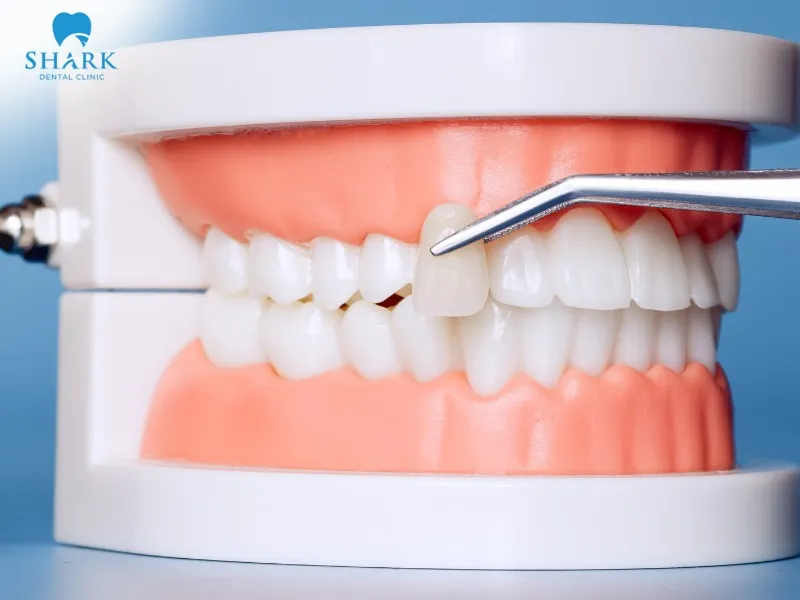
Dental caps, also known as dental crowns, are restorative treatments made from porcelain-based materials that closely match the shape, size, and color of natural teeth. During the procedure, the dentist reshapes the tooth and permanently places the porcelain cap over it to restore both its function and aesthetics.
Pros
- Dental caps effectively correct issues such as chipped teeth, decayed teeth, teeth with small cavities, or teeth weakened after root canal treatment.
- Porcelain crowns are highly durable, capable of withstanding chewing forces ranging from approximately 900 to 1200 MPa, allowing them to function similarly to natural teeth.
- Dental caps have a long lifespan of about 15 to 20 years, or even longer with proper oral hygiene and regular professional care.
Cons
- To place a dental cap, a portion of the natural tooth structure must be permanently removed, making the procedure irreversible.
- If the tooth is over-prepared or the technique is inaccurate, bacteria may penetrate beneath the crown, leading to inflammation, sensitivity, or discomfort.
What are dental veneers? Pros and cons
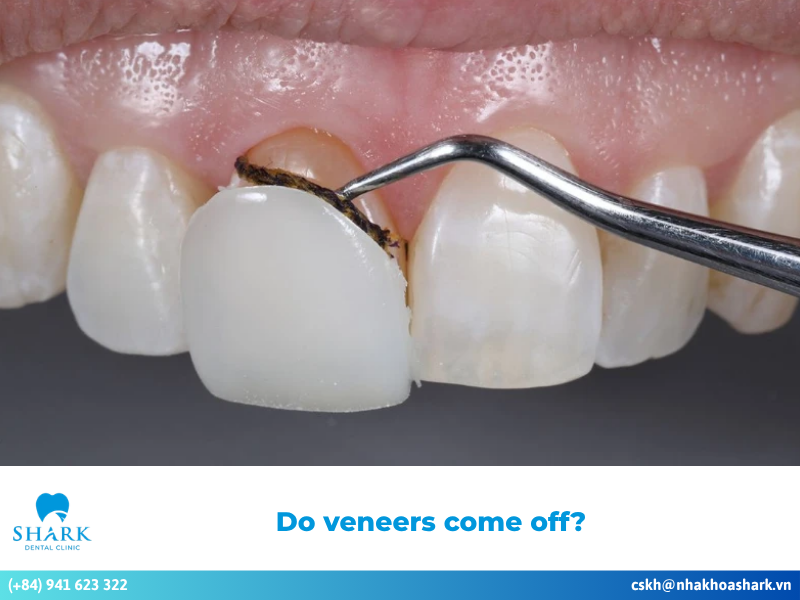
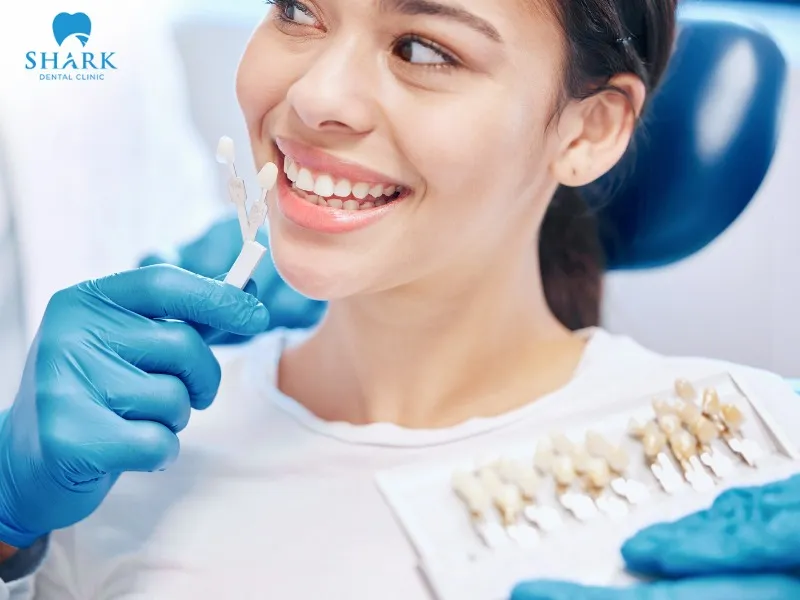
Porcelain veneers represent a significant advancement in cosmetic dentistry. These ultra-thin shells, typically around 0.3 mm thick, are bonded to the front surface of teeth using specialized dental cement, dramatically enhancing the appearance of a smile.
Pros
- Dental veneers preserve a maximum amount of natural tooth structure, as only a very thin layer of enamel is removed. This helps protect the dental pulp and minimizes sensitivity.
- Veneers offer a natural gloss and lifelike texture that closely resembles real enamel, delivering excellent aesthetic results.
- Porcelain veneers have high biocompatibility, do not irritate the gums, and do not oxidize over time.
- The placement of veneers does not affect the bite or alter normal chewing function.
Cons
- For patients wondering, “Can you get veneers with bad teeth?”, the experts at Shark Dental Clinic advise that veneers are not suitable for everyone. They are most effective for patients without severe tooth damage, significant misalignment, or habits such as teeth grinding.
- One notable limitation is the high cost. Because veneers rely on advanced CAD/CAM technology and require meticulous clinical skill, their price is generally higher than that of conventional restorative options, which is often discussed when comparing the costs of dental caps and veneers.
Dental caps vs. veneers: How are they similar?
When comparing dental caps and veneers, several similarities stand out:
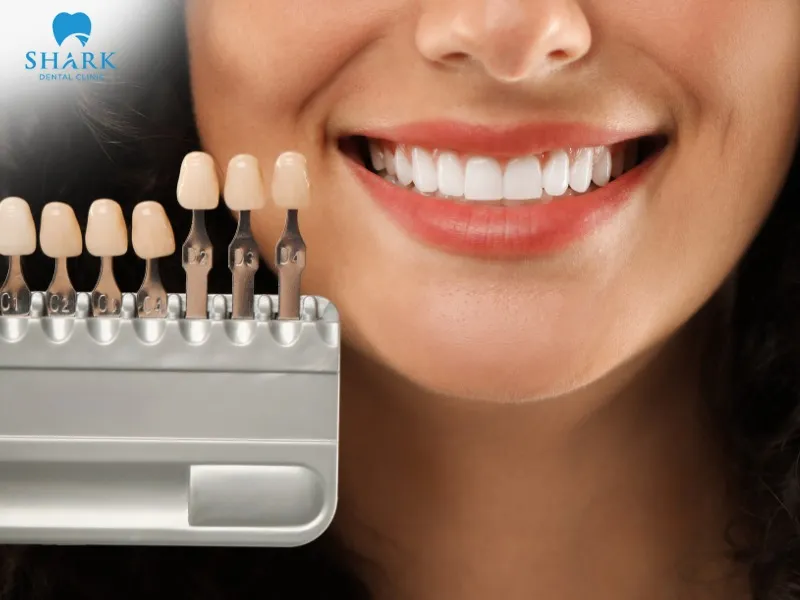
- Aesthetics: Both dental caps and veneers effectively improve tooth discoloration, stains, and uneven color, resulting in a brighter, more uniform, and attractive smile.
- Safety: Both options are biocompatible with the oral environment, do not irritate gum tissue, and are safe for long-term use.
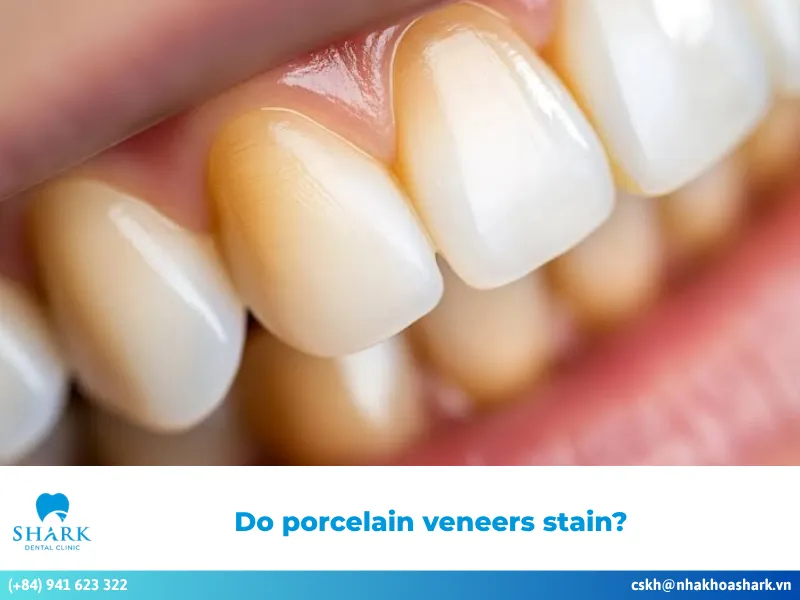
- Durability: Dental caps and veneers are highly color-stable and resistant to staining, helping to maintain a white, natural appearance over time.
>>> See more: Do veneers hurt?
Dental caps vs veneers: How are they different?
While dental caps and veneers share some similarities, they differ in several important ways:
- Tooth reduction rate: Dental veneers require significantly less tooth reduction compared to dental caps. This minimal reduction helps preserve the original structure of the natural tooth and reduces invasiveness.
- Coverage area: Dental caps cover the entire surface of the tooth, whereas dental veneers only cover the outer (front) surface.
- Indications: Dental caps are commonly recommended for teeth that are severely damaged, have large cavities, or are chipped or fractured. In contrast, dental veneers are more suitable for cosmetic concerns, such as discolored or yellowed teeth and dark gum lines.
How much do dental caps vs veneers cost?
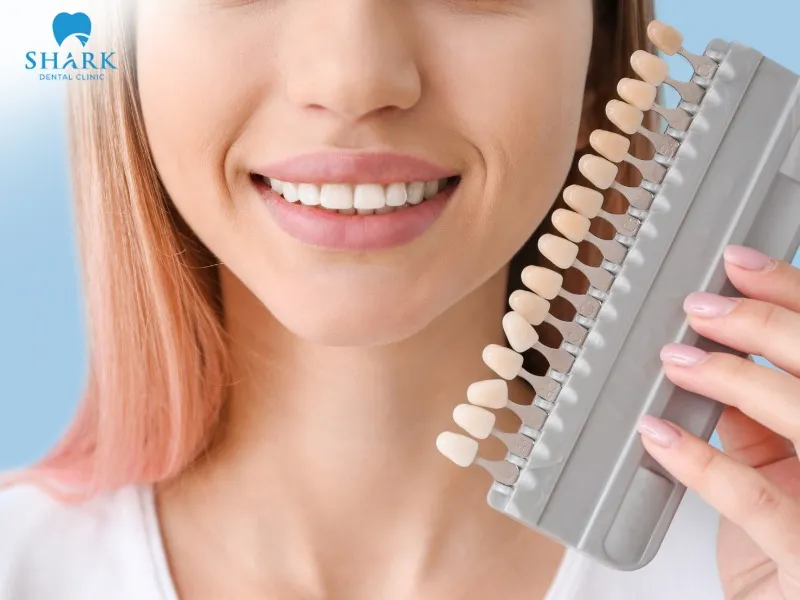
When researching “How much is dental veneer in Vietnam” patients will find there is a noticeable difference between dental caps and veneers cost. The price of dental caps typically ranges from 1,000,000 to 12,000,000 VND per tooth. Meanwhile, dental veneers generally cost between 8,000,000 and 15,000,000 VND per tooth. These prices are for reference only and may vary based on the materials used and the dental clinic where the procedure is performed. Additionally, if you are wondering, “Are veneers covered by dental insurance?”, it is important to note that cosmetic veneers are typically an out-of-pocket expense, whereas restorative caps may qualify for partial coverage.
Is a veneer or crown right for me?
Both dental caps and veneers offer significant benefits for functional restoration and aesthetic improvement. The right choice depends on your specific dental condition, financial considerations, and advice from your dentist.
When patients ask, “Can you get veneers with crooked teeth?”, that dental caps are recommended for teeth that are cracked, severely damaged, misaligned, or affected by protrusion or an underbite. On the other hand, if your teeth are healthy but discolored or stained, dental veneers may be the more suitable option.
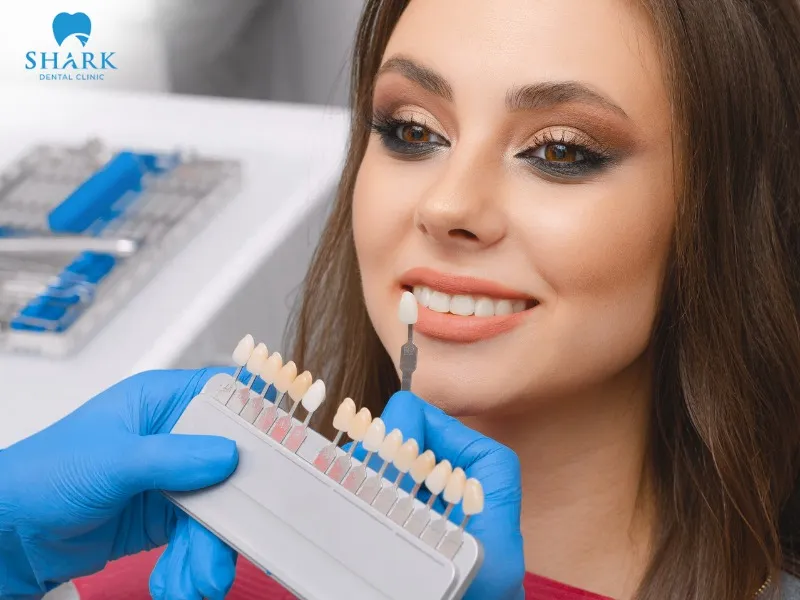
This comparison provides a detailed look at dental caps vs. veneers, both of which effectively restore dental aesthetics and are popular among patients. We hope this information helps you make an informed decision and achieve a confident, radiant smile soon.
>>> See more: Dental Implants vs. Veneers