

Metal braces and ceramic braces are two widely used orthodontic treatments that effectively correct misaligned teeth and are highly favored today. In the article below, Shark Dental Clinic provides a comprehensive and detailed comparison of metal vs ceramic braces to help you better understand each option. Let’s explore it now!
Metal vs ceramic braces
When comparing metal vs ceramic braces, both methods provide positive orthodontic results, helping teeth become straighter and improving confidence. Depending on your actual dental condition and financial situation, the dentist will recommend the most suitable option. It is also important to understand the long-term commitment, including the retainer vs braces phase, as a retainer will be necessary to maintain your results once the active alignment is complete.
You should consider metal braces if you have severely misaligned teeth, complex bite problems, and want to optimize costs. In contrast, if you want to feel more confident during treatment and your misalignment is not too severe, ceramic braces may be the better choice in the discussion of ceramic vs metal braces.
What are metal braces?
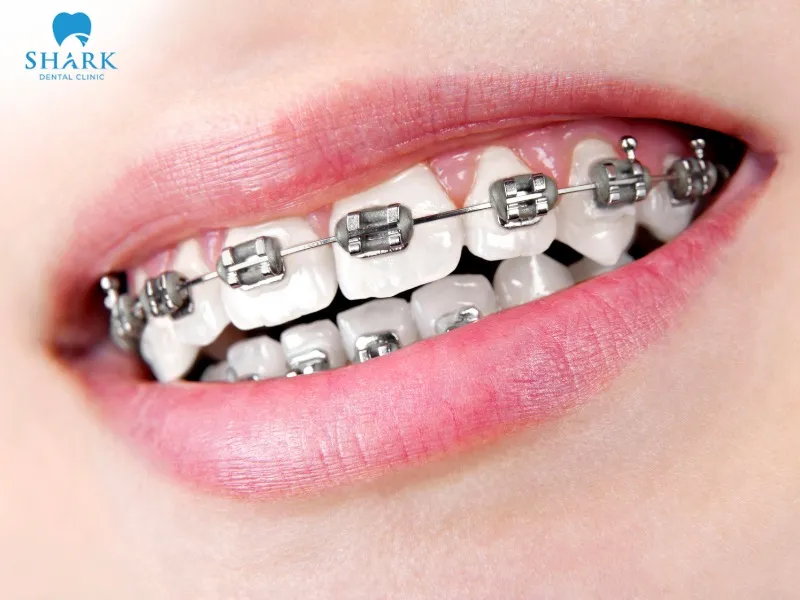
For those wondering when were braces invented, it helps to know that metal braces are a long-established orthodontic method commonly used in dental clinics. They are cost-effective and suitable for many patients.
Material composition
Metal braces consist of archwires and brackets made from metal, frequently secured by braces rubber bands. These orthodontic appliances are affixed to the surface of the teeth to apply the necessary pressure, helping to align misaligned teeth.
Advantages
- High effectiveness: Metal brackets are highly durable and allow precise force control, which makes them particularly effective for complex orthodontic cases.
- Cost-effective: Metal braces typically have the lowest cost compared to other orthodontic options, making them accessible for various financial situations.
- Suitable for severe misalignment: They are ideal for cases of serious crowding, protrusion, or underbites, delivering optimal results that clearly demonstrate how braces can change your face.
Disadvantages
- Metal brackets are visible during treatment, which may affect your confidence in daily communication.
- Some individuals may experience discomfort, soreness, or irritation while wearing metal braces.
What are ceramic braces?
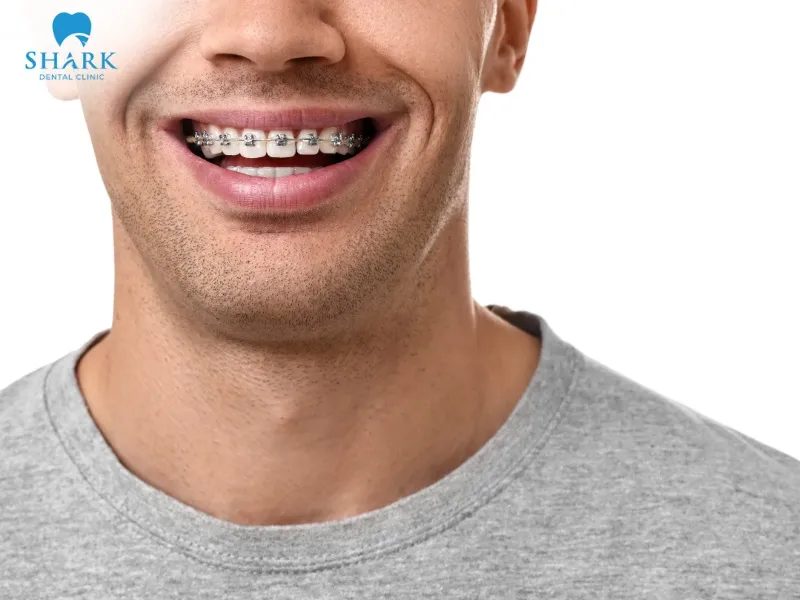
Ceramic braces are a more modern orthodontic method that has gained popularity in dentistry. They provide effective results while also offering better aesthetics during treatment.
Material composition
Ceramic braces are made from ceramic materials combined with archwires and orthodontic components. This system helps shift misaligned teeth into their correct position.
Advantages
- Aesthetics: Ceramic brackets are designed to blend in with the natural color of teeth, allowing you to feel comfortable and confident even while wearing braces.
- Effectiveness: Ceramic braces exert stable force to effectively move misaligned teeth.
- Versatility: They can address various issues, including protrusion, underbite, and overall misalignment.
Disadvantages
- Ceramic brackets are more fragile than metal brackets and can chip if subjected to strong biting forces or accidental impact.
- Some people may experience discomfort or soreness during the treatment process.
Cost comparison for metal vs ceramic braces
At reputable dental clinics, ceramic braces typically cost between 9,000,000 and 15,000,000 VND more than metal braces, making the option of getting braces in vietnam very popular for medical tourists. Metal brackets are generally the most affordable option for orthodontic treatment. They cost approximately 20,000,000 to 45,000,000 VND, but you should also verify how much are braces with insurance to lower your out-of-pocket expenses.
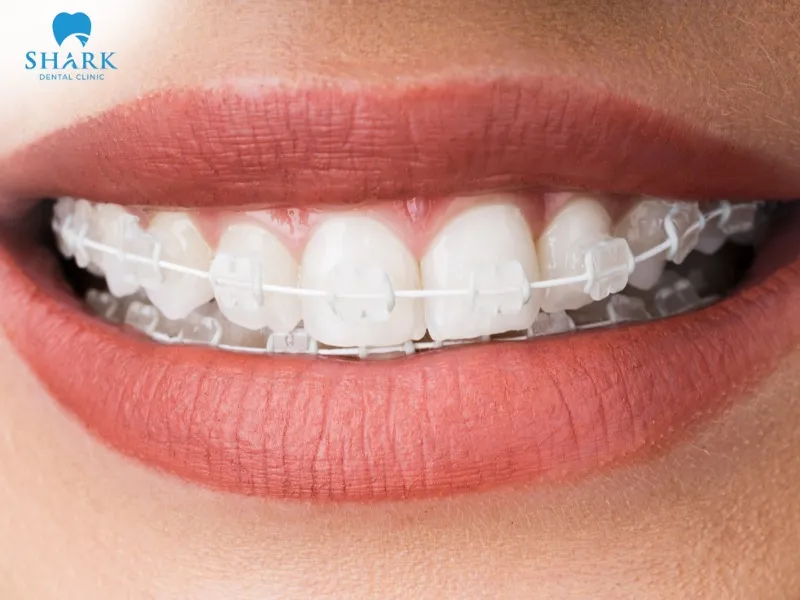
Meanwhile, ceramic braces are more expensive, ranging from 35,000,000 – 60,000,000 VND. Ceramic brackets feature an ivory-white color that closely matches natural teeth and do not oxidize during use, providing superior aesthetic results. This is also the reason why ceramic braces are priced higher than metal braces.

Treatment time differences between metal and ceramic braces
In practice, there is not a significant difference in treatment time between metal and ceramic braces. However, in some cases, ceramic braces may require an additional 1 to 6 months for treatment. This is because metal brackets are sturdier and deliver a more stable force, which helps move misaligned teeth into the correct position more quickly.
Who is the ideal candidate for ceramic vs metal braces?
Ceramic braces are ideal for individuals with sufficient financial resources who prefer an orthodontic solution that prioritizes aesthetics. Patients with nickel sensitivity may consider ceramic braces or nickel-free orthodontic systems after consultation with their dentist.

Overall, both metal and ceramic braces are modern orthodontic methods that effectively correct misaligned teeth and are widely chosen today. After considering this metal vs ceramic braces comparison, you can select the option that best suits your needs to achieve a straighter and more confident smile.