

Does coffee stain composite veneers? This is a common concern among patients after cosmetic dental restoration. Although composite material can improve the color and shape of the teeth, it may still become stained over time when frequently exposed to dark-colored beverages. So, how does coffee affect composite veneers? The following information from Shark Dental Clinic will explain this issue clearly.
Does coffee stain composite veneers?
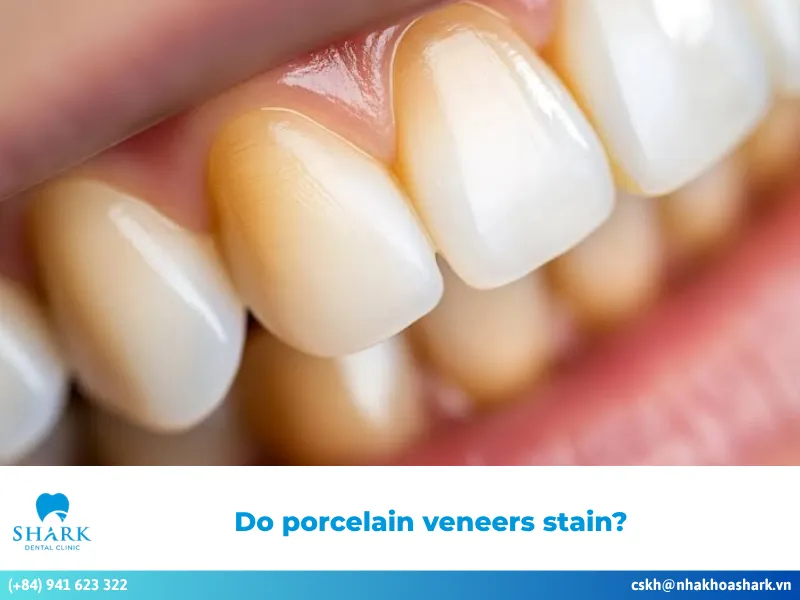
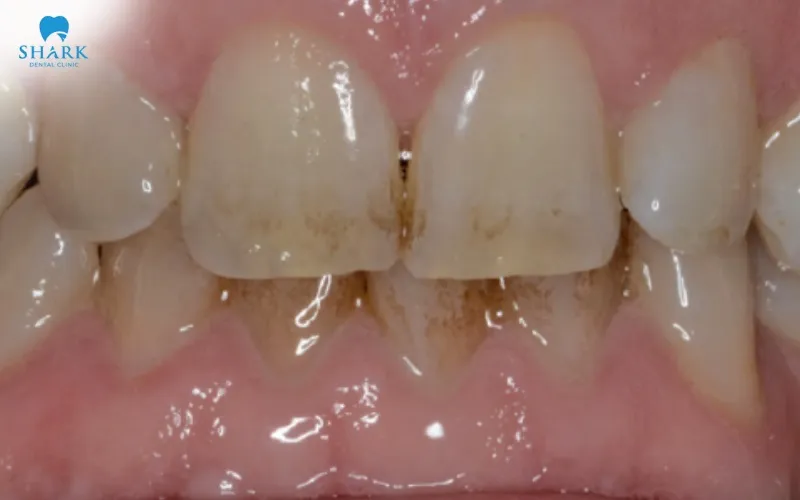
Although composite veneers can improve tooth color and overall aesthetics, their stain resistance is not the same as that of porcelain veneers. In practice, drinking coffee regularly may still cause composite restorations to become dull or discolored over time, particularly when they are not cleaned, maintained, and protected correctly.
Why composite resin is prone to staining?
Composite resin may gradually change color because of several factors that affect the material during daily use. Inadequate finishing and polishing is one of the most important causes. When the restoration surface is not sufficiently smooth, pigments from foods and beverages can attach more easily, causing the composite to become dull more quickly and lose its original aesthetic appearance.
Several other factors may also increase the risk of composite staining, including:
- Dietary habits: Frequently drinking coffee, tea, red wine, colored soft drinks, or smoking can cause pigments to accumulate on the surface of composite restorations. Repeated exposure allows these dark substances to remain on the material and gradually affect its original shade.
- Inadequate surface treatment: Poor marginal adaptation or inadequate finishing and polishing may affect the marginal seal and the material’s resistance to discoloration. When the restoration does not fit or bond properly, pigments may collect more easily around the surrounding surfaces.
- Incomplete light curing: If the composite material is not cured with the dental light using the correct technique, it may not achieve optimal hardness or color stability. As a result, the restoration may be more likely to become discolored during everyday use.
Composite vs porcelain veneers: Stain resistance compared
Both composite and porcelain veneers can improve the color and appearance of the teeth. However, these two materials differ considerably in their ability to resist staining.
- Porcelain veneers: Porcelain has an advantage because its surface is dense, smooth, and almost nonporous, which limits the absorption of pigments from foods and beverages. Therefore, when patients consume coffee, tea, red wine, or other colored drinks, porcelain veneers can maintain a stable shade for a long period when they are cared for properly.
- Composite veneers: Composite material provides lower stain resistance. Over time, its surface may become worn or less smooth, creating favorable conditions for pigments from food, beverages, and tobacco to attach. Consequently, composite restorations generally become dull or discolored more quickly than porcelain veneers. They may require professional polishing or complete replacement when the color change begins to affect the appearance of the smile.
How to drink coffee without staining your composite veneers?
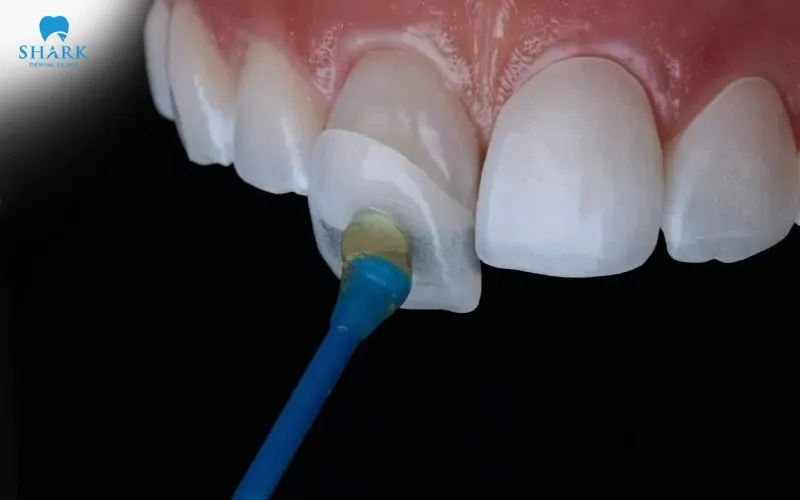
You do not necessarily need to stop drinking coffee when you have composite veneers. However, because composite material is more likely to retain pigments than porcelain, maintaining several appropriate care habits can help reduce pigment accumulation, keep the restorations brighter, and extend their aesthetic lifespan.
Rinse your mouth with water immediately
After drinking coffee, rinse your mouth thoroughly with clean water to remove any residue and dark pigments remaining inside the oral cavity. This habit not only helps reduce the risk of composite veneer discoloration but also helps dilute and remove acidic residue, helping protect the natural teeth and surrounding gum tissue.

Use a straw for iced coffee
Using a straw when drinking iced coffee is a simple way to reduce direct contact between the beverage and the surfaces of composite veneers. Directing the coffee farther into the mouth helps limit the amount of pigment that reaches and remains on the restorations.
This habit can also reduce the exposure of both the composite material and the natural teeth to the acids contained in coffee. However, the straw should be positioned carefully so that the drink passes beyond the front tooth surfaces as much as possible.

Maintain excellent oral hygiene
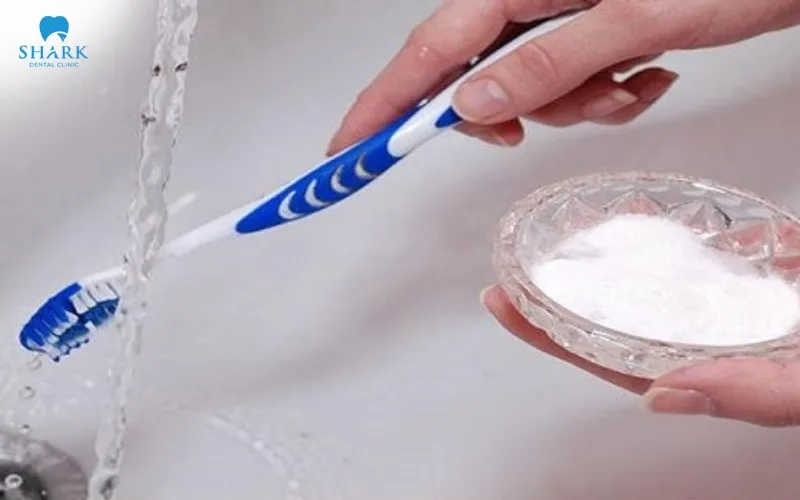
Brush your teeth at least twice each day and combine regular brushing with dental floss or a water flosser. This routine helps remove plaque and limits the accumulation of pigments on composite surfaces. You should also prioritize a low-abrasion toothpaste to avoid making the restoration surface rough. A smoother surface is less likely to retain dark pigments and can therefore reduce the risk of staining gradually developing over time.

Can you whiten stained composite veneers?
Discoloration of composite veneers does not necessarily mean that they must be replaced immediately. Many people assume that conventional teeth whitening can whiten a composite restoration. However, this belief is not accurate because whitening agents affect natural enamel differently from artificial restorative materials.
Why traditional teeth whitening does not work on composite resin?
Conventional teeth-whitening methods are designed to act on natural tooth enamel by breaking down discoloring molecules within the tooth structure. Composite resin, however, is an artificial restorative material and does not have the same structure or chemical response mechanism as natural enamel. For this reason, it does not respond to whitening substances in the same way.
When teeth whitening is performed, the natural teeth may become visibly brighter, while the composite filling or veneer remains its original shade. This can create a noticeable color difference between the natural teeth and the composite restoration, making the restoration appear darker than the surrounding teeth even though its actual color has not changed.
Professional dental cleaning and polishing
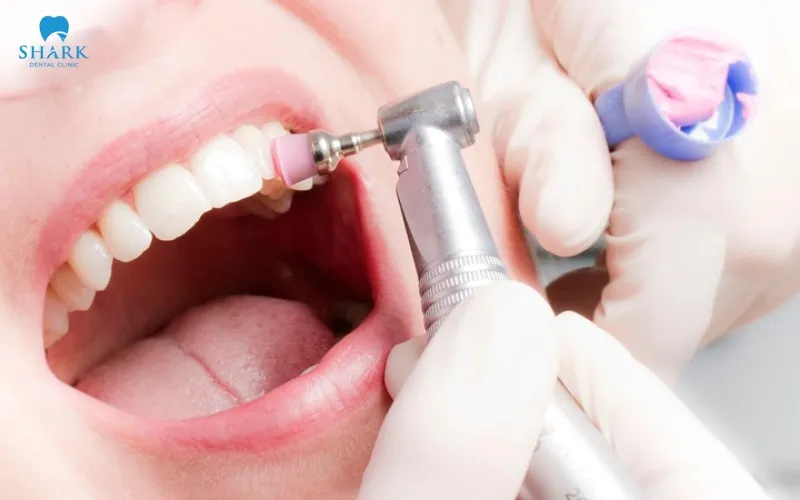
When composite veneers develop stains from coffee, tea, tobacco, or strongly colored foods, professional dental cleaning and polishing are usually considered before replacement. For stains located on the outer surface, a dental professional can polish the composite to reduce or remove the attached pigments. This procedure also helps restore surface smoothness and gloss while improving the overall appearance of the composite material. In many cases, professional polishing can return the restoration to nearly its original appearance without requiring complete replacement.
When to consider replacing your composite veneers?
You should consider replacing composite veneers when the restoration has become severely discolored and cannot be improved through professional polishing. Replacement may also be appropriate when the composite surface has become worn, rough, chipped, fractured, or noticeably degraded. In these situations, a new restoration can help restore the original color, aesthetic appearance, and normal function of the treated teeth.
It is important to understand that composite veneers are not permanent restorations. After a certain period of use, maintenance, repair, or replacement is normal. The time at which replacement becomes necessary depends on the quality of the composite material, the position of the restoration, and each patient’s oral hygiene practices, dietary habits, and daily use of the treated teeth.
Other common beverages that stain composite veneers
Coffee is not the only drink that may stain composite restorations. Many dark-colored beverages or products containing artificial or natural coloring agents can gradually cause composite veneers to look dull or discolored, especially when they are consumed frequently and the teeth are not cleaned correctly. Common drinks that require particular attention include the following. Limiting how often these beverages contact the restorations and cleaning the mouth afterward can help reduce the amount of pigment that remains on the composite surfaces:
- Coffee and espresso: These beverages contain high concentrations of dark pigments that can easily attach to composite surfaces when consumed regularly. Repeated exposure may gradually make the restorations appear duller or darker, particularly when residue remains on the teeth for extended periods after drinking.
- Tea: Black tea and green tea contain high levels of tannins, making them more likely to leave visible stains on composite restorations after frequent or prolonged consumption, especially when daily oral cleaning is insufficient.
- Red wine: Red wine contains both dark pigments and acids. These components can increase the likelihood of color deposits remaining on composite veneer surfaces and contribute to increasingly visible discoloration over time when these pigments remain in contact with the restoration surfaces.
- Dark-colored soft drinks: These drinks contain coloring agents and acids that may cause composite restorations to change color when they are consumed regularly over a prolonged period and their colored residue is not removed through appropriate oral hygiene.
- Energy drinks with artificial coloring: Their high concentration of artificial colorants may increase the risk of pigment accumulation on composite surfaces.

In summary, Shark Dental Clinic has provided a detailed answer to the question, “Does coffee stain composite veneers?” Regular coffee consumption can cause composite restorations to become dull or discolored over time when they are not cared for correctly. Hopefully, the information above helps you better understand this issue and provides useful knowledge for protecting your teeth and composite restorations safely while maintaining the desired aesthetic result.
>>> See more: Can you eat with pop on veneers?