

Porcelain crowns are highly regarded for their ability to maintain a stable and natural-looking color over time. However, after many years of use, some patients may notice that their porcelain crowns gradually lose their original brightness or appear less white than when they were first placed. This often leads to the question: Can you whiten porcelain crowns? In the article below, Shark Dental Clinic will provide a detailed explanation of whether you can whiten porcelain crowns, the available whitening methods, and what you should know before considering any treatment.
Can you whiten porcelain crowns?
Many people wonder, can you whiten porcelain crowns in the same way as natural teeth? The answer is not exactly. In reality, porcelain crowns are made from high-quality ceramic or dental porcelain materials with a non-porous surface. Unlike natural tooth enamel, these materials do not absorb whitening agents, which means conventional teeth whitening treatments are generally ineffective on porcelain crowns.
Both at-home whitening products and professional in-office whitening procedures are designed to remove stains and discoloration from natural tooth enamel. However, the color of a porcelain crown is determined during the manufacturing process and remains unchanged when exposed to whitening gels or bleaching agents. As a result, if a porcelain crown becomes dull, stained, or no longer matches the shade of the surrounding natural teeth, the dentist will typically recommend polishing and professionally cleaning the crown’s surface or replacing it with a new restoration instead of attempting to whiten it.
Thanks to their excellent stain resistance, porcelain crowns are able to maintain a stable and natural-looking shade for many years. Even so, to keep your smile looking bright and attractive, you should continue practicing good oral hygiene every day and visit Shark Dental Clinic for regular dental check-ups, following your dentist’s recommendations for long-term oral health and crown maintenance.
What causes dental crowns to stain?
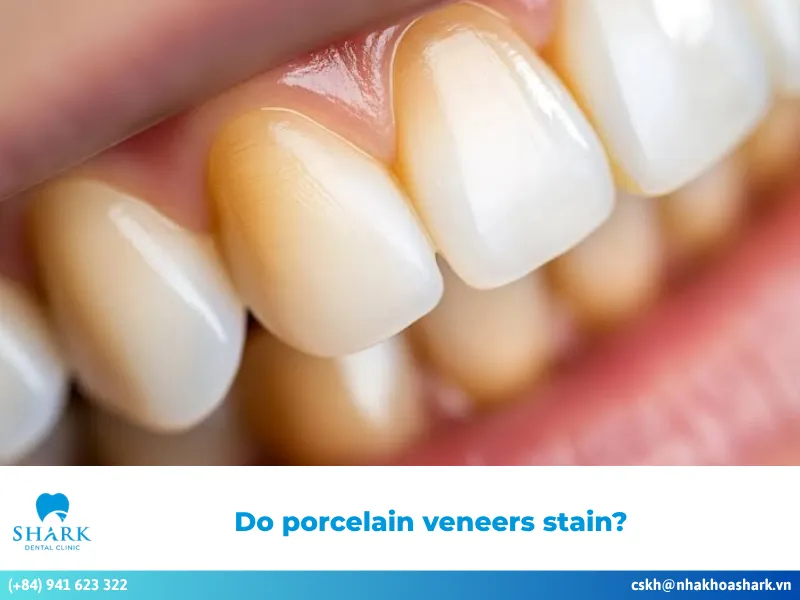
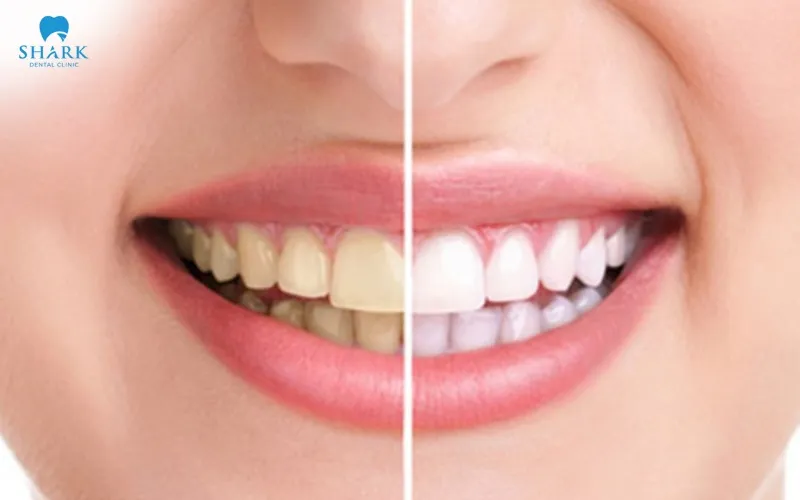
Although porcelain crowns are more resistant to staining than natural teeth, they can still become discolored or lose their brightness after years of use. If you’re wondering, “Can you whiten porcelain crowns?” It’s also important to understand the common causes of discoloration before considering any treatment options:
- Type of dental crown used: The type of dental crown plays an important role in how well it maintains its appearance over time. Metal porcelain crowns generally have lower long-term aesthetic durability than all-ceramic crowns. After years of use, the metal framework inside the crown may gradually oxidize, causing a dark line to appear along the gum margin and making the restoration look less natural. In contrast, all-ceramic crowns are better at maintaining their bright, natural color and are less likely to become discolored over time.
- Improper crown placement: If a dental crown is not properly fabricated or does not fit closely against the prepared natural tooth, small gaps may develop between the crown and the tooth structure. These spaces can trap food debris and bacteria, leading not only to discoloration of the crown but also to an increased risk of gum inflammation and other oral health problems.
- Daily eating and drinking habits: Frequently consuming dark-colored foods and beverages, such as coffee, tea, colored soft drinks, chocolate, or tobacco products, can gradually stain the surface of dental crowns over time. As these pigments accumulate, the crown may lose some of its original brightness and appear less aesthetically pleasing.
- Improper oral hygiene: Poor oral hygiene is another common reason why dental crowns may appear stained. Inadequate tooth brushing, failing to use dental floss, or neglecting to clean between the teeth regularly allows plaque and tartar to accumulate around the crown. Over time, this buildup can make the restoration appear yellowish or dull, reducing its overall aesthetic appearance.
>>> See more: How long after a crown is cemented can I drink coffee?

Teeth whitening treatments for people with dental restorations
Although the answer to can you whiten porcelain crowns is generally no, there are still several effective ways to improve their appearance and maintain a brighter, more attractive smile. While porcelain crowns cannot be whitened using conventional bleaching treatments like natural teeth, the following methods are commonly recommended by dentists:
- Professional cleaning and polishing: After years of use, the surface of porcelain crowns may gradually accumulate plaque, surface stains, and discoloration from coffee, tea, tobacco, and certain foods. Having your teeth professionally cleaned and polished during regular dental visits helps remove these surface deposits, restore the crown’s natural shine, and make it appear brighter and cleaner without affecting the restoration itself.
- Professional deep cleaning at the dental clinic: If a porcelain crown appears dull because of long-term plaque or tartar buildup, your dentist may perform a more thorough professional cleaning using specialized dental instruments. This procedure effectively removes deposits from the crown’s surface while preserving the integrity, strength, and smooth finish of the porcelain material. It is a reliable option for improving the appearance of crowns that have been in use for many years.
- Replacing the porcelain crown: If the porcelain crown has become significantly discolored, has lost its original shade over time, or no longer matches the surrounding natural teeth, replacing it with a new crown is often the most appropriate solution. A new porcelain crown can be custom fabricated in a shade that better suits the patient’s preferences and blends naturally with the rest of the smile, providing a brighter and more harmonious appearance.
- Whitening natural teeth before replacing the crown: For patients who have both natural teeth and porcelain crowns, the dentist may recommend whitening the natural teeth first and then fabricating a new porcelain crown that matches the newly whitened tooth shade. This treatment approach helps create a more consistent tooth color across the entire dental arch and provides a more balanced, natural-looking, and aesthetically pleasing final result.
How to prevent color change in porcelain crowns?
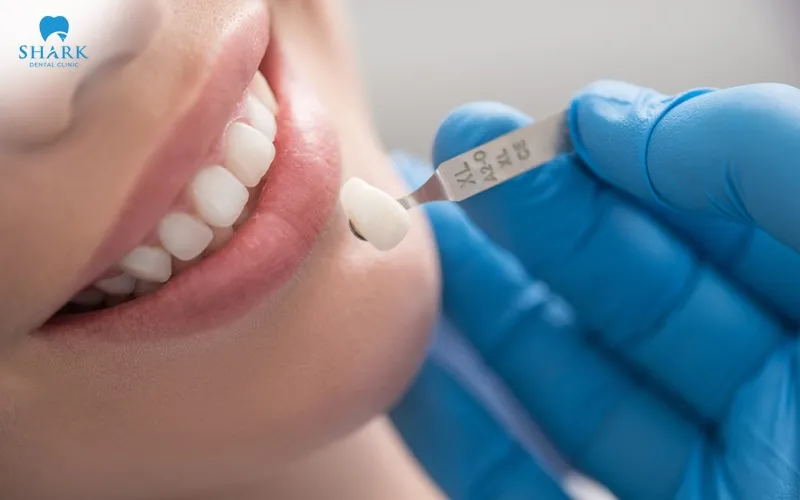
To keep your porcelain crowns looking bright, glossy, and natural-looking for many years, it is important to combine proper daily oral hygiene with healthy lifestyle habits. If you have ever wondered if you can whiten porcelain crowns, preventing discoloration in the first place is the most effective way to preserve their appearance. Below are several important recommendations to help minimize the risk of porcelain crowns becoming stained or losing their original shade over time.
- Brush your teeth at least twice a day using a soft-bristled toothbrush and a gentle toothpaste that is suitable for your oral condition. Brush carefully with gentle vertical or circular motions to effectively remove plaque, food debris, and surface stains without irritating the gums or damaging the polished surface of your porcelain crowns.
- Use dental floss every day to clean between your teeth and remove trapped food particles and bacteria, especially around the area where the porcelain crown meets the gumline. Since this area is often difficult to clean with a toothbrush alone, flossing helps reduce plaque accumulation and supports healthier gums around the restoration.
- Avoid brushing your teeth immediately after consuming acidic foods or beverages, such as soft drinks, citrus fruits, coffee, or tea. Instead, wait about 30 minutes before brushing your teeth to help protect the surfaces of both your natural teeth and your porcelain crowns from unnecessary wear.
- Limit how often you consume foods and beverages that are known to cause staining, including coffee, strong tea, red wine, colored soft drinks, and tobacco products. Reducing your exposure to these staining agents can help your porcelain crowns retain their original shade and natural brightness for a longer period.
- Include more crunchy fruits and vegetables, such as apples, carrots, and celery, as part of your daily diet. These foods can naturally help clean the tooth surfaces during chewing while also supporting healthy gums and contributing to better overall oral health.
- Drink enough water throughout the day to help rinse away food debris, bacteria, and staining substances that may remain in the oral cavity after eating or drinking. Adequate water intake also helps keep your mouth cleaner and supports the long-term brightness and cleanliness of your porcelain crowns.
- Visit your dentist every six months for regular dental examinations, professional scaling, and polishing. Routine dental maintenance allows your dentist to monitor the condition of your porcelain crowns, remove plaque and tartar buildup, restore surface shine, and detect any potential problems early to help extend the lifespan of your restoration.

As discussed above, the answer to “Can you whiten porcelain crowns?” depends on the material used to fabricate the restoration. Conventional whitening treatments, particularly at-home whitening products, may only remove minor surface stains and cannot significantly change the actual color of porcelain crowns. Therefore, if you would like to improve the appearance of your dental restorations, it is recommended that you visit a reputable dental clinic where your dentist can perform a comprehensive examination, assess your oral condition, and recommend the most appropriate treatment solution. Shark Dental Clinic hopes the information shared in this article has given you a clearer understanding of this topic, helping you confidently choose the most suitable, effective, and safe solution for maintaining a bright, healthy, and beautiful smile.