
In the past, when a porcelain crown needed to be removed, dentists generally had to cut through or destroy the restoration, creating a potential risk of affecting both the porcelain crown and the natural tooth structure. Today, the introduction of laser removal of porcelain crown restorations has provided a gentler solution for assisting crown removal by selectively targeting the bonding cement layer. What exactly is this method? Join Shark Dental Clinic as we examine it in detail below.
What is laser removal of porcelain crowns?
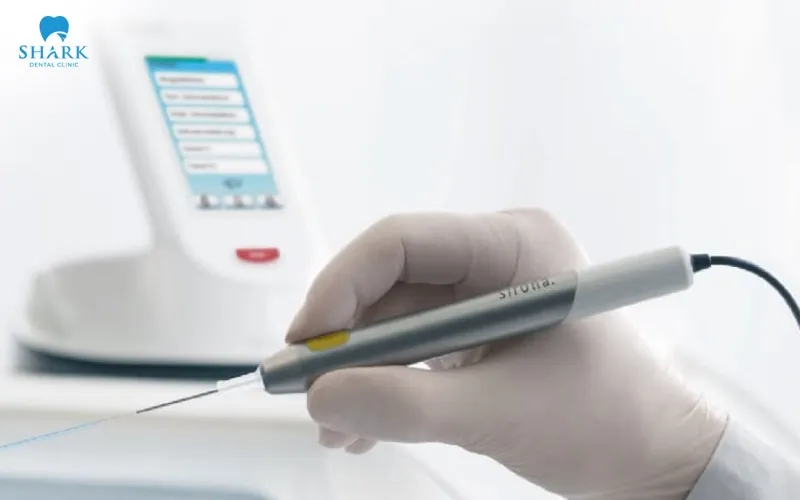
Laser removal of porcelain crowns is a technique that uses an Er laser to help weaken or break down the bonding material between the porcelain crown and the prepared tooth, allowing the dentist to remove the crown more conveniently. Instead of cutting through or destroying the entire porcelain crown as required by a traditional method, laser energy is directed primarily at the bonding cement layer, reducing the amount of force needed to remove the restoration.
This method is commonly indicated when a porcelain crown needs to be replaced or when the underlying tooth must be examined or treated. Its purpose is to minimize possible effects on both the porcelain crown and the natural tooth structure. By concentrating the laser effect on the cement rather than the crown, the technique supports a more controlled removal process. The crown does not need to be immediately divided into sections or completely destroyed before it can be lifted from the tooth. This may allow the dentist to access the prepared tooth below while limiting unnecessary effects on the restoration and remaining natural tooth tissue.
How does laser-assisted crown removal work?
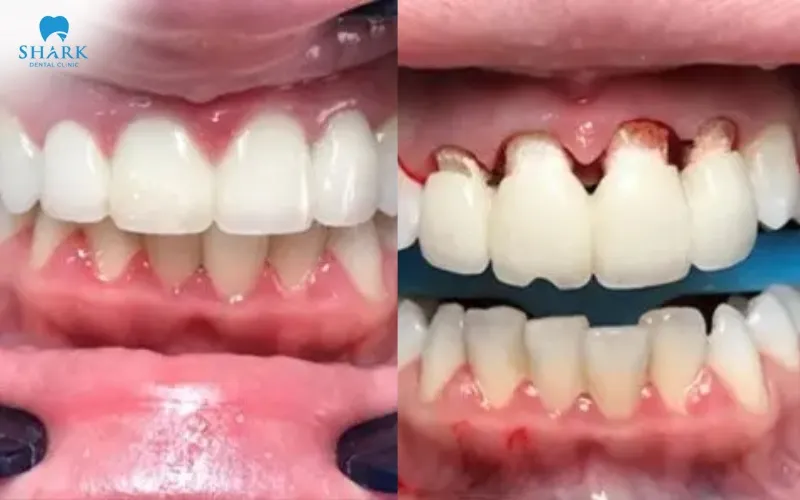
Laser-assisted crown removal works according to the principle of selectively targeting the bonding material between the porcelain crown and the prepared tooth rather than cutting directly into the restoration. Through this mechanism, the dental crown can be removed with minimal mechanical force, helping preserve the natural tooth structure and reduce the risk of damaging the restoration.
The science of laser debonding
Laser crown removal primarily uses an Er laser with a wavelength ranging from 2,780 nm to 2,940 nm. Unlike methods that remove restorations using mechanical cutting instruments, an Er laser can transmit energy through various types of dental ceramic materials. The energy then acts mainly on the bonding cement layer positioned between the porcelain crown and the prepared tooth or abutment.
Laser energy is absorbed by water and organic components within the bonding cement, producing microscopic vaporization and a photomechanical ablation. This process weakens or breaks the bond within the cement layer without requiring the dentist to cut directly into the porcelain crown or natural tooth tissue.
The laser energy passes through the ceramic material before reaching the cement interface underneath. There, absorption by water and organic elements creates microscopic vaporization and photomechanical effects. These effects reduce the strength of the connection holding the crown in place. Once the bond has been sufficiently weakened, the dentist can remove the restoration with less mechanical pressure.
Because the laser acts selectively on the bonding material, the porcelain crown can be removed using minimal mechanical force. This helps limit the risk of cracking or breaking the restoration, reduces damage to the prepared tooth, and, in many cases, may allow the crown to be preserved for reuse when it continues to meet clinical requirements.
Studies also show that when the correct laser settings are used together with a water-spray cooling system, the temperature increase within the tooth structure and around the restoration remains within safe limits. This helps minimize potential effects on the dental pulp and nearby tissues.
Types of lasers used in modern dentistry
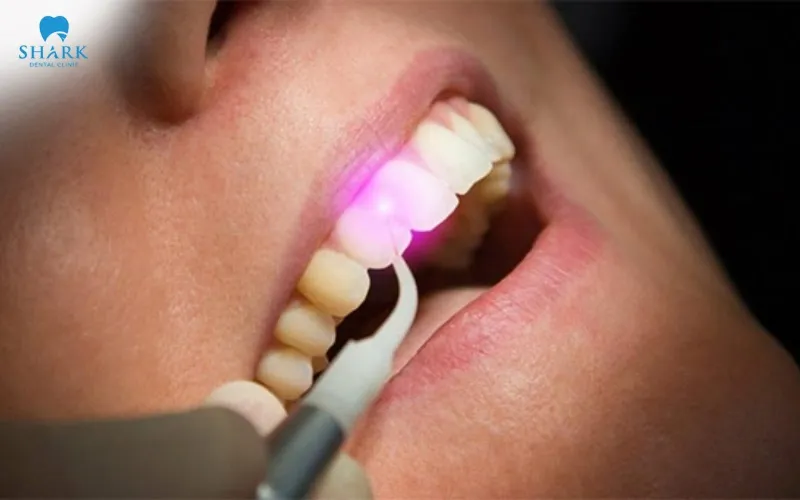
Today, several types of lasers are used in dentistry to support the treatment of soft tissue, hard tissue, and certain restorative procedures. Each laser has a different wavelength and absorption profile, making it suitable for specific clinical indications. Some commonly used dental lasers include:
- Nd laser: This laser is commonly used in soft-tissue treatment. It can support bacterial control within periodontal pockets, assist with bleeding control, and promote the healing process.
- Diode laser: This laser is widely used for soft-tissue procedures such as gingivectomy, gum contouring, periodontal treatment, and reducing bacteria within the oral cavity.
- Er laser: This type of laser is highly absorbed by water and hydroxyapatite, allowing it to act effectively on both hard and soft tissues while generating relatively little heat. In restorative dentistry, Er lasers may also be used to assist with the removal of ceramic brackets or porcelain restorations. They work by selectively targeting the bonding material, helping weaken the bond while limiting effects on the restoration and surrounding tooth structure.
Laser removal vs. traditional crown removal
Every crown removal method has its own advantages and limitations. Comparing laser-assisted techniques with traditional methods can help patients better understand how each approach affects the preservation of tooth structure, the treatment experience, and the possibility of keeping the restoration intact in different clinical situations.
Traditional crown removal methods
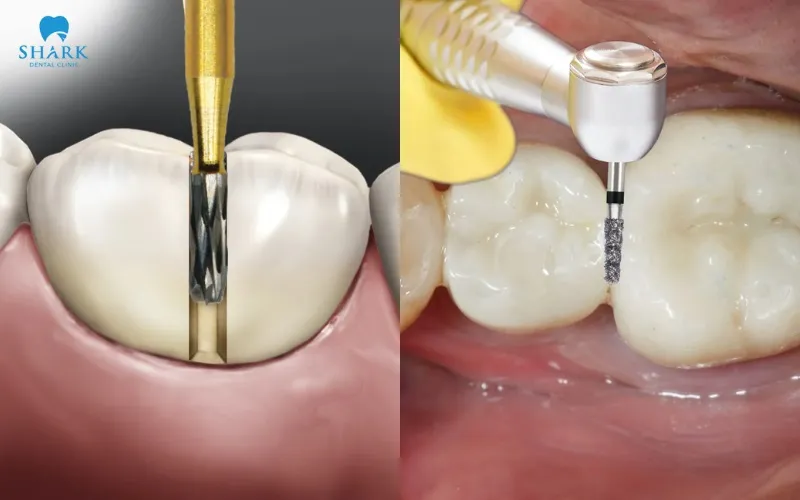
Before laser removal of porcelain crowns became available, dentists primarily relied on mechanical methods to remove crowns. Depending on the condition of the restoration, the type of bonding cement, and the treatment objective, the dentist selects an appropriate technique for crown removal.
- Removal with specialized instruments: The dentist uses dedicated crown-removal instruments to apply force and separate the crown from the prepared tooth. This method is generally considered when the bond is not excessively strong and there is a reasonable possibility of preserving the restoration.
- Cutting or sectioning the porcelain crown: When a crown is firmly bonded or is not intended for reuse, the dentist may cut or divide it into several sections so that it can be removed safely. After this procedure, the porcelain crown generally cannot be used again.
- Combining several mechanical techniques: In some situations, the dentist may combine a crown-removal instrument with partial cutting of the restoration. This approach helps reduce the force placed on the natural tooth and limits the risk of damaging the remaining tooth structure.
Laser-assisted crown removal advantages
Compared with traditional crown removal methods, laser-assisted techniques offer several advantages in appropriately selected cases, including:
- Reduced force during crown removal: The laser helps weaken the bond within the cement layer, allowing the dentist to remove the crown with less mechanical force. This limits the amount of pressure applied to both the restoration and the natural tooth structure.
- Shorter treatment time: Because the debonding process can proceed more efficiently, the dentist may spend less time manipulating the crown, helping improve treatment efficiency.
- Greater protection for the tooth and restoration: Reducing the force required for removal helps limit the risk of cracking or chipping the porcelain crown and damaging the tooth structure underneath. In certain cases, it may also increase the likelihood that the restoration can be preserved.
- Limited thermal effects on tooth tissues: When the correct settings are used, the laser selectively delivers energy to the bonding material and generates a low amount of heat. This helps reduce its effect on the tooth structure and surrounding tissues.
Key benefits of removing porcelain crowns with lasers
Compared with traditional porcelain crown removal, laser technology can provide several benefits in suitable cases. By selectively acting on the bonding material, the laser supports a gentler crown removal process while helping preserve both the restoration and the natural tooth structure.
Preservation of the natural tooth structure
The laser primarily targets the bonding cement between the porcelain crown and the prepared tooth instead of cutting directly into the restoration or tooth tissue. As a result, the dentist can remove the crown using minimal mechanical force, helping reduce the need to grind away additional tooth structure and preserve as much of the remaining natural tooth as possible.
Preserving the prepared tooth is especially important because the structure underneath the crown has already been shaped to support the restoration. Excessive cutting or force during removal could further reduce the remaining tooth tissue. By weakening the cement interface first, laser-assisted removal can help the dentist access the underlying tooth while limiting unnecessary removal of healthy structure.
Potentially more comfortable patient experience
Because the procedure does not require the dentist to use prying force or cut through and destroy the restoration as in some traditional methods, laser-assisted porcelain crown removal is generally gentler for the patient.
At the same time, reducing the impact on the surrounding tissues also helps limit discomfort during and after the procedure. This method provides patients with a more comfortable experience with potentially less pain or soreness.
Ability to remove restorations completely intact
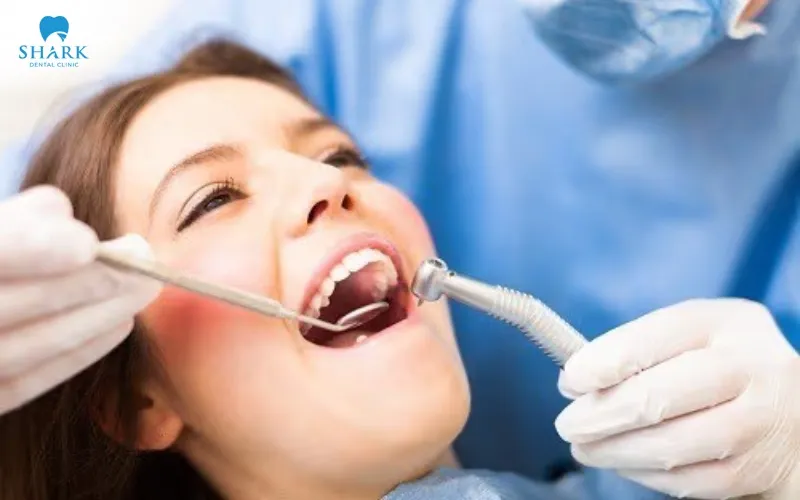
In many suitable cases, laser energy helps weaken the bond within the cement layer without cracking or breaking the porcelain crown. This creates an opportunity to preserve the restoration, allowing the dentist to inspect, repair, or reuse the crown when it continues to meet the required standards for fit and function.
Preserving the crown intact may be particularly useful when the restoration still fits properly and remains clinically functional. Rather than cutting the crown into sections, the dentist can first weaken the cement bond and then carefully remove the restoration. After removal, the crown must still be examined thoroughly before the dentist determines whether repair or reuse is appropriate.
Faster procedure and reduced chair time
By helping separate the bond between the porcelain crown and the prepared tooth, laser energy allows the restoration to be removed more efficiently. This can reduce the amount of treatment time required compared with methods that involve cutting through and destroying the porcelain crown. In some cases, a more efficient removal process may also shorten the overall treatment time and make the subsequent restorative steps more convenient. In suitable cases, this may help reduce chair time.
The step-by-step laser crown removal process
Laser removal of porcelain crowns must follow a carefully controlled process to protect the natural tooth, the restoration, and the surrounding tissues. Depending on the individual clinical case, the dentist will adjust each stage of the procedure to achieve the best possible result.
Initial clinical evaluation and planning
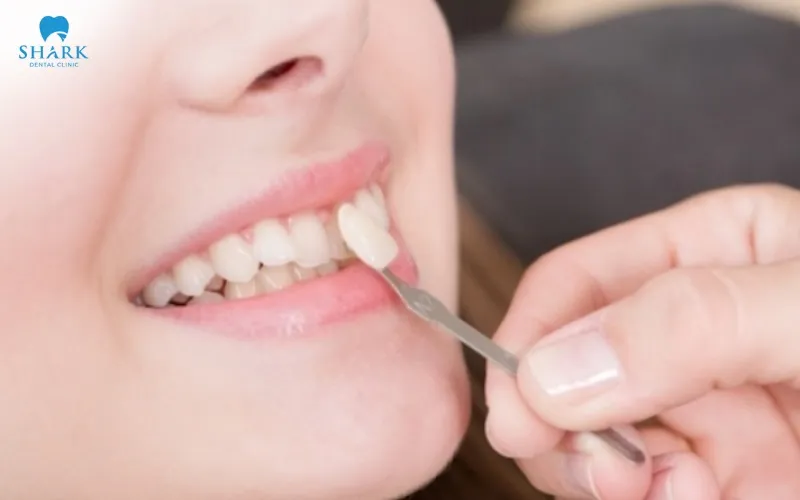
Before removing the dental crown, the dentist examines the condition of the restoration, evaluates the prepared tooth and gum tissues, and identifies the reason for removal. Possible reasons include a loose crown, an open margin, recurrent tooth decay, or the need for further treatment. Based on the examination findings, the dentist determines whether laser-assisted crown removal is suitable and develops an appropriate treatment plan.
The laser debonding procedure
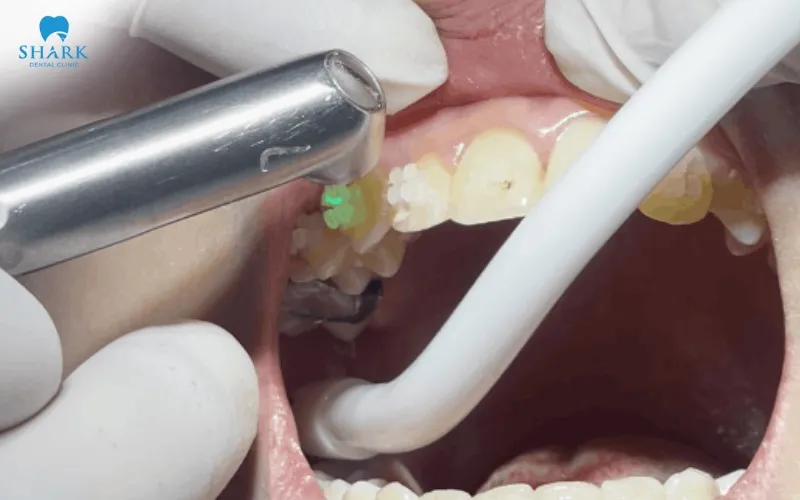
After completing the necessary preparation, the dentist directs the laser onto the surface of the porcelain crown using suitable operating settings. The laser energy passes through the ceramic material and reaches the cement layer, where it weakens or breaks the bond between the crown and the prepared tooth.
The dentist applies the laser according to the characteristics of the restoration and the bonding material. Once the bond has been reduced sufficiently, the crown can be removed with gentle mechanical force. This helps limit the risk of damaging the natural tooth or causing the restoration to crack or break.
The controlled application of laser energy is important throughout this stage. The dentist must use appropriate settings so that the energy primarily affects the bonding layer while limiting unnecessary effects on the crown, tooth structure, and nearby tissues.
Post-removal tooth assessment and next steps
After the crown has been removed, the dentist examines the prepared tooth and gum tissues and removes any remaining cement when necessary. Depending on the reason for treatment, the patient may be advised to undergo professional cleaning, treatment for tooth decay, root canal treatment, restoration repair, or replacement of the crown.
If the porcelain crown remains intact and continues to meet clinical requirements, the dentist may consider reusing it after a comprehensive evaluation. The crown must be assessed for its fit, function, condition, and suitability before any decision regarding reuse is made.

Frequently asked questions about laser crown removal
Below are several frequently asked questions about laser removal of porcelain crowns, together with answers that can help patients understand the method more clearly before choosing treatment.
Is laser porcelain crown removal safe for all patients?
No. This technique must be recommended by a dentist after evaluating the condition of the tooth, the type of restoration, and the bonding material. When the procedure is performed for an appropriate clinical indication and with the correct laser settings, it can support safe porcelain crown removal while limiting the effects on both the tooth structure and the restoration. However, suitability must be assessed individually rather than assumed for every patient.
Can any type of dental crown be removed with a laser?
No. Not every type of dental crown responds to this technique. Whether laser removal of a porcelain crown is possible depends on several factors, including the restoration material, crown thickness, type of bonding cement, and the dentist’s clinical assessment.
In conclusion, laser removal of porcelain crown is a modern dental method that uses energy generated at specialized laser wavelengths to break down or weaken the layers of bonding material holding the restoration in place, instead of using a dental handpiece to cut through it as in traditional methods. Through the information shared above, Shark Dental Clinic hopes to help you develop a clearer and more complete understanding of this technique, while gaining additional useful knowledge and practical experience when selecting the most appropriate solution to protect your oral health effectively and as safely as possible overall.
>>> See more: Can a crown be removed and reused?