
During the healing period after implant surgery, finding that a dental implant healing cap fell out can be worrying for many people, especially when they are not sure what the correct response should be. This situation is not always a dangerous one, but if it is left for a long time, or if you decide to put the cap back in yourself at home, the implant area may end up being affected. To help you understand this situation more clearly, let Shark Dental Clinic walk you through the details below.
Why did your dental implant healing cap fall out?
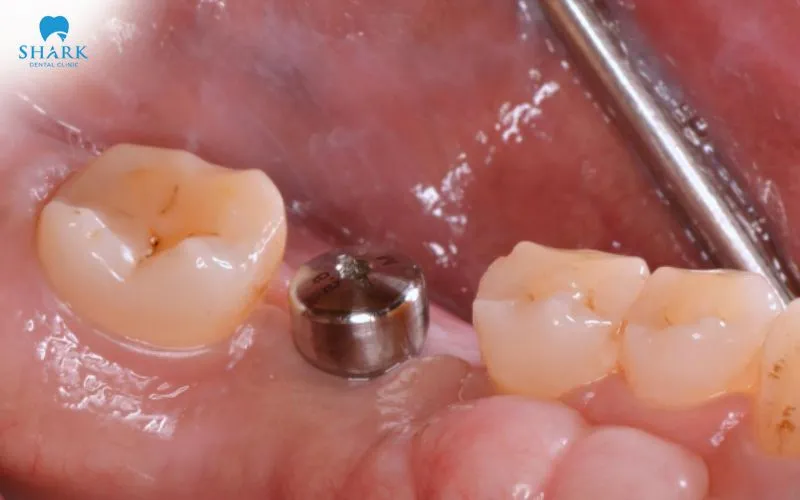
A gingival former can work loose or fall out while it is in place, and there are a number of different reasons why this can happen. Among them, a screw that has not been tightened to the appropriate torque and the force of chewing acting on the implant area are the two factors that are most often considered in cases where a dental implant healing cap fell out.
Loose screws or improper torque during placement
The gingival former is fixed onto the implant post with a screw that has to be tightened to an appropriate torque. If the screw has not been tightened firmly enough, the cap can gradually work its way loose while you are eating and chewing, and it may eventually fall out altogether. On the other hand, tightening it too much is not the ideal solution either, because it can make things difficult later on when the dentist needs to remove the cap in order to carry out the next restorative steps.
Chewing hard food or excessive pressure on the area
While you are eating and chewing, a strong force acting on the gingival former can cause the screw to rotate and work loose, or can make the cap come away completely, especially if you regularly eat hard or chewy foods, or direct your chewing force straight onto the implant site. For this reason, anyone who has had the procedure needs to limit the pressure placed on the implant area and follow the diet the dentist has recommended in order to protect the gingival former.

What should you do when a healing cap falls out?
When a gingival former falls out, you should not try to screw it back in yourself, and you should not simply ignore what has happened either. Dealing with it early, ideally within the first 24 hours, after your dental implant healing cap fell out, allows the dentist to check the position of the implant and limits the chance of the gum tissue growing over and covering the area that still needs to be restored.
Immediate steps to take within 24 hours
If your gingival former has fallen out, you should:
- Keep the cap that has fallen out, store it somewhere clean, and bring it with you when you go to the dental clinic.
- Do not fit or screw the cap back in yourself, as doing so may injure the gum tissue or affect the position of the implant.
- Clean your teeth and mouth gently, avoiding any heavy contact with or direct impact on the implant area.
- Limit hard and chewy foods, and avoid placing pressure on the area that has just lost its cap.
- Contact the dental clinic and arrange an appointment within 24 hours so that the dentist can examine the area and deal with it promptly.
If the cap is only slightly wobbly and has not come out completely, you should still not try to tighten it any further yourself. In cases where there is swelling and pain that keeps increasing, a fever, pus, or an unusual bad smell, you need to let your dentist know as soon as possible.

Why seeking prompt professional care is important?
The gingival former has the job of protecting the site and of maintaining the space that is needed while the gum tissue is healing. When the cap falls out, this area can end up being covered over by gum tissue growing across it if the problem is not dealt with early. If you come to the dental clinic within a suitable period of time, the dentist can check the condition of the site and screw the cap back into place when circumstances allow. If it is left too long, on the other hand, the gum tissue may start to close over, which makes treatment more complicated and sometimes means an additional minor procedure is needed.
Can you screw the healing cap back in yourself?
You should not try to screw the gingival former back in at home. This component is secured in place using a specialised instrument that is made specifically for the implant system in question, and the size and the shape of the driver tip can differ from one brand to another. Ordinary household tools are therefore not suitable for the job.
More importantly than that, putting the cap back on by yourself without the right expertise can mean that it ends up seated in the wrong position, or tightened to a torque that is not appropriate, and this in turn affects the gum tissue and the healing process. When the cap falls out or comes loose, you should keep the component safe and contact the dental clinic so that the dentist can examine the site, fit it back correctly, and keep the implant area safe.
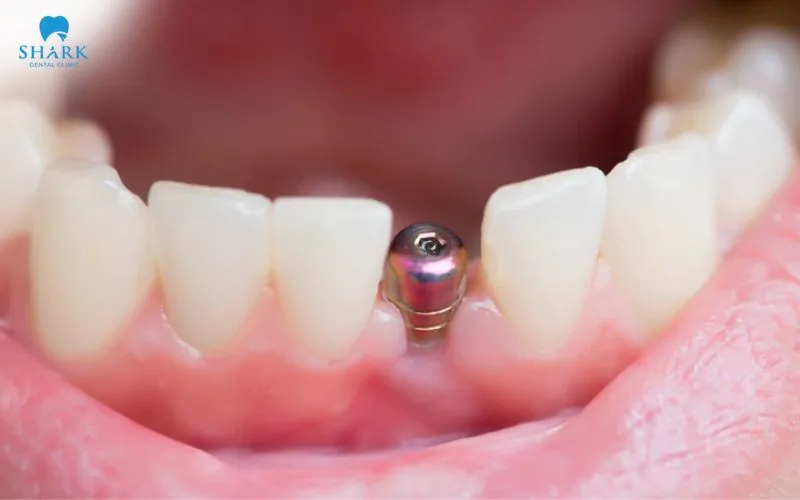
What is the function of a healing cap in implant treatment?
The gingival former is a component used during the restorative stage of implant treatment, and its role is to help shape the gum tissue and maintain the space that the crown will need. Thanks to this, the dentist is able to create a gum line that is suitable, which also makes things easier at the stage of taking the impression and fabricating the implant crown later on.
How the healing cap shapes surrounding gum tissue?
The gingival former works as a space holder that guides the gum tissue while it heals. The gum gradually wraps around the cap following the shape that has been designed, creating a contour that corresponds reasonably well to the crown that is planned for the restoration.
If the cap comes away and is left off for too long, the gum tissue may start to grow in and narrow the space around the implant. This can affect the impression-taking process and can mean the dentist has to deal with the gum tissue before the restoration can continue.
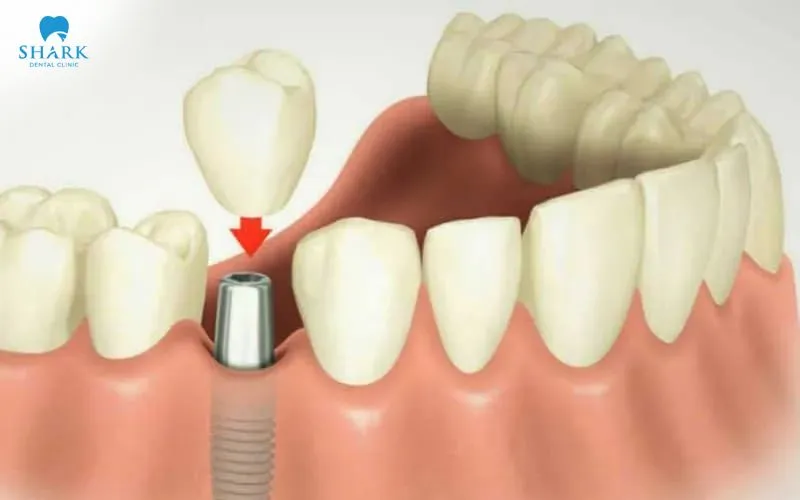
How long does the abutment area take to heal?
After a gingival former has been fitted, the healing period varies depending on the condition of the soft tissue and the restorative plan before the impression for the restoration is taken. This period of time helps the gum tissue to become more stable, limits bleeding, and creates the conditions for the dentist to record the gum contour accurately.
However, the healing time in practice can differ from person to person, depending on the condition of the gum tissue, the position of the implant, and the way each individual recovers. The dentist will examine the site directly and decide on the right moment to take the impression and have the crown made.
>>> See more: Dental implant healing abutment
Safe dental implant treatment at Shark Dental Clinic
At Shark Dental Clinic, implant treatment is carried out in clearly defined steps, from the examination and treatment planning through to the restoration and the follow-up after treatment.
- Step 1 – Examination and treatment planning: The dentist checks the condition of your teeth and mouth and takes a 3D Cone Beam CT scan to assess bone density and the position of the nerves, then plans an implant placement that suits you.
- Step 2 – Cleaning and preparation before surgery: The mouth is thoroughly cleaned, and at the same time the dentist checks your general health and explains the procedure so that you feel reassured before it begins.
- Step 3 – Placing the implant post: After the anaesthetic has been given, the dentist places the implant post into the site of the missing tooth according to the plan that was drawn up, keeping any intrusion into the surrounding tissue to a minimum.
- Step 4 – Monitoring osseointegration: You come back in for follow-up appointments on the schedule that has been agreed, so that the dentist can check how the site is healing and how well the implant post is integrating with the jawbone.
- Step 5 – Taking the impression and fitting a temporary tooth: The dentist takes an impression of the jaw using a suitable method once implant stability has been confirmed, then fits a temporary restoration when clinically indicated.
- Step 6 – Fitting the fixed ceramic restoration on the implant: Once the implant post has integrated firmly, the dentist attaches the abutment and the individually fabricated ceramic crown. The bite is also checked and adjusted to make sure chewing feels natural.
- Step 7 – Care instructions and regular check-ups: Once the restoration is complete, the dentist explains how to clean and care for the implant and arranges a schedule of regular check-ups to monitor your oral health along with the stability of the implant.
Frequently asked queastions
Below are the questions people commonly ask, which will help you understand more clearly what to do when a gingival former falls out after implant surgery, or when a dental implant healing cap fell out.
Is a fallen healing cap a dental emergency?
A gingival former that has fallen out is usually not an emergency situation, but you should not take it lightly or try to deal with it yourself at home. Get in touch with the dentist who carried out the implant treatment, so that the site can be examined and the cap can be refitted or replaced if that turns out to be necessary. Being seen early helps to make sure the implant area is still healing in the right direction and limits the problems that could otherwise arise.
Will the gum close over the implant if the cap stays off?
It can happen. When a gingival former falls out and is left off for a long period of time, the gum tissue may gradually grow into the space and cover over the area that was being protected. If that happens, the dentist may not be able to take the impression and carry out the restoration in the way it was originally planned, and may even need to intervene in order to expose the implant post once again.
What happens if you accidentally swallow the healing cap?
If you accidentally swallow a gingival former, the possibility of aspiration into the airway should first be ruled out, and the foreign object can pass through the digestive tract and then be eliminated naturally. Even so, you should still let your dentist know so that you can be advised, have the implant area checked, and have a new cap fitted if that is needed. If aspiration is suspected, or if you experience choking, persistent coughing, difficulty breathing, difficulty swallowing, or chest pain, you need to go to a medical facility so that it can be dealt with promptly.
In summary, a dental implant healing cap usually falls out because of the force of chewing acting on it or because the screw has come loose. If you do happen to find yourself in this situation, where your dental implant healing cap fell out, try not to worry too much about it; what you need to do is go to the dental clinic straight away, so that the dentist can re-examine the site and decide on a suitable way of dealing with it in order to limit any complications that might arise. Shark Dental Clinic hopes this has helped you understand this situation more clearly, so that you can respond in a suitable way that keeps you safe and protects the results your dental treatment brings.
>>> See more: Symptoms of loose dental implant crow